
Talk To Expert
Mail Us

Trip Duration
16 Days
Group Sizes
2-20 People
Difficulty
Moderate
Max. Altitude
3,800 m
Activities

Meals

Accommodation
The Upper Mustang Trek is a 16 day trekking journey to the most exclusive Himalayan areas in Nepal. The Upper Mustang is in the rain shadow of the Annapurna and Dhaulagiri ranges, which means that the landscape is very different compared to most other trekking destinations in Nepal. The area is characterized by dry valleys, colorful cliffs, old monasteries, traditional settlements, and powerful Tibetan cultural influences that have been maintained over centuries.
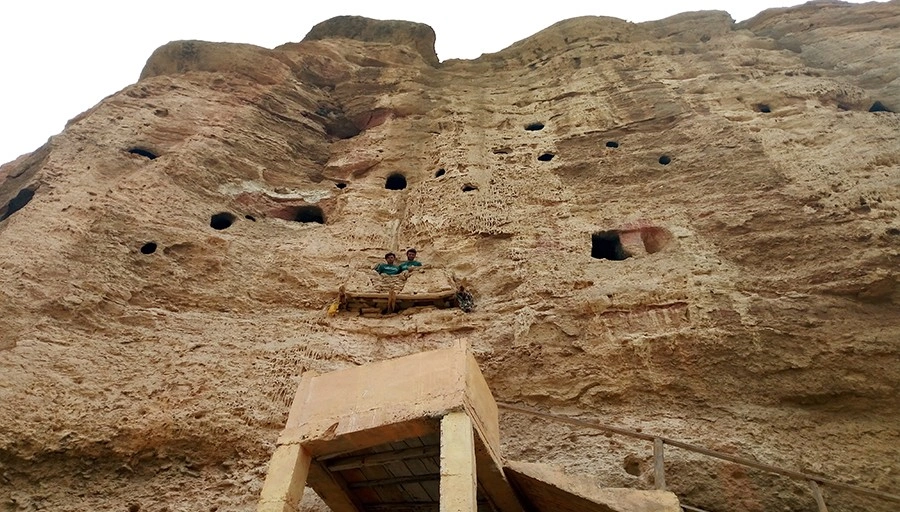
This journey starts in Kathmandu and goes to Pokhara and Jomsom, the entrance to the Mustang region. The trail then goes along the Kali Gandaki Valley to the villages of Kagbeni, Chele, Syangboche, Ghami, and Lo Manthang. Trekking along the path, ancient monasteries, chortens, caves, and traditional villages are encountered, which give an idea about the history and culture of the former Kingdom of Lo.
The Upper Mustang Trek Package is also appropriate to those travelers who are reasonably fit and willing to spend several days walking in the isolated mountainous areas. The trail does not involve any technical climbing or mountaineering experience, although trekkers must be able to cope with long walking days, weather changes, and simple accommodation in remote locations. We also aim to provide practical informationin order that travelers can be ready before coming to Nepal.
At Mega Treks and Expedition, we arrange transportation, permits, accommodation, and trekking support throughout the journey. The Upper Mustang is a restricted area, requiring special permits and our group takes care of the formalities before the trek begins. Our guides will help with planning our days and keeping a comfortable pace, as well as giving us information about the history, culture and landscapes of the region.
The visit to the ancient walled city of Lo Manthang, which was the capital of the former Kingdom of Lo, is one of the highlights of the Upper Mustang Trek Nepal experience. The journey also includes visits to remote villages beyond Lo Manthang, offering an opportunity to explore less-travelled parts of Upper Mustang before continuing to Muktinath and Jomsom.
The Upper Mustang Trek Itinerary is a mixture of mountain views, cultural discovery, ancient history and satisfying trekking days. This trek is a very different experience to many other trekking paths in Nepal and it can be enjoyed by travelers who are interested in remote Himalayan scenery and traditional Tibetan-influenced culture.
When you arrive in Kathmandu, one of our representatives will meet you at the airport and take you to your hotel. Once you check in, you will be able to rest or sightsee the area around you depending on the time you arrive.
In the evening, we will hold a briefing of the trip in which we will talk about the trek, go through the itinerary and answer any last questions. This is also a good opportunity to check your equipment and make any last-minute preparations before the journey begins.


We will do the permit preparations and final administrative arrangements today and then head to Pokhara. After all the preparations are made we will make a short domestic flight between Kathmandu and Pokhara.
The flight provides views of the middle hills of Nepal and parts of the Himalayan range under good weather conditions. After reaching Pokhara, we will check into our hotel and have the rest of the day to relax, pack trekking equipment, or sightsee the lakeside.

After breakfast we will fly to Jomsom from Pokhara in the early morning. This mountain flight is a short flight along the Kali Gandaki Valley and views the Annapurna and Dhaulagiri regions.
We will start trekking to Kagbeni on arrival in Jomsom. Jomsom is a historical settlement that has been a key trade route between Nepal and Tibet. The path is along the Kali Gandaki River and traverses the arid terrain that defines the Mustang region.
We will see a slow shift in landscape and construction as we head towards Kagbeni. The village is the entrance to Upper Mustang and has a lot of traditional elements that show the cultural heritage of the village.
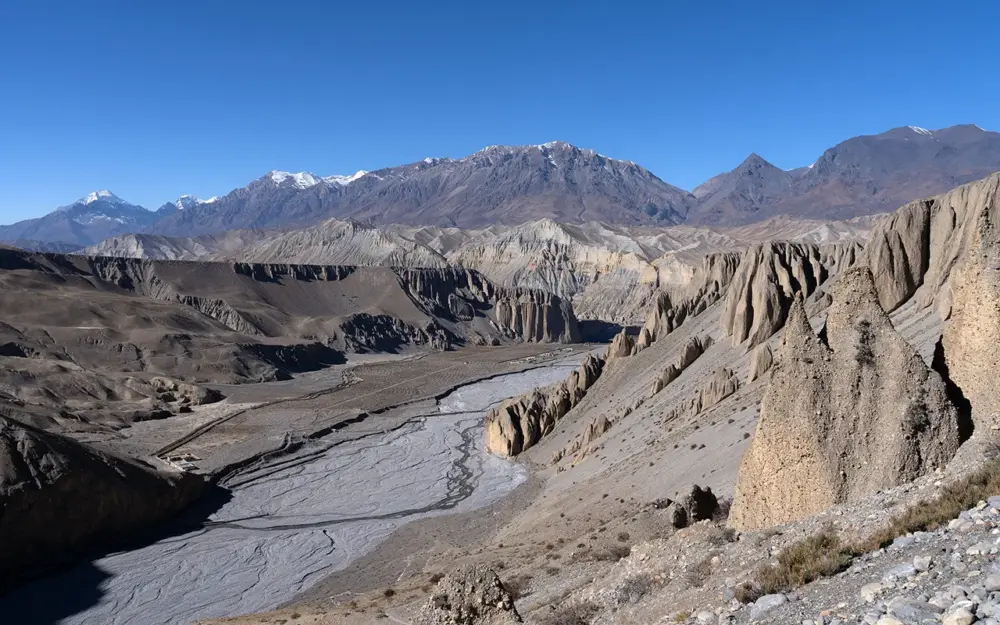
Today we will make a formal entry into the restricted Upper Mustang region after the permit checks along the trail. We will follow the trails along the Kali Gandaki River and pass through dry terrains, cultivated fields and traditional settlements.
The path will lead us through the villages of Tangbe and Chhusang, where whitewashed houses, prayer walls, and fields of agriculture will provide a unique ambience. The path has a few slow rises and falls, until it gets to Chele.
On arrival, we will relax in our teahouse and have a good sleep after another fulfilling day in the Mustang region.
We will depart Chele after breakfast and head further into Upper Mustang. The trail ascends slowly to elevated grounds and traverses through narrow valleys, traditional villages and open landscapes, which are typical of the area.
We will pass through a few passes such as Taklam La in the daytime and traverse through places where we will see the surrounding hills and mountain ridges. We will walk through small villages, agricultural lands, and areas of juniper plants that are commonly used by local communities for traditional and religious purposes.
The trail also goes close to Ramchung Cave, a significant local site. We will reach Syangboche after a few hours of walking and will relax in our teahouse in the evening.
Today we will proceed to Ghami, one of the bigger villages in Upper Mustang. The path ascends slowly through open country, past traditional villages, chortens and fields of agriculture that are indicative of the heavy Tibetan influence that is prevalent in the area.
The further we climb the higher we will go passing mountain passes and have broader scenery of the surrounding landscapes. The trail passes through villages where traditional ways of life remain an important part of daily life. We will have a consistent pace throughout the day and have frequent breaks when necessary.
We will reach our teahouse after going down to Ghami and have time to rest and have a look at the valley around.
Today we will travel towards Lo Manthang, the ancient capital of the former Kingdom of Lo. The trail leads through the remote areas of Upper Mustang and is a chance to experience the unique landscapes, villages, and cultural sites of the region.
On the way, we will pass traditional settlements of Mustang – Tsarang, before moving on our journey towards Lo Manthang. The trail will take us through beautiful landscapes before gradually opening towards the Lo Manthang Valley. The higher we get, the more spectacular views of surrounding mountains and desert-like landscapes will be. We will finally reach Lo Manthang, a walled city that has been the cultural and historical heart of Upper Mustang in the centuries. After arrival, we will rest in our teahouse and look forward to a day of exploration tomorrow.
Today is dedicated to exploring Lo Manthang and its surrounding attractions. We will explore various key monasteries, cultural and historical sites in and around the walled city after breakfast.
Lo Manthang is still one of the most culturally important settlements in Nepal. The town has old houses, old monasteries, small streets and an old royal palace that shows the long history of the region. During the day, we will have opportunities to learn more about local traditions, architecture, and religious practices.
We can also go to local villages and see other places outside the city depending on time and local conditions. This day is a good chance to enjoy the cultural heritage that makes Upper Mustang different to other trekking areas in Nepal.
After breakfast we will travel from Lo Manthang to the far off village of Yara. This is less explored region of the Upper Mustang Trek and traverses rough and rocky paths through dry valleys, traditional villages with a significant Tibetan influence.
The trail involves descents, river crossings, and a gradual ascent toward Yara. We will also encounter small villages, farmlands, and spectacular rock formations which are typical of Upper Mustang along the way. This part of the trek is more remote and isolated than the areas around Lo Manthang.
When we arrive at Yara, we will relax in our teahouse and take in the serene environment of this traditional Mustang village.
Today we will continue toward Tange, one of the more remote settlements in Upper Mustang. The route cuts across arid areas, steep valleys, and parts of rocky terrain that reflect the geographical peculiarities of the area.
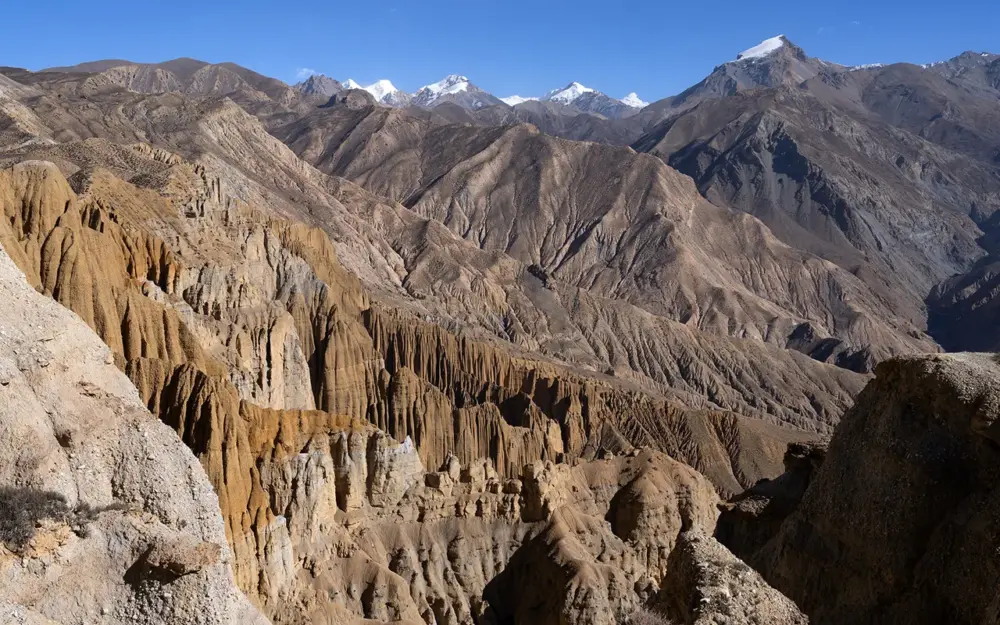
We will be walking through dramatic cliffs, colorful rock formations, and expansive open views which are very different to the greener trekking areas of Nepal. The path involves a number of ups and downs, and is one of the more physically challenging days of the trek.
After crossing streams and following remote trails through the valley, we will eventually arrive in Tange, where we will spend the night.
The day is one of the most lengthy trekking days of the Upper Mustang Trek Itinerary. We will depart Tange after breakfast and take mountain tracks through the isolated country to Tetang.
The path slowly ascends to greater heights and then traverses open areas of trail which provide broad vistas of the mountains and valleys around. We will cross through landscapes all day that will showcase the isolation and beauty of the Mustang region.
The day involves a lot of walking, but the shifting landscape and the views of the panorama make it worthwhile. Upon reaching Tetang, we will settle into our teahouse and rest after a long day on the trail.
We will proceed to Muktinath, which is one of the most significant pilgrimage sites in Nepal, after breakfast. The path is through mountainous terrain and has a view of the surrounding Himalayan mountains.
As we move towards Muktinath, we will observe that the number of visitors is gradually increasing because of the religious importance of the region. Both Hindus and Buddhists respect the site and pilgrims come to the site in Nepal, India, and other regions of the world.
Upon arrival, we will have time to explore the temple area and learn about its cultural and religious importance. The backdrop of the mountains and its spiritual significance make Muktinath one of the highlights of the trek.
We leave Muktinath now and descend towards Jomsom. The trail follows parts of the Kali Gandaki Valley and passes through settlements that have been linked by trade and pilgrimage routes for long.
As we descend in altitude, the terrain slowly transforms and the atmosphere is significantly warmer. The trail provides a glimpse of the mountains around, river valleys, and the arid landscape that defines most of the Mustang area. We will have a relaxed schedule and have frequent breaks during the day.
When we reach Jomsom we will be able to rest up after the trekking part of the trip. Jomsom is the administrative centre for the Mustang district and has a different feel to it than the smaller villages we have visited during the trek.
After breakfast, we will get ready to return to Pokhara. If the weather conditions are clear, we will take a short flight from Jomsom to Pokhara. This mountain flight provides another chance to enjoy the view of the Annapurna and Dhaulagiri regions from the air.
Please note that flight schedules in the Mustang region are sometimes affected by weather. We will go to Pokhara by road in such cases. Although the distance is much more significant, it will enable us to proceed with the trip safely and arrive at our destination.
We will arrive in Pokhara and will transfer to our hotel and have a relaxing evening after several days in the mountains.
Today we will take a short flight from On a clear day, you will be treated to views of the hills, river valleys and parts of the Himalayan range.
Upon arrival in Kathmandu we will transfer to our hotel. The rest of the day is free to relax, explore the city, shop for souvenirs or visit some of Kathmandu’s cultural attractions.
This is also a chance to look back at the experiences and memories that were acquired during the Upper Mustang Trek Nepal.
Today is the end of your Upper Mustang Trek with Mega Treks and Expedition. One of our representatives will pick you up and transfer you to Tribhuvan International Airport depending on your international flight schedule.
We suggest that you arrive at the airport a few hours before departure so that you have enough time to check in and go through the immigration process. Our staff will help in the final transfer arrangements and make sure that your departure is smooth.
We hope that your experience in Upper Mustang has been a memorable experience, a cultural experience, and a better understanding of one of the most unique trekking areas in Nepal.

You can cutomize this trip as per your requirements if met the proper guidelines.


The Upper Mustang Trek is a moderate to moderately difficult trek that can be undertaken by travelers who have a good fitness level and have an interest in remote mountain travel. This is not a technical climbing route, or one that involves any prior experience in mountaineering, but trekkers must be ready to spend several days walking on rocky terrain at elevations higher than their usual experience.
Some days involve many hours of walking and the route has some remote areas between Lo Manthang, Yara, Tange and Tetang where there are fewer facilities than on most popular trekking trails. The maximum overnight height is about 3,800 meters and certain parts of the path ascend higher and then down to villages.
Even though the altitude is usually not as challenging as on some of the highest trekking paths in Nepal, the altitude, dry climate, and successive trekking days demand proper preparation. We suggest the use of regular walking, hiking and cardiovascular exercises prior to arrival to make the experience more enjoyable.
The optimum period to accomplish the Upper Mustang Trek is spring between March and May and autumn between September and November. These seasons are usually characterized by a stable weather, comfortable daytime temperatures, and good visibility in the region.
Unlike most trekking places in Nepal, Upper Mustang is in the rain shadow of the Annapurna and Dhaulagiri ranges. This means the area receives significantly less rainfall during the monsoon season. This makes Upper Mustang one of the few trekking areas that can still be explored during the summer season between June and August.
During spring, the weather is mild with clear skies and in autumn, the visibility is good after the monsoon season. Winter trekking is possible but due to the low temperatures and frequent snowfall it can be difficult particularly at high altitudes.
Most international visitors arriving at Tribhuvan international airport, Kathmandu fall under the Nepal tourist visa category. Visa fees and requirements may change from time to time so it is best to check the latest information before travelling.
Included in the Upper Mustang Trek Package are special restricted area permits on top of the permits needed in the Annapurna region. The Upper Mustang is a restricted zone and no independent trekking is allowed as per the existing laws. Before entering the restricted area, trekkers will have to be accompanied by a licensed guide and acquire the corresponding permits.
All the necessary permits and paperwork are organized by our team prior to the start of the trek. We advise that you should always have a passport that is valid at least six months and a number of passport-sized photos to use in administration.
The safety of your trek is our utmost priority. Although the heights in the Upper Mustang Trek are not as high as some of the highest trekking trails in Nepal, altitude symptoms may still arise, and they must not be overlooked.
Our guides have a small first aid kit and keep an eye on the health of the group during the trip. We advise trekkers to immediately report any symptoms such as headaches, dizziness, unusual fatigue, or difficulty breathing.
The dry climate of Upper Mustang may enhance the possibility of dehydration, and therefore, it is essential to ensure that there is sufficient fluid intake. We also suggest that a healthcare professional be consulted prior to traveling and that regular vaccinations are current.
The weather and conditions of the trail are sometimes subject to change as well as the transportation schedules. Our guides constantly check the local conditions and make decisions, keeping safety in the first place. We believe that a safe and comfortable trekking experience is more important than strictly following a timetable.
Transportation in the Upper Mustang Trek Itinerary will be a mix of transfers by personal vehicle, domestic flights, and the days of the trek. This trip starts with your airport transfer in Kathmandu, and proceeds with a domestic flight to Pokhara.
From Pokhara, we take a mountain flight to Jomsom, which serves as the gateway to Upper Mustang. Upon completion of the trek, we go back to Jomsom and then back to Pokhara either by air or road depending on weather and transport conditions. The tour ends with a flight between Pokhara and Kathmandu and an airport transfer.
Weather conditions are very crucial in mountain flights in Nepal. There are sometimes delays and schedule changes, especially in the Mustang region. We suggest that you must be flexible in your travel arrangements and that changes in weather are a normal occurrence in mountain travel in Nepal.
All trekkers who will be part of our Upper Mustang Trek Package will be required to have travel insurance. The trek takes place in a remote region where access to medical facilities is limited, and emergency evacuation can be expensive if required.
We strongly recommend that you purchase good travel insurance which covers trekking, medical care, hospitalization, trip interruption and emergency helicopter evacuation. Serious accidents are rare but good insurance is priceless and provides peace of mind on the trip.
Please read your policy carefully before you travel to make sure it covers trekking activities in Nepal, and rescue services in an emergency. We also suggest that you bring a printed version of your insurance information and emergency contact information on the trek.
Many travelers choose to extend their stay in Nepal before or after the Upper Mustang Trek. There are a number of cultural sites in Kathmandu such as ancient temples, palaces, and UNESCO World Heritage Sites that can be visited in an extra one or two days.
The other common extension destination is Pokhara where visitors can unwind around the Phewa Lake, the World Peace Pagoda, local attractions or just rest after the trek. Chitwan National Park is another place we can take trips to, where those interested in wildlife can visit.
There might be other trekking extensions that can be offered according to your time and interests. Our group is able to suggest appropriate choices and assist in developing an itinerary that fits your travel time.
We feel that it is best to be honest with you on expenses prior to your journey. The Upper Mustang Trek Package usually includes permits, accommodation on the trek, transportation as indicated in the itinerary, guide services, porter support where indicated, and meals as indicated in the itinerary.
The international flights, Nepal visa fees, travel insurance, personal trekking equipment, guides and porter tips, and personal purchases are expenses that are not usually included.
Other costs in the trek can be hot showers, battery charging, WiFi, bottled drinks, snacks, laundry and souvenirs. Most trekkers allow USD 15-30 per day on these additional expenses depending on their personal spending patterns.
The national language of Nepal is Nepali, and local communities in Upper Mustang typically use Tibetan-influenced dialects that have been maintained over the centuries. The tourism sector in Nepal is very familiar with English and our guides are at ease with English and Nepali.
The majority of teahouse owners along the way know international visitors and can speak simple English. It is always good to learn some local greetings which can assist in establishing good relations with the locals.
In certain villages, there is mobile network coverage which is less effective in remote parts of the trek. Some teahouses may offer limited WiFi services at a fee, but these are usually slow and unreliable. We suggest that family and friends are advised that communication might be restricted at certain times during the trek.
There are several simple guidelines we ask trekkers to follow in order to respect local communities, protect cultural heritage, and preserve the natural environment of Upper Mustang.
Do not litter along the trail or around teahouses and villages. Please carry your waste until proper disposal facilities are available. We promote the use of reusable water bottles and deter unwarranted one-time use plastics.
Do not remove artifacts, stones, fossils, religious objects, or cultural items from the region. Many of the sites in Upper Mustang are of great historical, religious and archaeological significance and should be treated with respect.
Do not enter monasteries, temples or homes without permission. Dress decently and observe local practices as recommended by your guide when visiting religious places.
Do not disturb wildlife or destroy the delicate landscape. The dry environment of Upper Mustang recovers slowly from environmental damage, making responsible travel particularly important.
Upper Mustang is an ideal place to do photography as it has its own unique landscapes, traditional villages, monasteries, and Himalayan landscape. Tourists are usually allowed to take pictures in most parts of the trek.
However, we encourage trekkers to ask permission before photographing local residents, monks, religious ceremonies, or activities taking place inside monasteries. Courteous dealings usually result in enhanced experiences of both the visitors and the local communities.
In Nepal, the use of drones is controlled and might need government permission based on the area and intended use. Some cultural places, monasteries, and restricted zones can ban the use of drones.
The illegal drone operations may lead to the imposition of fines or seizure of the equipment. In case you would like to make use of a drone to take pictures or shoot a film, you should discuss the trip with our team first, and we will be able to guide you on the existing regulations.
In case this is your first trekking experience in Nepal, preparation can greatly enhance your comfort and enjoyment. We suggest starting a physical exercise a few weeks prior to departure which involves walking, hiking, climbing stairs or any other cardiovascular exercise.
Since Upper Mustang is a deserted and isolated area, it is necessary to carry the right clothes depending on the temperature and weather. Warm jacket, layered clothing, sun protection, sunglasses and comfortable trekking boots are highly recommended.
Reaching Kathmandu at least one or two days before the trek will give time to acclimatize to international travel, pack, and participate in the trip briefing without feeling in a hurry.
Good quality trekking boots should be worn before the trip rather than being used for the first time on the trail. Blisters and discomfort during long trekking days can be avoided by wearing properly broken-in footwear.
Above all, be flexible and realistic in the journey. The weather, transportation timetables, and local conditions may sometimes vary. Positive attitude and readiness to adjust usually play a significant role in a successful trekking experience.
The Upper Mustang Trek is regarded as a moderate to moderately challenging trek. Although it doesn’t involve any kind of technical climbing, trekkers should be ready for several days of walking along mountain trails and at high altitudes.
Some previous trekking experience is beneficial but not required. With good preparation, positive attitude and physical fitness, many travelers manage to finish this trek.
Lo Manthang (3,800 m) is the highest overnight stop on this itinerary. Some trail sections and passes reach higher elevations before descending to the villages.
Popular seasons are spring (March-May) and autumn (September-November). Upper Mustang can also be explored in summer monsoon seasons as it is situated in the rain shadow of Annapurna and Dhaulagiri ranges.
Upper Mustang is a culturally and historically important area close to the Tibetan border. Special permits are needed to assist in maintaining the area’s heritage, traditions and environment.
Yes. Trekkers will need permits for the Annapurna region and a Restricted Area Permit for Upper Mustang. All necessary permits are set up by our staff prior to leaving.
The route is lower than many of Nepal’s trekking routes, so symptoms related to altitude can still occur. It is important to stay hydrated, acclimatize properly and listen to your guide’s advice.
Accommodation is available in local teahouses and lodges. Facilities are generally simple and comfortable for trekking purpose and more basic in remote villages.
Most teahouses provide meals like dal bhat, noodles, fried rice, soups, potatoes, eggs, bread, pancakes and hot drinks. Menu may change from village to village and according to the availability of supplies.
Upper Mustang is one of the less explored trekking areas in Nepal. Villages and teahouses can be found along the way, but facilities are not as developed as in other trekking areas in Nepal.
Yes. Single travelers are invited to participate in group departures or organize private departures to their preferred schedule.
Limited WiFi services may be available in some teahouses for an additional fee. But in remote regions, internet connection is often slow and unreliable.
Most teahouses provide charging facilities for phones, cameras and power banks. In certain villages extra fees may apply.
What to bring Trekking boots, warm clothes, waterproof layers, sun glasses, sun protection, daypack, water bottle, personal medicines and sleeping bag (if required).
Guide and porter services are included based on the selected package. You will be accompanied by professional trekking staff throughout your trip.
Yes. It is strongly recommended that you have full travel insurance including coverage for trekking, medical expenses, trip cancellation and rescue.
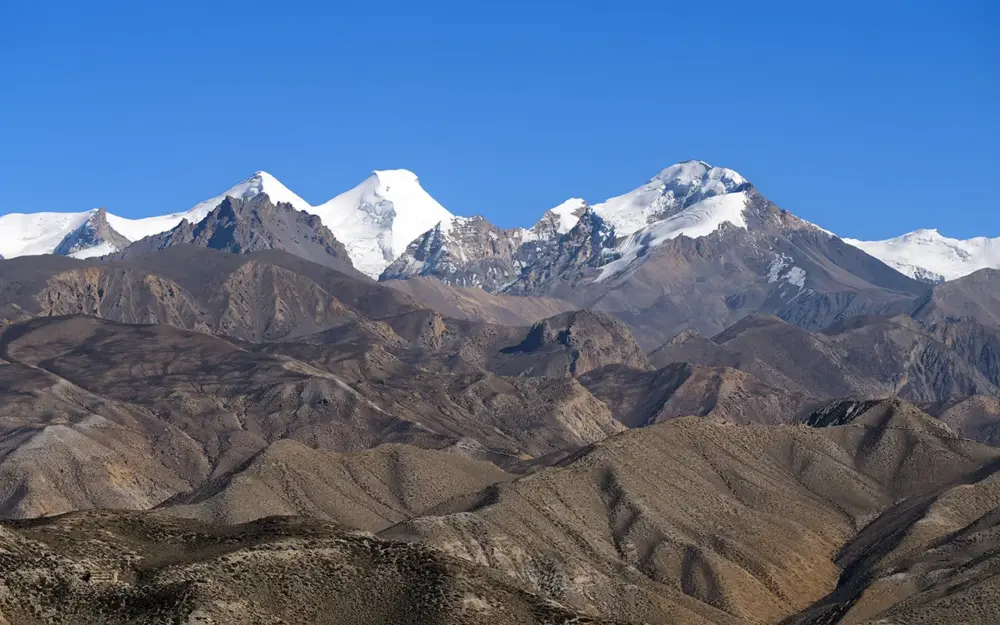
This route gives the views of Annapurna, Dhaulagiri, Nilgiri, Damodar Himal, Tukuche Peak and other surrounding Himalayan ranges.
Lo Manthang is the old capital of the Kingdom of Lo and the cultural and historical heart of Upper Mustang. It is famous for its monasteries, traditional architecture and preserved heritage.
Yes. Private departures are often tailored to your itinerary, fitness and travel preferences.
Contact Mega Treks and Expedition via our web site, email or direct enquiry. We will give you details about the trip, availability, the price and the booking process.


 Write a Review


