
Talk To Expert
Mail Us

Trip Duration
9 Days
Group Sizes
2 to 25 People
Difficulty
Moderate
Max. Altitude
3300 m
Activities

Meals

Accommodation
Helambu Circuit Trek is an enriching Himalayan experience that offers its participants a combination of stunning mountain views, cultural experiences, relaxing hiking routes, and moderate difficulty of the trekking experience in one trip to remember. It is situated to the north of Kathmandu and is a great option for tourists wishing to experience the natural beauty of Nepal without having to follow extremely high-altitude or technically challenging mountain trails. It can be done by both active beginners and experienced trekkers who want to have a quieter Himalayan experience. The trip is made more comfortable, smooth, and enjoyable throughout the arrival to the departure with professional planning and structured assistance of Mega Treks.
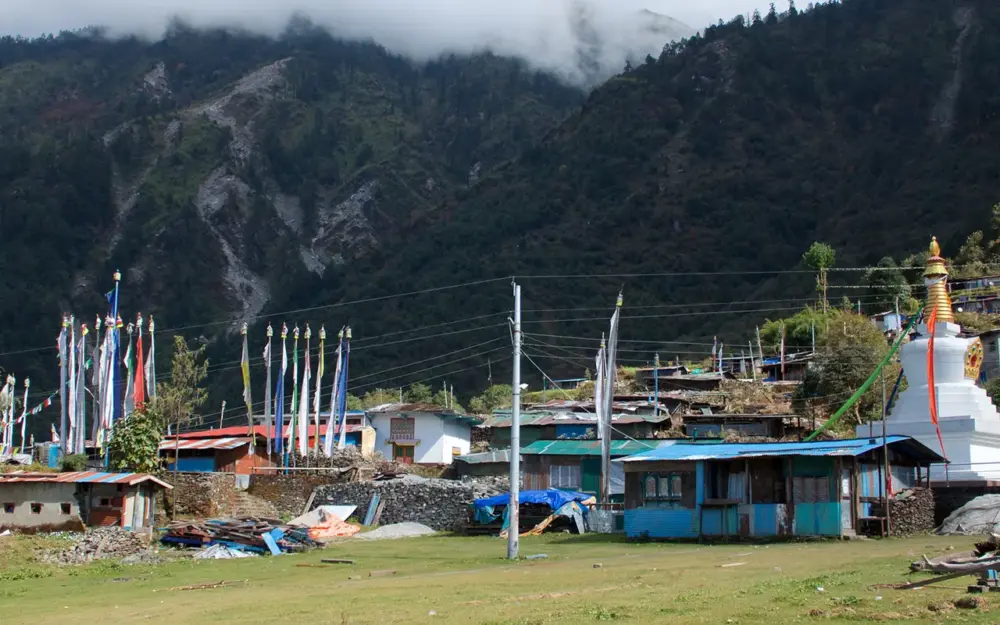
The Helambu is a beautiful area with a good cultural identity. The trekkers are taken through the traditional Tamang and Sherpa villages along the way to experience the genuine mountain life, practicing Buddhist culture, prayer flags, monasteries, and the warm hospitality of the locals. This area has a more peaceful and serene trekking environment compared with the overcrowded trekking regions like Everest or Annapurna. This is why the Helambu Circuit Trek is ideal for a traveler who likes scenic trails, but is not in crowded places, and at the same time appreciates the spectacular Himalayan scenery.
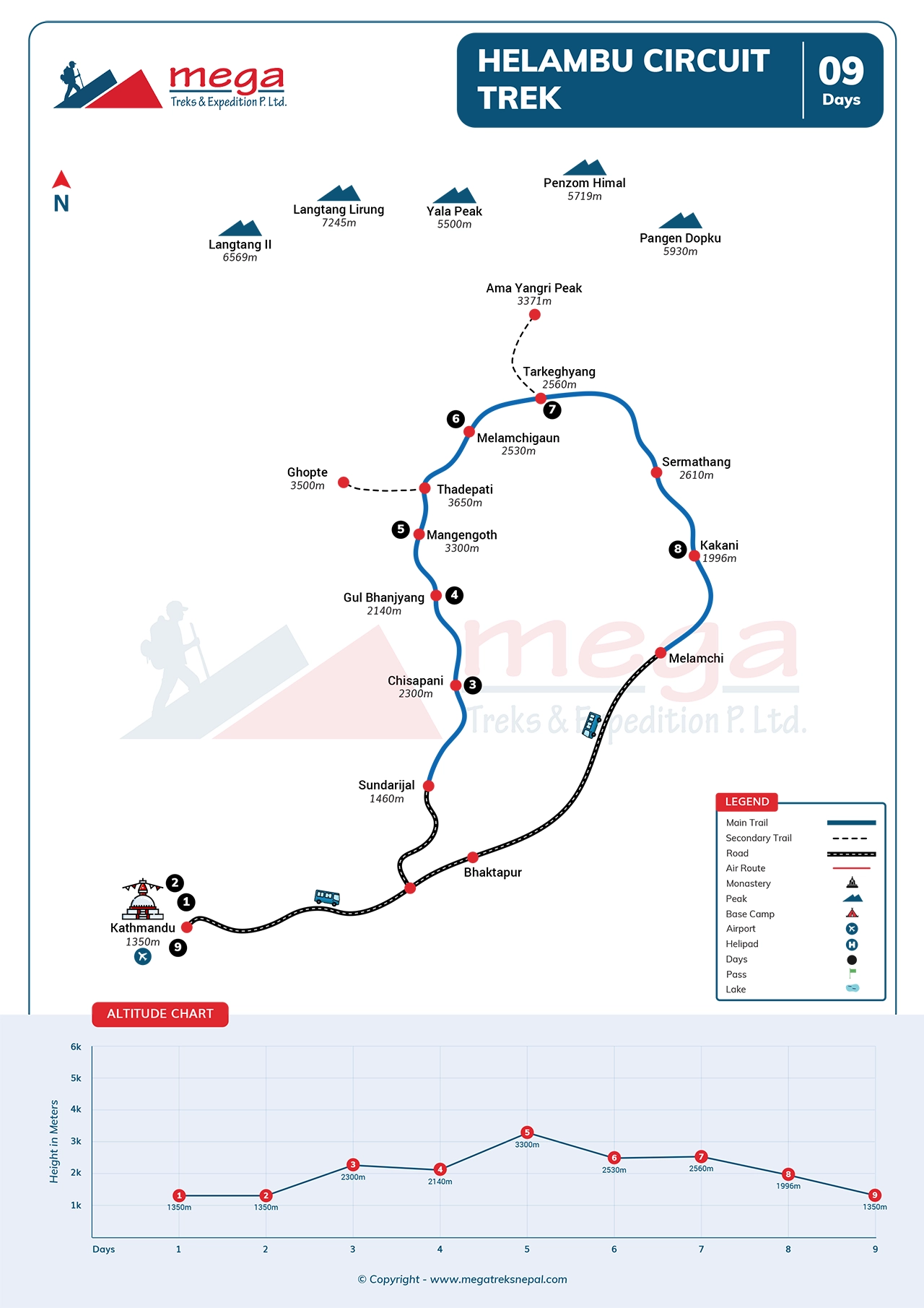
The trek starts at Kathmandu (1,350 m / 4,428 ft) and then descends into the trekking area via picturesque roads and mountain tracks. The path flings across scenic villages such as Chisopani, Gul Bhanjyang, Mangengoth, Melamchigaun, Tarke Gyang, and Kakani. Daily trekking is a diverse experience with forest walks, terraced farmland, ridge trails, and traditional villages. Overnight highs on the trek range up to (3,300 m / 10,825 ft), meaning exposure to altitude is not as serious as with most of the other Himalayan misadventures. This is an average altitude, which enables trekkers to have a mountain view and diminishes the dangers of a high altitude.
The difficulty of the Helambu Circuit Trek is medium, and the average daily walk time is four to six hours based on the itinerary and the walking pace. The path has frequent ascending and descending slopes and irregular mountainous tracks, which demand decent fitness and training. Technical climbing or mountaineering is, however, not required, and this trek can be done by an average fitness traveler.
In plain trekking lodges or teahouses that provide simple and yet comfortable overnights, accommodation is normally offered. Meals are typically rice, noodles, soup, bread, eggs, potatoes, tea, and typical trekking meals. In certain villages, there might be charging facilities and limited internet access.
A logically crafted Helambu Circuit Trek program provides a reasonable combination of mountain vistas, cultural engagement, and easy trekking adventure. Mega Treks offers a convenient, local, and scenic Himalayan experience to its travelers, making it a memorable Nepal trekking trip.
The Helambu Circuit Trek traditionally starts as you arrive in Kathmandu, the colorful capital of Nepal, at (1,350 m / 4,428 ft). Upon arrival, the majority of the tourists rest for some time, pack trekking equipment, and prepare to embark on the adventure. A sightseeing day in Kathmandu is also part of many itineraries, where visitors have the opportunity to explore key cultural sites as they familiarize themselves with the surrounding environment, before setting off into the mountains. This renders the first part of the journey easy and on time.
The real trekking process would typically begin with a picturesque drive between Kathmandu and Sundarijal, which would be the base point of the trek. The path slowly ascends through rock stairs, green forest lanes, and a stunning natural landscape, Sundararaj. The initial part of the path takes you through the Shivapuri-Nagarjun National Park, a tranquil place to walk, experience the mountain air, and take in the natural beauty of the place.
On the route, trekkers traverse small villages and scenic places before arriving at Chisopani, a common first-night destination, where the atmosphere is serene, and the view of the mountain is splendid. This slow beginning enables the trekkers to get used to the walking speed, appreciate the scenery changing, and commence the Helambu Circuit Trek with a comfortable introduction to the Nepal mountain trekking experience.
You will land in Kathmandu at Tribhuvan International Airport and get transferred to your hotel to start your Helambu trekking adventure. The capital of Nepal and the beginning of numerous Himalayan trekking treks is Kathmandu, a city with an elevation of 1,350 m / 4,428 ft. This arrival day is made to arrive, take a rest, and get settled very comfortably after your international flight.
Depending on your time of arrival, you can use the whole day to rest at the hotel, pack your trekking equipment, ensure you have all the things you need on the trip, and get yourself prepared psychologically to take the trip.
It is a simple introduction, which will enable your body to ease out of the travel fatigue before the active trekking days. Kathmandu is a bustling place with culture and energy, yet these days, purposefully relaxed to ease down and acclimatize. A stay over in your hotel will give you ample time to get a good sleep and get ready to see the sights and go on a hike. Such a progressive start assists in developing a soothing and easy start to your unforgettable Helambu trek in Nepal.


In Kathmandu Valley, the guided sightseeing tour will take you through a sightseeing trip, and then you will start your mountain trekking adventure in the Helambu region. This is a comfortable day to explore the culture and plan trips. The sites of great heritage that will be visited during the tour include the Pashupatinath Temple, the sacred Hindu pilgrimage site, one of the most renowned Buddhist monuments in Nepal, Boudhanath Stupa, and the historic Bhaktapur Durbar Square, which has traditional architecture and rich cultural heritage.
The sightseeing takes about four hours and provides a valuable insight into Nepal’s history, religion, and local practices. A stroll around these cultural landmarks enables tourists to feel the cultural core of Kathmandu prior to going into the mountains. The sightseeing tour will conclude with you going back to your hotel and preparing yourself to embark on the trekking trip, which will begin the following day. This is a great cultural introduction and is a very relaxing and informative day, as it allows the travelers to relax well before the more vigorous adventure starts.

You will ride from Kathmandu and walk out of Sundarijal and trek to Chisopani, taking picturesque walks in the forest as well as the old-fashioned mountain paths. An hour and a half of driving will see you embark on your trekking adventure starting at Sundarijal. The trail starts with stone stairways passing beautiful waterfalls before entering Shivapuri-Nagarjun National Park. The further you go, the higher you climb, the path leads through serene forests, Tamang villages, and vistas of Kathmandu Valley. Other wildlife, like wild boar, can at times be observed in the forested areas.
The path slowly ascends the hillside before leading to stretches of ridges with cool mountain air and picturesque scenes. This is followed by a brief drop to Chisopani (2,300 m / 7,545 ft), where you will spend the night. This is the first complete trekking day, which will be a rewarding experience of nature, local culture, and mountainous scenery. Arriving at the lodge, you are able to relax and feel the quietness of the hill environment and prepare for the next day’s trekking through the beautiful Helambu region.
Your path will be from Chisopani to Gul Bhanjyang, where you will have to walk through picturesque mountain villages, fertile farmland, and scenic landscapes of ridges in the Helambu area. There can be a clear sunrise over the Annapurna, Langtang, Ganesh Himal, and Everest ranges in case the weather is good. The route goes down after breakfast through traditional villages and farmlands, down to Pati Bhanjyang, a village of mixed ethnicities and rural mountain living. The trail leaves there and ascends the steeply hilly terrain with small villages and terraced agriculture to picturesque ridge stretches.
The trekkers on the path will be able to experience a view of open valleys, serene landscapes, and a glimpse of the neighboring Himalayan mountains. The night stop of the day is Gul Bhanjyang (2,200 m / 7,215 ft). Even though the path will have some downs and some ups and downs, as well as some walking, the scenery will be changing all the time, making the experience more enjoyable. This day has been a great opportunity to look into the cultural villages of the region, mountain farming life, and to enjoy the rewarding trekking environment.
You will be walking from Gul Bhanjyang to Mangengoth along old Tamang villages, beautiful mountain paths, and serene pine forest sceneries. The trail slowly ascends to Kutumsang, where a clear day can give a great sight of valleys, and Himalayan ranges such as Langtang and Gaurishankar. The journey goes on through little mountain villages, which get increasingly higher and higher up the mountain, with varying scenery and a more mountain-like atmosphere.
Thick pine forest areas make the walk an easy and cool experience, and the walk is pleasant although the climb is gradual. It is the highest elevation where the overnight has been reached on this trekking path thus far, Mangengoth, which is at (3,300 m / 10,825 ft). This renders today one of the more strenuous parts of the Helambu adventure.
When you arrive at the lodge, you will be able to relax, breathe in cooler mountain air, and enjoy the highlands’ serene environment. The rewarding mountain walk today offers a mixture of stunning views, cultural mountain living, and a more rewarding Himalayan trekking experience as you will keep going deeper into the Helambu region.
This journey will take you from Mangengoth to Melamchigaun with mountain vistas, thick woodland paths, and quiet rural village sceneries of the Helambu area. The day can start with a short early morning walk to a nearby viewpoint to see sunrise over the Himalayas and then back to the lodge to have breakfast. The trail, after breakfast, goes through the beautiful pine and rhododendron woods up to Tharepati, where a trail that branches off the trail connecting Lauribinayak Pass with Tharepati joins it. Here onward, the road turns down through rugged forest tracts towards Melamchigaun.
The dynamic landscape during the day makes the trekking experience worthwhile with less noise and picturesque nature. Melamchigaun (2,560 m / 8,399 ft) is a traditional mountain village with its monastery and serene environment. Upon arrival, you are free to unwind and take in the local scene. This day will be a mixture of forest hiking, cultural village township, scenic downhill hiking, and mountain scenery as you sustain your memorable adventure of trekking in less populated Himalayan areas, the Helambu trekking adventure.
You will trek from Melamchigaun to Tarke Gyang using beautiful Himalayan landscapes, through picturesque valleys, old villages and mountain paths. The trail follows the villages after breakfast, then crosses a stream that flows through the Dorje Lakpa mountain region. The route slowly ascends through the serene rural landscape with a green valley view and a far-off Himalayan landscape, making the trek a nice experience. One of the biggest Sherpa villages in the Helambu area is Tarke Gyang (2,580 m / 8,465 ft), and it is a special cultural experience in the area.
The village has traditional mountain houses which are closely built and have narrow lanes and a genuine community feel. The walk of today will be a mixture of moderate walking, beautiful scenery, and a significant cultural experience. On arrival, you will be able to rest at the lodge and have the serene environment of this historical settlement. A stroll through Sherpa villages provides an understanding of the traditional mountain way of life.
You will leave Tarke Gyang and head to Kakani, where you will walk through pristine forests, old Sherpa villages and spectacular mountain landscapes with sweeping valley views. Today is not as long and challenging as it was before when trekking. It gives the possibility to walk with a slower and easier pace. The trail goes through lonely woodland and on its way down opens to great views of the neighboring valleys and the magnificent mountainous landscape.
On the trail, you will go through traditional Sherpa villages where locals lead a tranquil Himalayan lifestyle. Apple orchards make the ride more beautiful and provide a cool breeze of scenery. Kakani (2,400 m / 7,872 ft) is your day-long rest. The reduced walking time allows the travellers to have more time to appreciate the area without being in a hurry. It is a great day of trekking that has a relaxed proportion of easy walking, sightseeing, and cultural experience in villages as you proceed to the next stage of your Helambu trekking adventure in Nepal.
Your Kathmandu to Helambu trekking trip will be completed by walking from Kakani to Melamchi Pul Bazaar and then driving back to Kathmandu. The day starts with a breakfast followed by some two hours of downhill walking through picturesque mountain scenes to Melamchi Pul Bazaar. It is the last trekking part that provides an opportunity to relax in the quiet nature and reflect on the mountain adventure. Arriving at Melamchi Pul Bazaar, you will start the picturesque journey back to Kathmandu, about four to five hours.
The road trip will take us through rivers, terraced agricultural lands, small villages, and evolving landscapes, and give us pleasant final sights of rural Nepal. Your home to city comfort after some rewarding time in the mountains is Kathmandu (1,350 m / 4,428 ft). Once there, you can rest at your hotel and rejoice over the success of the trek. This last day is a mixture of walking and driving, and it is a way to complete the Helambu adventure in a way that is pleasant and memorable.

You can cutomize this trip as per your requirements if met the proper guidelines.


The Helambu Circuit Trek is best done in spring and autumn when the weather is usually pleasant, and the mountain scenery is clear. During spring, March-May, the time is marked by the opening of the rhododendron forests, warmth, and pleasant climate that make walking a nice experience in the entire Helambu. Another good season is autumn, which is the months of September to November, since the weather is normally clear following the monsoon, forming beautiful Himalayan views. During winter, trekking can be done, but since the temperatures are colder at higher levels, the trek might not be that comfortable.
The slippery trails, leeches, and low visibility of the mountains are frequent occurrences of the monsoon season, and it makes the trek more difficult. The selection of the season can greatly enhance your trekking experience. When planning your Helambu Circuit Trek itinerary, spring and autumn are the best times to choose to balance the weather and have a pleasant walk. These are also the periods when one gets a chance to enjoy the mountain villages, local culture, and scenic views in the entire trekking path.
Helambu Circuit Trek is a moderate trekking route that traverses beautiful hills, forests, and mountain villages in the north of Kathmandu. The total trekking distance is about 70-90 kilometers, depending on the specific route. The trek starts from Kathmandu (1,350 m / 4,428 ft) and ascends slowly, moving through villages like Chisopani, Gul Bhanjyang, and Mangengoth. Mangengoth is one of the peaks of this pathway at night, with a height of around 3,300 m / 10,825 ft. This route maintains a moderate level of elevation as compared to most of the Himalayan treks, and as such, it is open to a larger group of trekkers.
The gradual increase in altitude helps most of the traveling people to settle at their own pace during traveling. The trail has a mixture of climbing, downward steps, ridges, and forest trails, which give a different experience of trekking every day. Such a blend of approachable altitude and rewarding mountain views makes the climb appealing to those who are interested in a moderate Himalayan experience in the Kathmandu neighborhood.
The level of difficulty of the Helambu Circuit Trek is usually rated as moderate and thus can be taken by trekkers who are fairly fit and have some walking experience. The path involves frequent uphill, downhill, and trekking on a mixture of terrain, although it is not technical climbing. There is a lesser risk of altitude sickness since the highest point is approximately 3,300 m / 10,825 ft, but some travelers may experience milder symptoms. The body may not adjust well, and this may manifest as headaches, tiredness, and decreased appetite.
A slow walk, maintaining hydration, and getting enough rest can prevent some of the discomfort with altitude. Although this walk can be easily undertaken by most of the travelers, it needs strength and planning. It is physically challenging at some point due to the combination of the elevation gain and back-to-back trekking days. First-time mountain trekkers can enjoy the journey in a safer, more enjoyable, and comfortable manner through good planning and realistic expectations.
The time spent walking on the Helambu Circuit Trek is different based on the itinerary, the condition of the route, and the stops. During easy days, trekking can take approximately four hours, whereas the long days can take a maximum of six hours with a little bit of excess. The daily walking distances can be considered to be easy to manage, and the route can be used by people who like moderate walks, not the hardest endurance tests. There are days when we will have to climb steadily uphill through villages and forests, and days when we will have some easier downhills with a view of the valley.
The shortest walking distances give the opportunity to have more time to relax, to see the local settlements, or to see the mountain landscapes. Longer days entail greater endurance yet are within reach of fairly fit trekkers. A balanced pace can be added to your Helambu Circuit Trek itinerary to aid in acclimatization and comfort. The route always remains at moderate altitude in comparison with other Himalayan treks, which means that walking conditions are not so intense, but some uphill sections may be perceived as physically challenging, depending on the weather and personal level of fitness.
Helambu Circuit Trek accommodation is typically in local trekking lodges or teahouses, which provide basic yet comfortable accommodation. Most accommodation is of a simple nature with twin sleeping arrangements, blankets, and communal shower rooms in most places. One should not expect higher comfort in remote villages of the mountains. Food is usually rice, noodles, soups, potatoes, bread, eggs, tea, coffee, and certain dishes of this country. Meal options can be reduced at more advanced stops, yet there are usually adequate meals. Consumption of water can be done either in bottles or by using purification processes, which are usually more environmentally friendly.
Hot beverages are often sold along the way. In case of booking with Mega Treks, they can include accommodation and standard meals in the package to make the booking more convenient. Food and accommodation in general are sufficient to have a comfortable trekking experience without compromising on the nature of a real mountain trekking experience.
The Helambu Circuit Trek has several trekking options that can be coupled with the trek based on the available time, fitness, and travel interests. Other trekkers can follow shorter Helambu walks with a primary emphasis on the cultural villages and scenic walking, whereas others can continue to Gosainkunda or access Langtang region trails to have a longer mountain experience. The starting points can also be chosen as alternatives based on the transportation choices and trekking arrangements. These route choices may vary the number of hours of walking every day, the total distance, and the distance ascended.
To shorten the Himalayan trek around Kathmandu, Helambu is often the best choice; however, travelers seeking a more challenging experience can find more prolonged paths linked to each other. Other routes may provide other cultural experiences, scenery, and mountain perspectives. The correct path is based on your time and hiking expectations.
When talking about the flexibility of the route with an experienced trekking operator, one is likely to get the appropriate plan. This also makes the Helambu area attractive to those who are first-time trekkers as well as those who are interested in having fewer people in the Himalayas.
Yes, beginners can participate in the Helambu Circuit Trek provided they are reasonably fit, motivated, and have clear expectations about mountain trekking. This is thought to be an easier path than some of the other higher elevation treks in the Himalayas since it remains at a moderate level and does not require the use of technical climbing. Nevertheless, the beginner need to know that the multi-day trekking still requires strength, patience, and the capacity to walk uphill and downhill for several hours a day.
Adequate preparation enhances comfort and confidence. This is a journey that first-time trekkers typically find accommodating since they like walking, traveling outdoors, and active holidays. It is easier when a balanced itinerary is selected, which includes walking days in equal numbers. Guided trekking can also assist beginners to feel more comfortable with logistics, route navigation, and local arrangements.
Although not as challenging as mountain hikes, it is a real trekking experience with hard work and dedication. It can be a perfect guide to trekking in the Himalayan areas of Nepal for many active beginners.
With the correct planning, the Helambu Circuit Trek is much more pleasant, less challenging, and safer. This is not one of the most demanding treks that Nepal offers, but even the simple walking that one has to do over the course of multiple days still demands endurance and a simple form of strength. Several weeks of exercise before the trip: Hiking, stair climbing, cardio, and leg-strength workouts can be of great help.
Hiking shoes should also be broken in before the trip to ensure that Trekkers do not experience discomfort. It is also essential to pack appropriate clothes that will be used during changes in weather conditions in the mountains, such as warm clothing, raincoats, gloves, and easy-to-wear trekking clothes.
Mental preparation is also important, and this is for those travelers who are new to mountain trekking. Learning the speed of the trek, the simple conditions of accommodation, and the secluded setting will contribute to the development of realistic expectations. As the difficulty of the Helambu Circuit Trek is moderate, average fitness is typically sufficient, provided adequate preparation is made. Planners usually find the trip much more convenient and comfortable and experience the overall trekking process more easily, securely, and fulfilling than those who had to improvise on the trip.
Electricity is commonly available in most trekking lodges during the Helambu Circuit trek, although this varies with the village and the supply of electricity. Other lodges can impose additional charges for charging phones, cameras, or power banks in more remote locations. It is highly advisable to have a power bank as a backup. In certain areas of the route, mobile network coverage exists, although signal strength can be quite different depending on the area and the weather conditions. Some lodges may have access to the internet, but the connections are usually slow and unreliable compared to those in cities.
Trekkers must not anticipate high levels of connectivity all the way along the way. In case of the need to be connected, it might be beneficial to use a local SIM card to enhance connectivity in certain locations. But some of the trekking experience is being offline and outside of constant digital distractions. Prioritizing charging and a poor internet connection will make the trekking adventure less inconvenient, and important devices will be operable even in the wilderness.
Helambu Circuit Trek needs the required trekking permits that will help control tourism and conservation management of the trekking area. As part of the route goes through sensitive regions, you need official permits before embarking on the trek. Depending on the route that is taken, permit requirements can change as well when your itinerary links up with adjacent trekking areas. Tourists are advised to get permits beforehand via a trekking agency or the authorities to prevent delays.
When trekking, it is advisable to carry permit documents as they might be inspected in certain places on the way. Guided trekking tours usually have permit bookings, and the work has been simplified for the tourists. When making a reservation with Mega Treks, they may include permit handling as an addition to the organized package. With the right permits, trekking trails are legal to approach and assist in promoting sustainable tourism in the area. It is always advisable to check revised permit regulations before travel, since requirements may at times vary with time.
The Helambu Circuit Trek is typically started by road transportation to the starting point of the trek in Kathmandu and finished by a road trip back to Kathmandu, once the trek is finished. Transport can either be by using personal vehicles or the local buses, depending on the itinerary adopted. Road travel is very picturesque, as the route is traversed through valleys, villages, rivers, and landscapes upon hills, before one reaches the trailhead.
The time taken to travel is different based on the traffic, road conditions, and the starting point. The trip back is also a mix of mountains and local roads back to Kathmandu. Some trekkers would like to get personal transport due to comfort and convenience, and there are those who are cost-conscious and can use public transport.
Trekking packages usually facilitate transport as part of the entire tour logistics. The condition of the roads in Nepal is usually difficult to predict, so it is useful to be flexible and patient in case of a transfer. The process of transportation forms a significant element of the whole trekking experience in that time; transportation links the bustling Kathmandu city to the more subdued mountain environment, which forms the Helambu region, a satisfying trekking experience among many tourists.
Travel insurance is highly advisable for anyone intending to take the Helambu Circuit Trek, although the route remains at lower altitudes in comparison with some of the more extreme mountain treks found in Nepal. Trekking is always associated with some risks, such as being injured or getting ill, being delayed by weather, or having to face sudden travel inconveniences. An insurance policy covering trekking, medical care, in case of emergency evacuation, and trip interruptions should be the ideal cover. Health problems might, nevertheless, occur suddenly despite the fact that serious altitude concerns are less likely to occur on this path than on very high Himalayan treks.
Insurance is a source of tranquility and financial security in your journey. Trekking altitude and activities should be checked by reading the policy carefully to make sure that the activities are included. Other standard travel insurance plans might not cover mountain trekking unless it is bought separately. When hiking in remote places and areas where immediate medical assistance might be scarce, reliable insurance can be of great help. Effective coverage will assist in making the whole trekking experience safer and more secure.
The Helambu Circuit Trek is an excellent experience of a combination of mountain views, village culture, forest walking, and a moderate trekking adventure near Kathmandu. What the travelers can expect is a journey through the traditional Tamang and Sherpa settlements, serene forest cover, scenic ridges, and gorgeous Himalayan views. Helambu tends to be less busy and crowded with trekkers in comparison to busier trekking routes, providing a more relaxed trekking environment. The accommodation is not difficult but simple, and day-to-day trekking does not imply any technical complications of climbing. The conditions of the weather, the trail surfaces, and comfort levels can be different in each season.
Cultural engagement with the local communities is a valuable addition to the experience, as more than mountain sceneries. This is a perfect Himalayan journey that would please any traveler who wants to experience a balanced adventure of the Himalaya and does not want to be exposed to extremely high altitude. Prepare to have unforgettable scenery, traditional village living, and fulfilling days of walking that are both challenging and pleasing. In general, the trip provides a real Nepal trekking adventure that can be enjoyed by most active travelers who want to explore the mountains that are easily accessible.
Active beginners who are not too unfit can also participate in this trek, which is regarded as one of the moderately accessible trekking trails in Nepal.
The hike is not very difficult, consisting of frequent uphills and downhills, and several days of walking on diverse mountainous landscapes.
The best seasons in terms of stable weather and clear view of the mountains are spring (March-May) and autumn (September-November).
The hike normally lasts between 8 and 10 days, depending on the selected route, the speed, and other sightseeing tours.
Yes, trekking permits are needed, and those are normally pre-planned via a trekking agency or government offices.
The risk of altitude is not as high as in very high-altitude walks, although some trekkers can have mild symptoms if they climb too fast.
Yes, there are simple trekking lodges and teahouses all along the way with their basic rooms and the basic facilities needed to stay overnight.
Simple foods like rice, noodles, soup, bread, eggs, potatoes, tea, and trekking meals are usually enjoyed by trekkers.
Yes, you can charge your phone and device at most trekking lodges, but an additional fee might be charged in remote areas.
In certain villages, there is Internet and mobile network connectivity; however, the connection is slow, weak, or not available in remote areas.
Definitely, travel insurance is highly advised to take care of the medical emergencies, trekking-related complications, as well as unforeseen travelling disruptions during the journey.
Definitely, trekking can be done alone, but most of the travellers will want to have a guide to help them with the logistics, route guidance, and to have that added advantage of safety.
Bring warm clothes, trekking shoes, rain gear, a water bottle, personal hygiene and medicine, and other trekking necessities to keep oneself comfortable.
Some trekking lodges offer hot showers, but this can be at an extra charge depending on the location.
Yes, there will be water on the way, but drinking water can be supplemented with purification tablets or filtered water that will decrease plastic pollution.
Accommodation in Kathmandu generally entails a standard tourist hotel, which is comfortable to an average level based on the trekking package you would like to take.
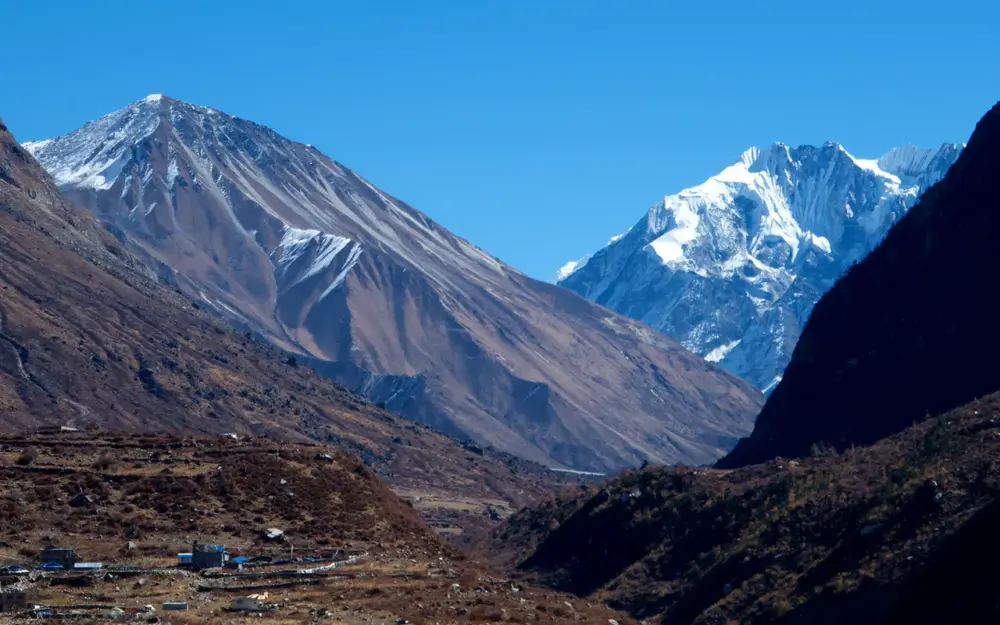
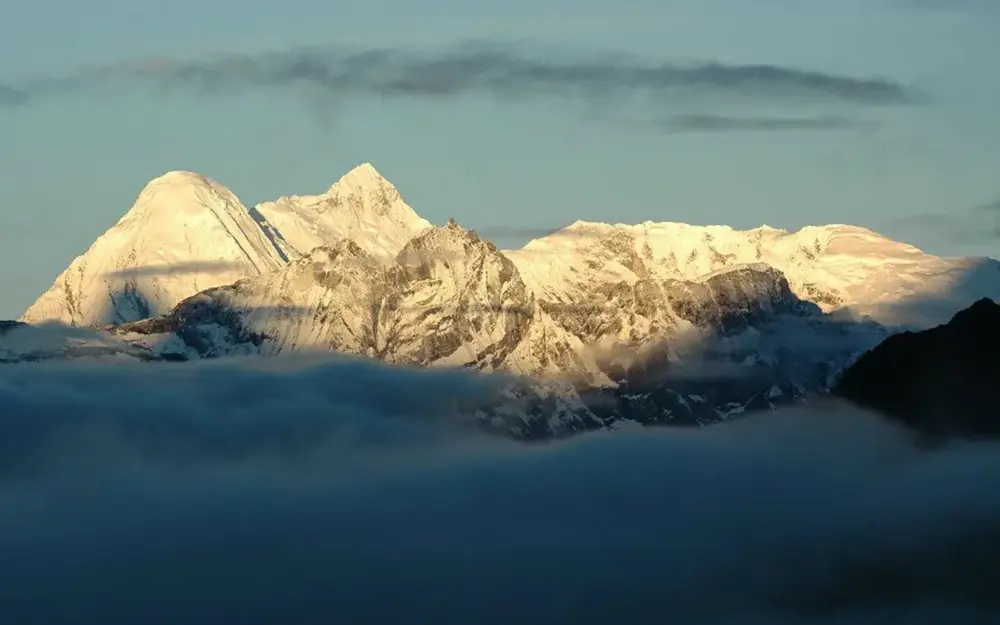
Yes, the trek provides a beautiful sight of the Langtang, Ganesh Himal, and other mountain ranges situated in the Himalayas during clear weather.
Helambu is normally less crowded than the Everest and Annapurna trekking trails; it is also a more peaceful trekking trail.
Yes, there are several trekking agents who would tailor the program and make it as per your time, fitness, and interests.
Yes, it is possible to hire guides and porters to make the trek easier, more organized, and more comfortable for travelers.
This trek is a blend of mountain scenery, cultural village experience, moderate trekking, and tranquil trails near Kathmandu in a single fulfilling trek.


 Write a Review


