
Talk To Expert
Mail Us

Trip Duration
11 Days
Group Sizes
2-20 People
Difficulty
Moderate
Max. Altitude
3870 m
Activities

Meals

Accommodation
Tamang Heritage Trail Trek is an 11 day cultural and mountain trek that will take you through the traditional Tamang villages, natural hot springs, forest trails and the beautiful Langtang region located north of Kathmandu. The trip is a nice option among the people who wish to have a trekking experience that involves not only walking on mountains but also having a cultural experience. The path allows you time to walk at a more relaxed pace, stay in the local villages, and have another aspect of trekking in Nepal.
This trek is well suited for travelers who enjoy cultural experiences alongside mountain walking. There are days of consistent uphill walking and increased walking time, yet the path is not too difficult and can be handled by trekkers who are reasonably fit and well prepared. This trek is village based, which makes it feel more related to life in the village than other routes that are only aimed at getting to a destination.
At Mega Treks and Expedition, we have guided many travelers through the Langtang region and understand the practical details that make a trip run smoothly. Our group will take care of transport, permits, accommodation organization, and trekking assistance during the trip. As this trail is a mix of cultural villages and mountain trekking, it is more comfortable to have a team familiar with the road conditions and the local people.
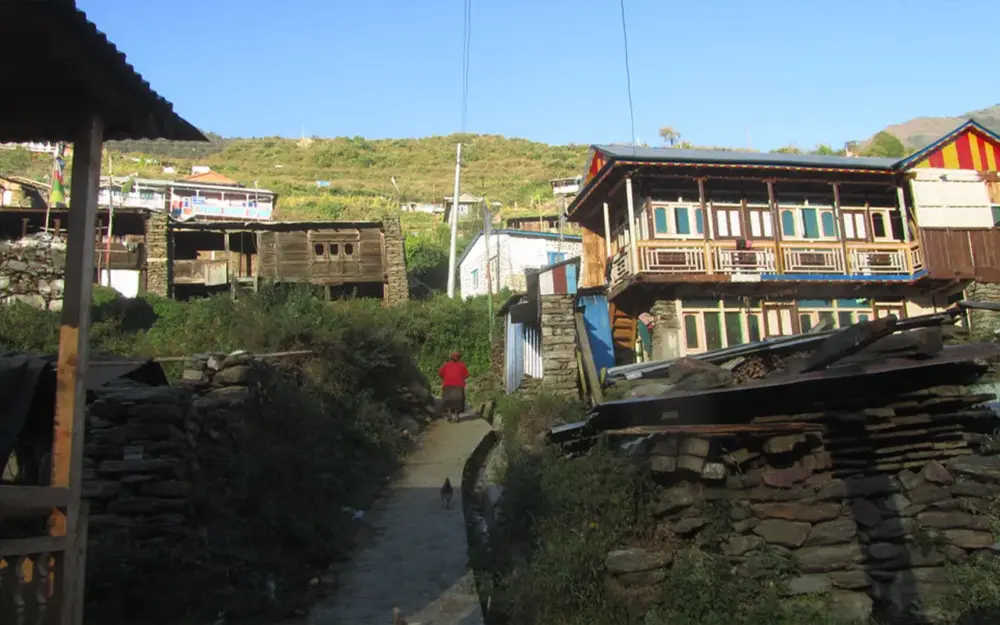
The Tamang Heritage Trail Trek Package is a good combination of culture, walking and mountain views. The trail goes through Tamang settlements where the visitor is able to see local traditions, architecture, food and daily life that is a reflection of the heritage of the area. Gatlang, Tatopani, Thuman and Briddim are some of the stops that make this route have a unique touch that is not similar to the more commercial trekking regions.
As the journey moves on to Lama Hotel, Langtang Village, and Kyanjin Gompa, the trip slowly turns out to be not so much cultural village trekking but a more traditional mountain trail. This renders the trip particularly fulfilling to tourists who desire diversity on one itinerary. The itinerary of our Tamang Heritage Trail Trek will be designed in a practical way so that guests do not feel in a hurry to complete the route.
This Tamang Heritage Trek Nepal is also a way to help the local communities in which tourism has a significant role in the livelihoods of the villages. The tea house accommodation, local food and the guide services are all direct contributors to the local economy. This trip is a rewarding balance for travelers who want a mix of cultural experiences and mountain trekking.
We will pick you up from your hotel in Kathmandu in the early morning and begin the drive north toward Syabrubesi. The road follows the Trishuli River for much of the way, passing through market towns and small villages. The drive takes around six hours depending on road conditions, and there are stops for tea and lunch along the way.
By the time you arrive in Syabrubesi, you will have a good sense of how the landscape changes as you leave the valley. Our team will check you in at your teahouse and go through the next day’s route with you over dinner. Rest well and prepare for your first full day of walking.


This is your first proper day on the Tamang Heritage Trail Trek and it sets the tone for what is ahead. The trail climbs steadily through rhododendron and pine forest before opening into the hilltop village of Gatlang. This is one of the oldest Tamang settlements in the region, with stone houses built close together and a small gompa that overlooks the whole valley. The views of Ganesh Himal from here are wide and clear on a good day.
Our guide will take you through the village and introduce you to the community-run teahouse where you will spend the night. The meals here are cooked by local families and give you an early taste of Tamang hospitality.

This walk today leads along a ridge path with panoramic views and then drains away to the valley of the Chilime River and then ascends to Tatopani again. The path goes by a number of small hamlets where you might meet locals weaving or tending animals. Tatopani means hot water in Nepali, and the village lives up to its name.
There are natural hot springs here where you can soak at the end of the day, which most trekkers find very welcome after a full day on the trail. We will arrange your entry to the springs and make sure you have time to enjoy them before dinner. The teahouse in Tatopani is run by a local family and the food is good and hearty.
The trail from Tatopani to Thuman is one of the longer cultural stretches of the Tamang Heritage Trail Trek Package. You cross the Chilime suspension bridge and climb steadily through terraced farmland and forest. Thuman is a quieter village and one of the less visited stops on the trail, which means the experience here feels more private.
The teahouse is simple but comfortable, and the family who runs it has been hosting trekkers for years. Thuman sits above the valley with good views in the evening light. During dinner our guide will tell you about the Tamang people and their traditions, and you may ask as many questions as you want.
It is a shorter day on walking time today, and you have more space to appreciate the surroundings at a slow pace. The trail descends and then rolls through forested hillsides before arriving at Bridhim.
This village is one of the last stops on the Tamang Heritage circuit before you join the main Langtang Valley trail. Bridhim has a warm and welcoming feel, and the teahouses here are a little more developed than the earlier villages. This is a nice spot to relax your legs and get ready to climb that starts tomorrow. Your gear will be inspected by our team and you will be ensured that you are prepared to go to the higher altitude section.
The trail leaves Bridhim and joins the main Langtang Valley route, and starts to follow the Langtang River upstream. This part has a beautiful and thick forest, and the trail is lined with high bamboo, oak, and rhododendron. You might spot langur monkeys and various birdlife if you walk quietly and keep your eyes open. Rare species such as red pandas live in the region but are seldom seen.
Lama Hotel is a collection of teahouses at the edge of the forest and serves as a popular rest stop for trekkers heading up the valley. It is not a single hotel but a cluster of teahouses that have grown up around the trail over time. We will settle you in and make sure you have a good meal and enough rest before tomorrow.
This is a significant day on the trek because you gain over 1000 metres in altitude. The trail climbs steadily through forest that gradually opens into wider meadows and pastureland. Langtang Village was largely rebuilt after the 2015 earthquake and the community has shown real strength in coming back together.
Walking through the village is a meaningful experience and our guide will talk you through what happened here and what the recovery has meant for the local families. The mountain views from Langtang Village are wide and clear, and the air already feels noticeably thinner. Drink plenty of water, eat a good dinner, and take it easy for the evening.
The trail from Langtang Village to Kyanjin Gompa is one of the most rewarding sections of the entire Tamang Heritage Trail Trek itinerary. The valley opens up fully as you walk, with views of Langtang Lirung and surrounding glaciers on your left and green yak pastures stretching ahead.
Kyanjin Gompa is the highest overnight stop on this trip and it has a working monastery, a small cheese factory, and a cluster of teahouses that have served mountaineers and trekkers for decades. We will arrive in time for you to rest and then take a short walk above the village to look at the glacier up close. The evening sky from here on a clear night is worth every step of the climb.
Today you begin the return journey down the valley. Going downhill is easier on the lungs but harder on the knees, so take your time and use trekking poles if you have them. We will follow the same trail back through Langtang Village and continue all the way down to Lama Hotel.
The descent is long but the forest sections are pleasant and the pace tends to feel quicker on the way back. You will have walked these paths before which also means you know what is coming, and that can make the day feel more comfortable. Lama Hotel is a good place to relax over dinner and share stories from the higher section of the trek.
The final day of walking brings you back down through the forest to Syabrubesi. The trail is well worn by this point and the descent is steady. Many trekkers find this last walking day a chance to reflect on the whole journey and to appreciate how much ground they have covered.
You will reach Syabrubesi early afternoon and you have time to shower, change into clean clothes and have a good meal at one of the restaurants here before you settle down to sleep. You will have our guide with you all day and he will make any last minute arrangements with you regarding the next morning drive.
We will arrange your ride back to Kathmandu by bus or jeep early in the morning. The drive is about six to seven hours and is along the same road as on Day 1 and on the river. It is a long ride but a satisfying one.
Once you reach Kathmandu, you will have done a complete circuit of the Tamang Heritage Trail and the Langtang Valley. Our team will drop you at your hotel in Thamel or wherever you are staying. If you need help with onward travel, hotel extensions, or any arrangements, just let us know and we will sort it out.

You can cutomize this trip as per your requirements if met the proper guidelines.


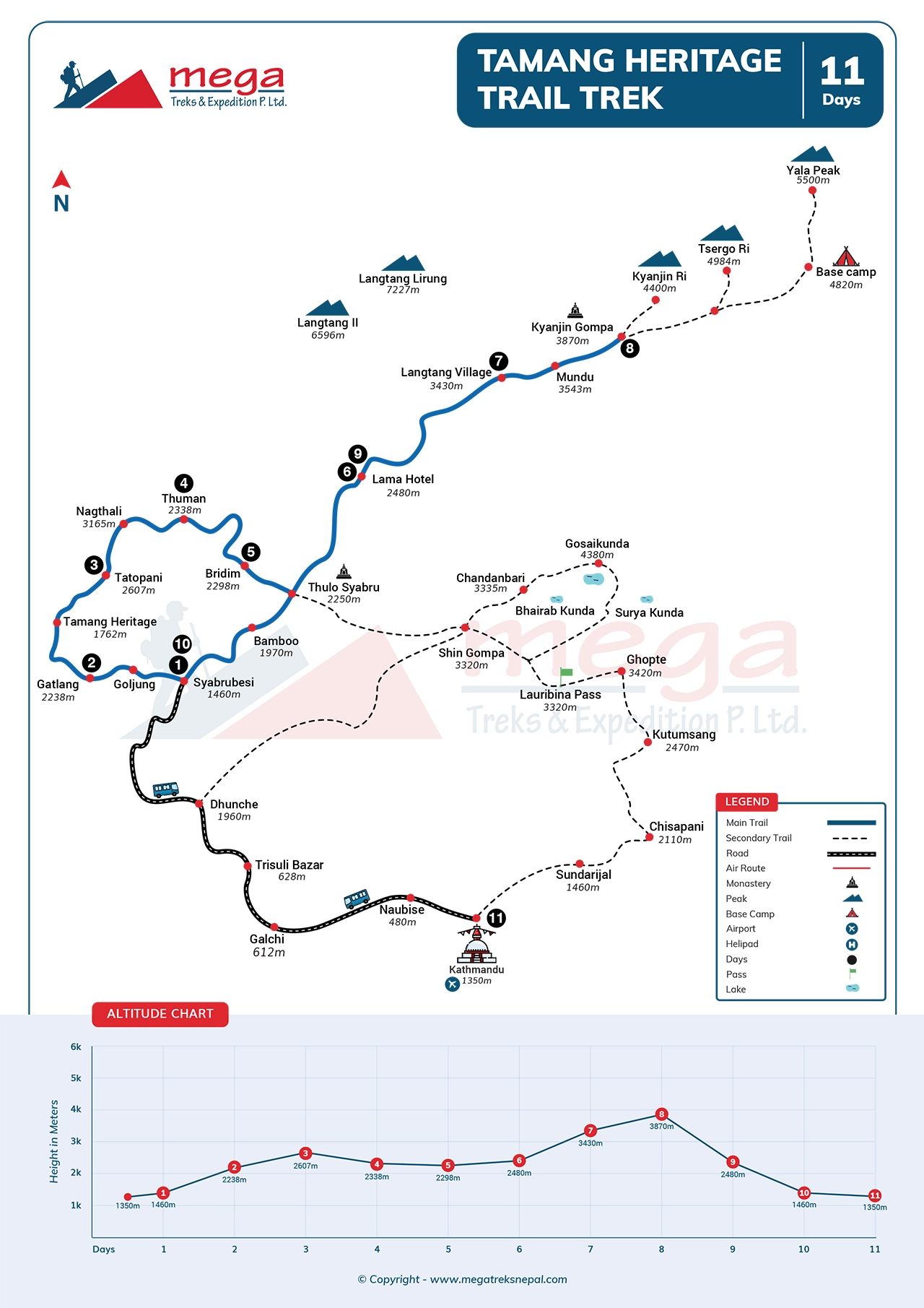
The Tamang Heritage Trail Trek sits at a moderate level of difficulty. The daily walking hours range from four to seven, and the trail involves a fair amount of uphill and downhill on uneven paths. You do not need to be an experienced trekker, but a reasonable level of fitness makes the experience much more enjoyable.
We recommend doing regular walks of two to three hours, at least three times a week, for four to six weeks before your trip. The Tamang Heritage Trail Trek Package has its summit at Kyanjin Gompa 3870 metres and it is possible to experience altitude sickness at any age and irrespective of fitness. Our guides will be trained on awareness of the altitude and will be tracking your well-being during the trek.
Tamang Heritage Trek Nepal can be undertaken during spring, between March and May or in autumn between September and November. These are the most predictable months of the year and have the clearest views. The spring is warmer and rhododendrons bloom on the lower trail, whereas autumn has cooler air and highly predictable skies once the monsoon has cleared.
December to February is the cold season with temperatures dropping particularly in the higher altitudes, yet the trail is still accessible and teahouses are not closed. Monsoon season from June to August brings heavy rain and leeches on the lower sections, though the forest is lush and the villages are quieter. We advise against the monsoon unless you are experienced with wet trail conditions.
Most visitors to Nepal can get a tourist visa on arrival at Tribhuvan International Airport in Kathmandu. You will require a valid passport of at least six months validity, a passport size photograph, and the visa fee in US dollars or equivalent. Nepal tourist visa fees are subject to change, so please check the latest immigration rates before travel.
This trek requires the necessary trekking permits, including Langtang National Park entry permits and any current trekking registration requirements. We will take care of the permits on your behalf and will add the cost to your package. Bring two passport photos and a copy of your passport, when you come.
At Mega Treks and Expedition, health and safety are important priorities on the trail. Prior to the trek, we will provide our team with some fundamental rules of altitude such as the need to remain hydrated, walk slowly, and inform your guide in case you feel unwell. The Tamang Heritage Trail Trek is gradual in gaining altitude, which aids in the process of acclimatisation, however, each individual reacts differently. On all our treks we carry a basic first aid kit and a pulse oximeter.
Travel vaccinations that we suggest prior to your trip include hepatitis A and B, typhoid, and tetanus. It is recommended to carry personal medicines, like altitude sickness pills like Diamox. Before the trek, please consult your doctor in case you have any medical conditions.
The Tamang Heritage Trail Trek Package includes transportation between Kathmandu and Syabrubesi by local bus unless a private jeep upgrade is selected., including the pick up in Kathmandu and the drop off at the end of the trek. The route to Syabrubesi is usually reached by local bus; this is the most used mode of transport by our clients. In case you want a more comfortable and flexible ride, we can have a private jeep at a higher price.
We operate jeep rental services in Nepal and know this road well. It is sometimes rugged, particularly after a shower, and a personal car will allow you more flexibility in making stops and timing. Either way you go, our crew will ensure that the ride is as comfortable as possible.
Travel insurance is not optional on this trek. It is a requirement. Make sure your policy covers high altitude trekking up to at least 4000 metres, emergency evacuation, and medical treatment abroad. Helicopter evacuation from the Langtang region in an emergency can cost several thousand US dollars, and without insurance that cost falls entirely on you.
We recommend checking your policy details carefully before you travel. Some standard travel insurance plans exclude trekking activities, so read the fine print. If you need help finding a suitable policy, our team can point you toward options that other Mega Treks and Expedition clients have used. Share your policy number with us before the trek starts so we have it on file.
If you want to do more after completing the Tamang Heritage Trail Trek, there are several good options. Many of our clients add a few days in Kathmandu to visit the Pashupatinath temple complex, Boudhanath stupa, and the markets of Thamel. Others extend into other trekking regions such as the Annapurna Circuit or Everest Base Camp.
We can also arrange a short side trip to Pokhara, which is around five hours from Kathmandu and is one of the most pleasant cities in Nepal. For those interested in a longer adventure, the Langtang region also has routes to Gosaikunda, a sacred alpine lake at 4381 metres. Just let us know what interests you and we will design an extension that fits your schedule and budget.
The Tamang Heritage Trek Nepal package covers accommodation, meals as listed in the itinerary, permits, a guide, and transport. There are still personal expenses that you should budget for. These are your international flights, travel insurance, visa fees, tips to your guide and porter, personal shopping and any snacks or drinks not included in the included meals.
Hot showers at teahouses sometimes cost a small extra charge. Charging devices and wifi, where available, may also have a small fee. We suggest budgeting between USD 15 to 25 per day for personal extras on the trail. In Kathmandu, costs depend on your spending habits, but having USD 100 to 150 set aside for arrival and departure days is sensible.
Nepali is the national language, but along the Tamang Heritage Trail Trek itinerary you will also hear the Tamang language spoken widely in villages. English is understood at most teahouses and teahouses on the route, and our guides are fully fluent. In more remote villages, a local guide who speaks the regional language makes a real difference in how much you get to connect with the community.
Mobile coverage exists in parts of the trail but is not reliable throughout. Ncell and NTC are the main providers and you can buy a local SIM card in Kathmandu for very little. We recommend downloading offline maps before you leave the city, as internet access in teahouses can be slow and inconsistent.
There are a few things we ask all our clients to be mindful of on the Tamang Heritage Trail Trek. Do not remove mani stones, prayer flags, or any religious items from where they have been placed. Do not walk around stupas or mani walls in an anticlockwise direction, as this is considered disrespectful in Buddhist practice.
Do not give money or sweets to children along the trail, as this encourages dependency and is not good for local communities. Do not play loud music in villages or near monasteries. Do not litter on the trail. Please carry a reusable water bottle and use water purification tablets rather than buying plastic bottles at every stop. These small things make a genuine difference to the communities and environments you are passing through.
Tamang Heritage Trail Trek Package welcomes photography, but one must always seek permission before taking photographs of people, especially in households or during religious ceremonies. Majority of the people are pleased when they are photographed provided one approaches them in a polite manner, but it is a question of respect to seek permission first. In Nepal, the use of drones is regulated and one needs a permit to fly anywhere in the country by the Civil Aviation Authority of Nepal.
Flying drones without a permit is illegal and can result in fines and equipment confiscation. Inside Langtang National Park, there are additional restrictions. If you plan to bring a drone, let us know in advance and we will help you understand what is needed. Mega Treks and Expedition does not encourage unauthorised drone use on any of our routes.
If this is your first time trekking in Nepal, there are a few things that will help you settle in quickly. Arrive in Kathmandu at least one full day before the trek starts so you can sort out last-minute gear, get used to the city, and meet your guide without any rush. Pack light. If porter support is included in your package, your main load will be carried, but you should still keep your daypack light. The teahouses provide blankets so you only need a sleeping bag liner.
Bring layers rather than heavy clothing. Drink water throughout the day even if you do not feel thirsty, as the altitude and dry air dehydrate you faster than you expect. Walk slowly and do not try to keep up with faster trekkers. Our guides set a pace that suits you, not the group average. Most importantly, be patient and enjoy the pace of life in the villages. That is where the real experience of this trek lives.
Tamang Heritage Trail Trek is a moderate trekking trail that entails a combination of cultural village trekking and mountain trekking days. It can be done comfortably by travelers with moderate fitness, but there are some hilly climbs and days at higher altitudes that demand consistent effort and good pacing.
Past experience in trekking will be beneficial, but not essential in this route. A lot of first time trekkers do so successfully when they train and keep up with the pace of the guide during the journey.
Generally the best seasons to do this trek are spring between March and May and fall between September and November. These are the months that tend to have a more stable weather, comfortable temperatures during trekking, and the trail conditions are more favorable to walk.
The altitude may have an impact on certain travelers particularly as the road moves on to Langtang Village and Kyanjin Gompa. To minimize risks, our guides accompany guests during the trek and promote adequate hydration, rest, and slow walking.
The main accommodations are in local tea houses and village lodges along the way. Facilities are usually basic but comfortable to trekking, and more basic services in the higher mountains.
The meals that are included are as per the itinerary and the common trekking food includes rice, noodles, soup, potatoes, eggs, bread and tea house meals. The food options can be reduced as you ascend to higher altitudes.
Yes, Tatopani is also the place of natural hot springs and this is one of the places that many travelers will stop by during the trek. Availability can be based on the local conditions and timing, yet it is one of the pleasant cultural aspects of the route.
Yes, individuals can join this trip. In Mega Treks and Expedition, we are able to organize individual departures or assist individual travelers to join group departures where feasible.
Yes, this trekking route is highly advised to be covered by travel insurance. Your insurance must be preferably inclusive of mountain trekking, emergency medical assistance and evacuation assistance in case of necessity.
Kathmandu to Syabrubesi is approximately 120 to 130 km depending on the road route. The drive usually takes 6 to 7 hours depending on traffic, weather, and road conditions.
Yes. This trek requires specific trekking permits, and our team will arrange all the necessary paperwork for your trip.
Wifi is sometimes available in some tea houses, but it is often very slow or unreliable. The coverage of mobile networks is also limited in some areas of the route.
Yes, most trekking lodges have charging facilities, normally at an additional fee. Higher places may not be as accessibly powered and a power bank can be convenient.
You should be equipped with trekking shoes, layered clothes, warm jacket, water bottles, personal medicine, toiletries and other trekking requirements. Once we book our team, it will be able to provide a full packing list.
Yes, the itinerary may be modified frequently, based on your time, fitness and travel plans. It is also possible to negotiate custom trip extensions and personal arrangements prior to departure.
Tipping is optional, but a typical form of rewarding the efforts of trekking personnel. The number will be determined by your satisfaction and preference.
It is not guaranteed that there will be ATM connectivity all the way through the trek especially in small villages. We recommend that you carry with you enough Nepali cash in Kathmandu to meet personal expenses and optional services.
This path provides both of them, although the initial section is more cultural village based whereas the latter is more mountain oriented. This mix renders the trek attractive to those who desire diversity.
Yes, beginners with reasonable fitness and proper preparation can join this route. The trekking is done at a slow pace and thus the trip is appropriate to most first time trekkers.
At Mega Treks and Expedition, we emphasize on pragmatic planning, local support with experience, and well administered trekking plans. Our crew strives to ensure that the journey is comfortable, organized and enjoyable throughout the arrival and departure.


 Write a Review


