
Talk To Expert
Mail Us

Trip Duration
8 Days
Group Sizes
2 to 25 People
Difficulty
Moderate
Max. Altitude
4,773
Activities

Meals

Accommodation
The Langtang Valley Trek is an 8 day mountain adventure that will guide you through the villages, forest trails, river valleys and the upper Himalayan terrain to the north of Kathmandu. It is an excellent alternative to those who wish to have a balanced trekking experience without flying locally. The trail will allow you to take your time and walk, acclimate to the altitude, and get acquainted with the culture of the Langtang region at a relaxed pace.
This trek is suitable for travelers with a reasonable fitness level who are prepared for several days of walking in mountain conditions. Although the trail is technically straightforward, it is physically demanding due to long walking days and increasing altitude. We believe in explaining the practical realities clearly so trekkers can prepare with realistic expectations.
We have accompanied numerous travellers along this path at Mega Treks and Expedition, and know the little touches that make the journey easier. Our group will take care of permits, transportation, accommodation organization, and on trail support to allow you to concentrate on the trekking. We also tell the truth about road conditions, as the road to Syabrubesi may be long and rough, depending on the season.
The accommodation on this trek is mainly local tea houses, which are simple but comfortable for mountain travel. Accommodation is generally simple and the facilities become more basic at higher elevations, so we encourage trekkers to travel with realistic expectations rather than expecting hotel standards. Meals are freshly prepared in local teahouses along the route, and popular foods include rice, noodles, soup, potatoes, eggs and hot beverages. Our team will assist in selecting appropriate meals on a daily basis, particularly in higher altitudes where proper eating is of concern.
The Langtang Valley Trek Package is a good combination of mountain scenery, local culture and active walking days without a lengthy expedition schedule. The trail cuts across ancient villages, tea shops, wood trails, yak fields and Buddhist villages that make the journey personal.
The Langtang Trek also contributes to the local communities in a significant manner as tourism is still significant to the families and businesses in the area. The itinerary of our Langtang Valley trek will be at a steady pace since the trip will be safer and more enjoyable with sufficient rest and gradual increase in altitude.
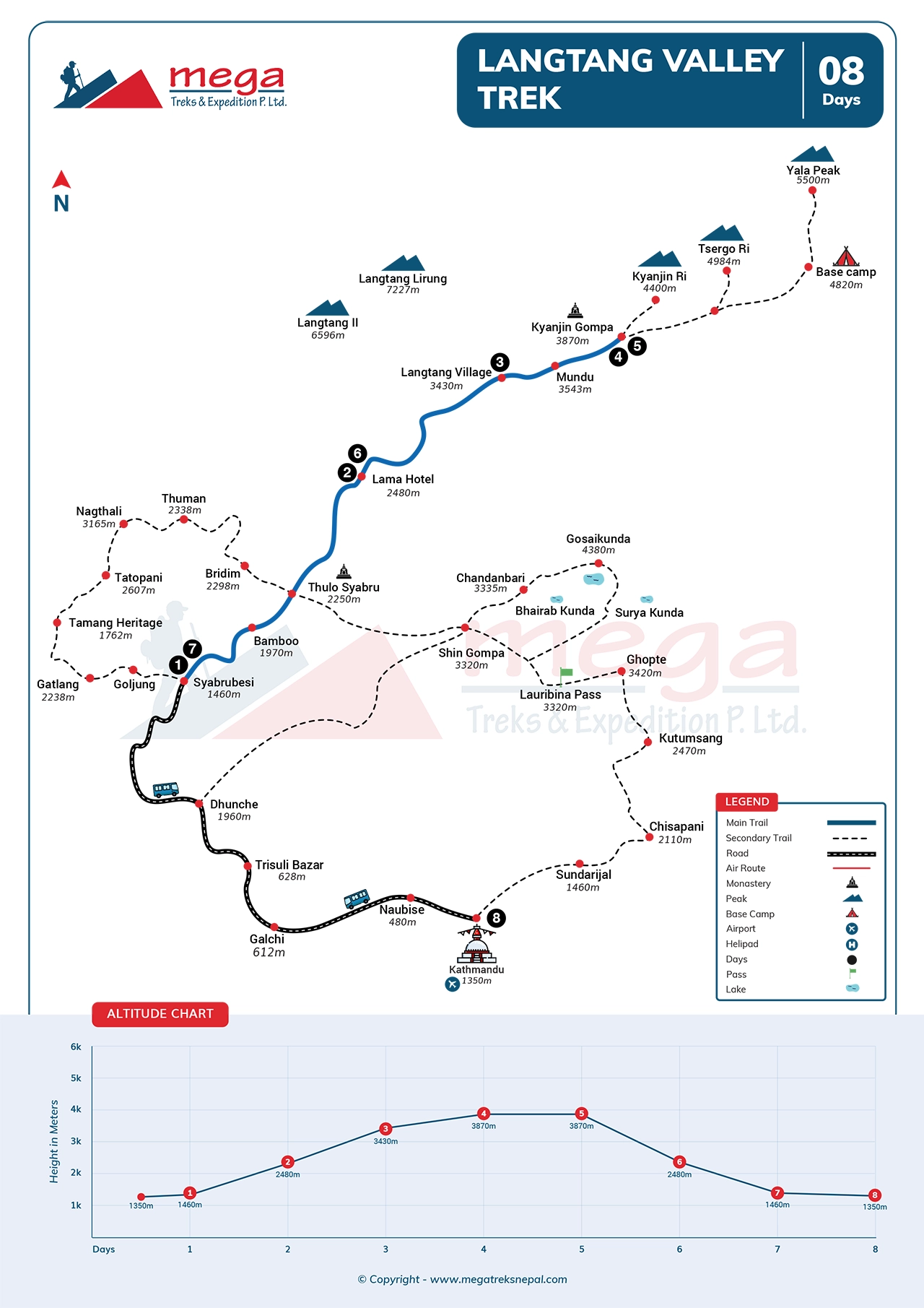
Your Langtang Valley Trek will begin early in the morning with a drive from Kathmandu to Syabrubesi. In Mega Treks and Expedition, our team verifies permits, transport schedule, and the final trip schedule prior to the trip to ensure that travelers start their trip well prepared. This is a long road journey, and we prefer to explain that honestly from the start.
Certain parts of the road may not be smooth particularly after or during the rainy season, hence flexibility is a plus. On the drive, you will pass by local towns, farmland, rivers, and hillside settlements. Once we arrive in Syabrubesi, you can settle into the lodge, organize your trekking gear, and rest properly before the walking begins.


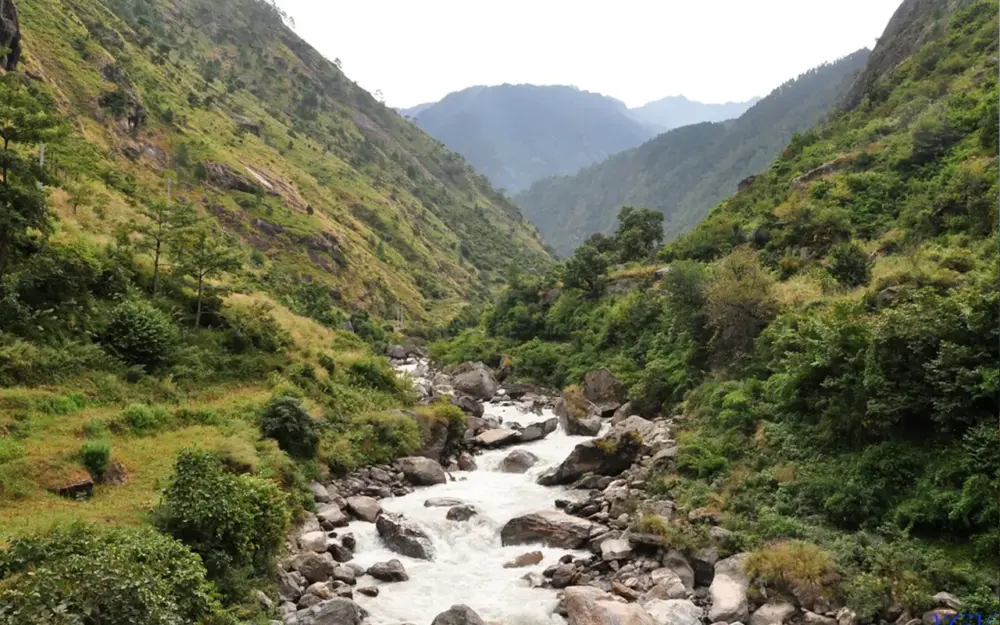
We will start the first day of walking of your Langtang Valley Trek Package after breakfast. This day is more exhausting to many first time trekkers than anticipated since the trail ascends consistently through forested areas, suspension bridges, and riverbanks. The elevation is not too high yet, and the constant uphill walking demands patience and gradual pacing.
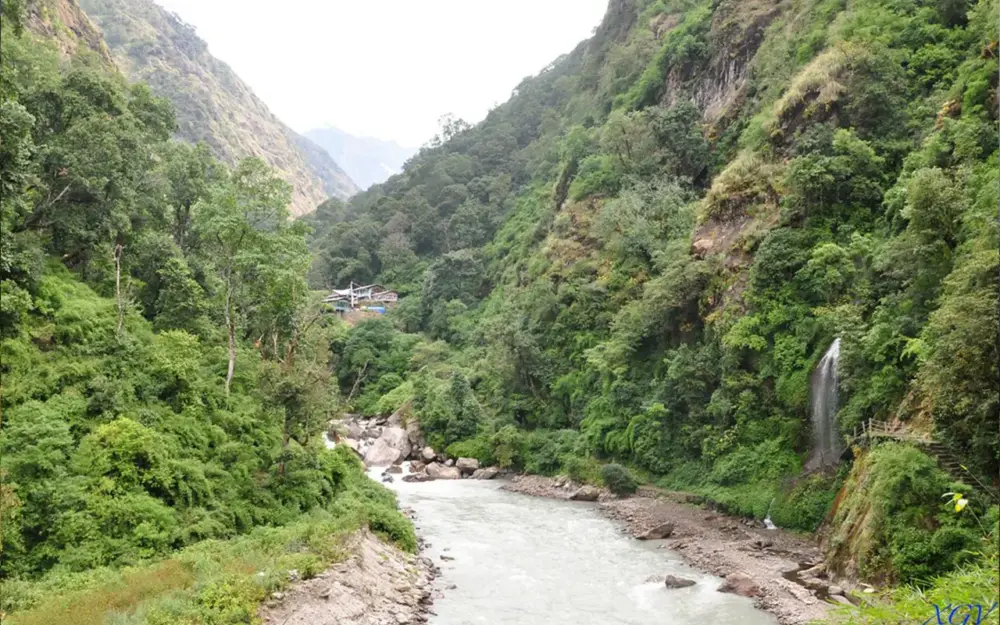
Our group will ensure that the day is relaxed by taking frequent tea, water and short breaks. A large portion of the path will be near the river, and the trail will have a serene feeling. Most of the guests are ready to have a warm meal and rest well by the time we get to Lama Hotel.
We go further into the valley today as the landscape starts to open up. The forest trails gradually disappear behind broader mountain sceneries and most of the tourists begin to experience the actual mountain nature of the trip at this point. The walk is more extended, and the pace is more manageable, but the altitude gain is more noticeable.
Our guide will remind all of us to walk gradually instead of attempting to move too fast at the beginning of the day. Even in cool weather, proper hydration is important. As we approach Langtang Village, you will see local homes, prayer walls, and signs of daily mountain life that make this Langtang Trek feel more personal.
It is a shorter trekking day and this is advantageous since altitude gains significance beyond this stage. After breakfast we will go on to Kyanjin Gompa, over open country, grazing ground, and mountain villages. Although the walking time will be less, our team will maintain a steady pace since it is not a good idea to gain elevation too fast.
When we get here you can relax, take a stroll about the village, or just have a more peaceful afternoon. This part of the Langtang Valley trekking itinerary is scheduled well since a proper rest before the higher climb makes a significant difference.
This is the hardest day of the trip. It is a steep climb and the air is thinner, so the progress is slower than usual even to experienced trekkers. Depending on the weather, trail conditions and your personal condition, our guide will suggest Tsergo Ri or Kyanjin Ri.
We never push trekkers toward the more challenging option simply to follow a fixed plan. In case visibility is low or somebody experiences symptoms of discomfort with the altitude, our team will modify the plan. Fixed schedules always come after safe decisions. After the climb, we return to Kyanjin Gompa for rest.
Today we begin the return walk down the valley. Although downhill trekking aids in the breathing process, several travelers are astonished that long downhill hikes may be more demanding on the knees and legs compared to the upward hikes. This is the reason why we maintain a consistent rhythm and give ourselves breaks.
The day is usually a mental challenge since the route is now familiar, but it remains a complete trekking day. Proper shoes are particularly necessary in uneven places. When we pass villages and trails that you have been over, the journey back may seem to be different in a good way, with less pressure and more time to enjoy the walk.
This is the last trekking day and although most of the path is down, still, one should pay attention to the rocky and uneven parts. After breakfast we shall go, and come back to Syabrubesi at a leisurely rate. At this point, most of the tourists are physically exhausted, and are glad to be nearing the end of the trip.
Our team will make the day easy so that all will be able to complete without undue stress. When we reach Syabrubesi you will be able to have a good meal and rest and spend your last evening in the mountain with the trekking crew.
We will start the drive back to Kathmandu after breakfast. As in the case of the first road journey, the timing of travel is influenced by the road conditions, traffic, and seasonal maintenance work, therefore we never give any unrealistic promises about the actual time of arrival. Mountain road travel in Nepal often requires patience.
This is the return day of many guests, who just want to rest and think after some active trekking days. Our crew will handle the transportation and ensure your transport back to Kathmandu is without any problems. After reaching there, we will take you to your hotel or an agreed drop off point and this will be the end of your Langtang Valley Trek with us.

You can cutomize this trip as per your requirements if met the proper guidelines.


950 US$
The Langtang Valley Trek is a moderate level of trek which can be undertaken by the travelers who have a moderate level of fitness and is willing to walk a few days under the conditions of the mountain. It does not need any technical climbing skills or previous mountaineering experience, and with proper preparation can be accessible to many first-time trekkers. Nevertheless, the expedition involves prolonged walking days over rough paths, consistent uphill climbing, rocky formations, and considerable increase in altitude, making the expedition physically challenging.
The peak of the expedition is almost 5,000 meters, and even shorter ascents may seem more difficult due to the thin air. Altitude sickness is a factor to take into consideration and it is necessary to pace slowly, hydrate and listen to your guide. The Langtang Valley Trek is a very rewarding Himalayan experience both to the beginner and the accomplished trekker with good preparation, realistic expectation and a steady approach.
The Langtang Valley Trek is best done in spring, from March to May, or in autumn, from September to November. These are the two seasons when the trails are clear, the skies tend to be open, and the mountain views are at their most reliable. Spring brings rhododendron flowers in full bloom along the lower sections of the trail, which is genuinely beautiful. Autumn offers crisp air and steady visibility after the monsoon clears.
We do take groups during winter, from December to February, if you are comfortable with cold nights and some snow on the higher sections. The trail is quieter and the views can be clear, but temperatures at Kyanjin Gompa drop below freezing. The monsoon season from June to August brings heavy rain, leeches in the forest, and low cloud that blocks the mountain views most days. We generally advise against it unless you have a specific reason.
Nepal is welcoming for most nationalities. Citizens of most countries can get a tourist visa on arrival at Tribhuvan International Airport in Kathmandu. The fee is currently USD 30 for 15 days and USD 50 for 30 days, payable in cash or by card. Passport-size photos may be required depending on current immigration procedures. SAARC country nationals from India and some others have different arrangements.
In the case of the Langtang Valley Trek Package, you will require the necessary trekking permits that will be required during the time of travel, such as the Langtang National Park entry permit and any existing trekking registration fees. Our team handles both of these for you in Kathmandu before departure, so you do not need to worry about the permit offices or the queues. We have done this process many times and we know exactly how to get it done without delays.
Altitude sickness is the main health consideration on the Langtang Valley trekking itinerary. You are climbing to nearly 5,000 meters, and while the itinerary is structured to allow gradual acclimatization, individual responses to altitude vary and cannot be fully predicted. Our guides carry pulse oximeters and a basic first aid kit at all times. They are also trained to be able to detect the symptoms of altitude sickness and make the call to descend where necessary.
We ask that you listen to your guide and report any symptoms honestly, even if you feel pressure to push through. We suggest that every trekker should visit a travel health clinic prior to coming to Nepal. Hepatitis A, Typhoid and Tetanus vaccinations are usually recommended.
Diamox, a drug to prevent altitude sickness, can be found in Kathmandu pharmacies and is worth discussing with your doctor prior to your travel. Drink only treated or bottled water on the trail and use hand sanitizer regularly. Our teahouse partners maintain clean standards, but stomach issues can happen on any mountain trek.
We operate the road transport for this Langtang Trek in-house, which means we use our own vehicles and our own trusted drivers rather than outsourcing to a third party. The drive from Kathmandu to Syabrubesi is approximately seven to eight hours by jeep or local bus. We use jeeps for private groups as they handle the mountain roads better and offer more comfort for longer stretches. For budget group departures, we use local buses which are an experience in themselves and perfectly safe.
Our drivers know this road personally. They have driven it in all seasons and they understand where to be cautious. Parts of the road beyond Dhunche can be rough, particularly after the monsoon, and landslides occasionally cause short delays. We communicate road conditions to you properly before departure.
Travel insurance is not optional for this trip. We require all trekkers joining a Langtang Valley Trek Package with Mega Treks and Expedition to carry comprehensive travel insurance that includes emergency helicopter evacuation cover. The reason is simple: if you need to be evacuated from Kyanjin Gompa due to altitude sickness or injury, a helicopter evacuation can cost between USD 3,000 and USD 6,000 depending on the location and conditions. Without insurance, that cost falls directly on you or your family.
Check your policy carefully before you travel. Many standard travel policies do not include coverage above a certain altitude or for trekking activities specifically. Look for a policy that explicitly covers high altitude trekking, emergency evacuation, and medical repatriation. World Nomads and similar specialist travel insurers are popular choices among our clients. Keep a printed copy of your policy number and emergency contact with our guide at all times on the trail.
Many of our clients choose to add extra days before or after the Langtang Trek to explore more of Nepal. Kathmandu itself deserves at least two to three days for the temples of Pashupatinath, the stupa at Boudhanath, and the old streets of Thamel and Patan. If you have more time, we also operate treks to Gosaikunda Lake, which sits at 4,380 meters and can be combined with the Langtang Valley trekking itinerary to create a longer loop.
We can also arrange a trip to Chitwan National Park for wildlife viewing, a tour of Pokhara and the Annapurna region, or a rafting day on the Trishuli river, which you actually pass by on the drive to Syabrubesi. If you are thinking about adding days on either side of your Langtang Trek, just let us know when you get in touch and our team will put together an honest recommendation based on your available time and interests.
We believe in being clear about costs from the beginning. The Langtang Valley Trek Package price covers your guide, porter, permits, accommodation during the trek, meals as listed in the itinerary, and ground transport. What it does not cover are your international flights, your Kathmandu hotel nights before and after the trek, your Nepal visa fee, your personal travel insurance, tips for guides and porters, and drinks beyond water and tea with meals.
On the trail, you will spend extra on things like hot showers, charging your devices, extra snacks between meals, bottled water if you prefer it over filtered, and any personal purchases in the villages. These extras can be estimated to cost USD 15 to 25 a day. Tipping is optional but it is very much welcome. We also have some hard-working guides and porters, particularly in difficult situations, and a tip at the end of the trek is significant to them and their families.
The national language is Nepali and Tamang is the most spoken language in the Langtang region. Both our guides speak both Nepali and English and hence we can easily communicate with them during the trip. In the villages and teahouses, most lodge owners understand basic English and are used to working with international trekkers. You do not need to speak Nepali to enjoy this trek, though learning a few words like Namaste and Dhanyabad goes a long way and is always warmly received.
Mobile network coverage on the Langtang Trek is limited. You will have signal in Syabrubesi and sometimes in Langtang village, but it drops significantly above that. Kyanjin Gompa has some WiFi available in the teahouses for a small fee, but the connection is slow and unreliable. We advise clients to let family and friends know they may be offline for several days. Our guides carry satellite-enabled communication devices for emergencies. For day-to-day contact, WhatsApp works when signal is available.
There are a few things we ask all our clients to keep in mind out of respect for the environment and the communities you will be walking through. Do not leave any waste on the trail or in the villages. Pack out everything you bring in, and use the designated toilets at teahouses. Do not purchase or collect any plants, wildlife products, or stones from the national park. It is illegal and harms the ecosystem that makes this trek what it is.
Do not drink alcohol excessively at altitude. It affects your body more than you expect at elevation and can mask symptoms of altitude sickness. Do not touch or disrupt religious monuments, prayer wheels, or mani walls. Always walk clockwise around them as is the local custom. Do not give money, sweets, or gifts to children on the trail, as it creates dependency and is discouraged by local community organizations. Finally, please do not leave reviews or social media posts that misrepresent conditions on the trail, as other trekkers rely on accurate information to plan safely.
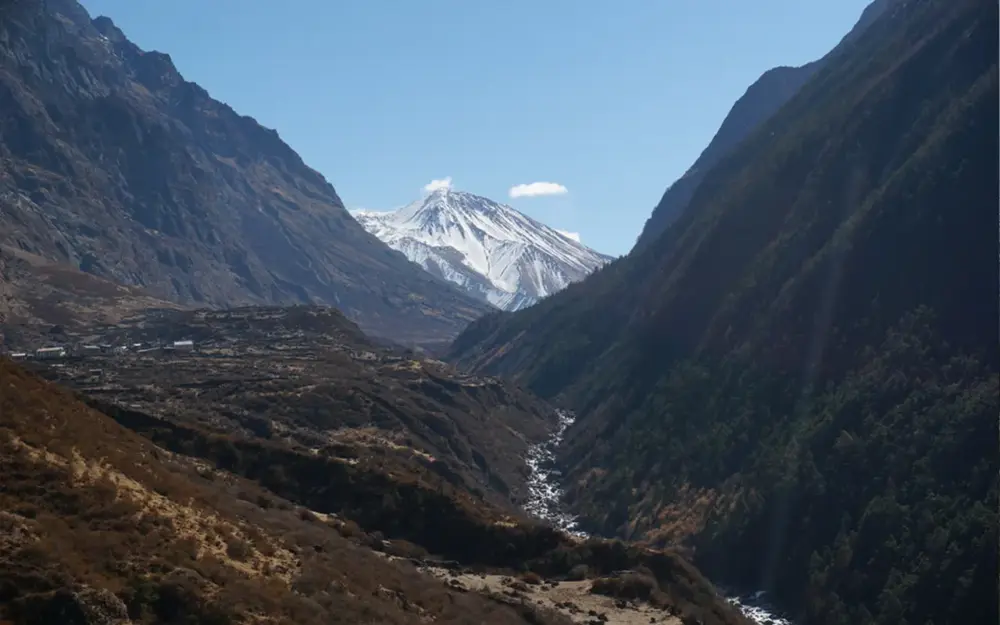
The Langtang Valley is photogenic at every stage, from the forest trail to the high alpine ridgeline. You are welcome to photograph freely throughout the trek. We only ask that you always request permission before photographing local people, particularly in villages and monasteries. A smile and a gesture go a long way, and most people are happy to be photographed when asked respectfully. Inside the Kyanjin Gompa monastery, photography may be restricted in certain inner areas. Our guide will let you know when this applies.
Drones require a permit in Nepal and are not permitted inside Langtang National Park without prior authorization from the Department of National Parks and Wildlife Conservation. We advise against bringing a drone unless you have arranged the necessary permits in advance, which is a process that takes time and coordination in Kathmandu. Unauthorized drone use can result in fines and confiscation. If you are a photographer or filmmaker with professional needs, reach out to us before your trip and our team will help you understand what is officially possible.
If this is your first time trekking in Nepal, we want you to be prepared rather than just excited. Start your physical preparation at least six weeks before the trek with regular cardio exercise, hill walking, and some time with a loaded daypack to get your back and shoulders used to carrying weight. You do not need to be an athlete, but a base level of fitness will make the experience far more enjoyable.
Arrive in Kathmandu at least a day or two before the trek begins. Jet lag is real and altitude affects you more when you are tired. Use those days to sort your gear, meet our team, walk around Thamel, and eat well. Bring layers because the temperature difference between Syabrubesi and Kyanjin Gompa is significant. A good quality sleeping bag rated to at least minus ten degrees Celsius is important. We rent sleeping bags and trekking poles in Kathmandu if you prefer not to travel with them, and our team can point you to trusted rental shops.
The Langtang Trek is rated as moderate. You do not need technical climbing skills or prior mountaineering experience, but you should be comfortable walking six to seven hours a day on uneven terrain.
No specific prior experience is required, but it helps to have done some hill walking or multi-day hiking before arriving. If this is your very first time on a mountain trail, we recommend doing some preparation walks at home with a daypack and comfortable boots.
Spring from March to May and autumn from September to November are the two best windows. During these seasons the weather is stable, the trails are clear, and the mountain views are reliable.
We will organize your transportation between Kathmandu and Syabrubesi. In the case of private groups we use our own jeeps that can comfortably navigate through the mountain roads. In case of group departures, we use local buses.
The trekking permits that will be required during the time of travel include the Langtang National Park entry permit and any existing trekking registration permits. Our team arranges the required permits before departure. You do not need to visit any government office yourself.
Yes, altitude sickness is a real consideration on the Langtang Valley Trek. You are going above 4,700 meters, and any person can be affected regardless of age or fitness level.
On the Langtang Trek, accommodation is in local teahouses, family-run mountain lodges. They are as simple as they can be and as comfortable as can be based on the location.
Teahouse menus are extensive with a variety of foods such as dal bhat, noodle soup, pasta, momos, fried rice, porridge, eggs, and others. The food is hearty and is usually dependable, but the further you get off the road the more basic the menu.
Tipping is not mandatory yet significant. Our porters and guides have physically demanding jobs with sometimes difficult conditions, and a tip is a direct and welcome show of appreciation.
Most teahouses will charge your phone or camera though there is a fee charged to use electricity which is normally USD 1 to 2 per charge. Carry a portable power bank in case of emergency since power supply is not always available in all the teahouses, particularly during the evenings.
We highly discourage the use of untreated tap or stream water on the trail. Although the water in Langtang National Park appears clean, it may harbor bacteria and parasites that bring about stomach diseases.
The essentials include good quality trekking boots which have already been broken, warm clothes such as a down jacket, waterproof outer shell, thermal base layers, trekking trousers and moisture wicking trekking tops.
This is a question we are always happy to answer because porter welfare is something we take seriously. Our porters are paid a fair daily wage that meets or exceeds the standards set by the Nepal Tourism Board.
Yes, solo travelers are very welcome on our group departure dates. We run fixed departure dates throughout the trekking season and solo travelers can join any available group.
Our guide will be your first point of contact if you become unwell on the trail. In case of minor problems such as stomach problems, blisters or mild altitude symptoms, our guide will have a first aid kit and be well informed about how to handle such cases.
Yes, we have private departures, which can be tailored to your group schedule, pace of choice and interests. If you want an extra rest day at Kyanjin Gompa, we can build that in.
To reserve a Langtang Valley Trek Package with Mega Treks and Expedition, all you need to do is to contact us either via email or our contact form on the website. We will verify availability and email you the trip details and price and request a deposit to reserve your spot.
The Langtang Valley is centered on Kyanjin Gompa, which is the spiritual and cultural center. Kyanjin Gompa is a significant religious place of the local Buddhists in the Langtang area.
The 2015 earthquake and the avalanche that followed caused devastating damage to Langtang village in particular. Almost the entire village was destroyed and many lives were lost.
We take our responsibility to the environment seriously at Mega Treks and Expedition. We operate under a strict no-litter policy and ask all clients to pack out their waste. We avoid single-use plastics where possible and encourage clients to use reusable water bottles with purification.
950 US$


 Write a Review


