
Talk To Expert
Mail Us

Trip Duration
8 Days
Group Sizes
1 to 25 People
Difficulty
Moderate
Max. Altitude
4065m
Activities

Meals

Accommodation
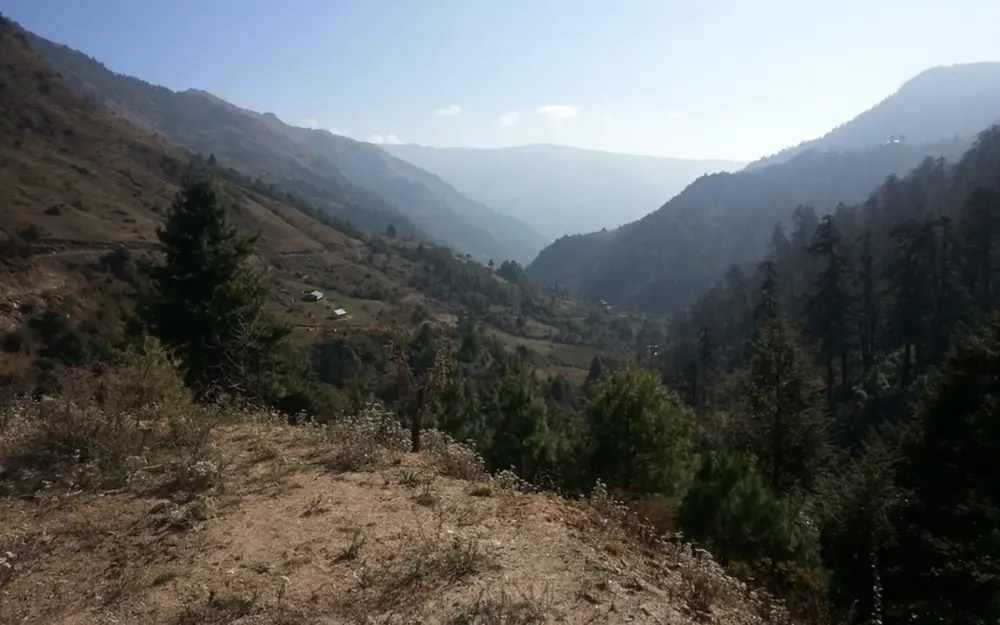
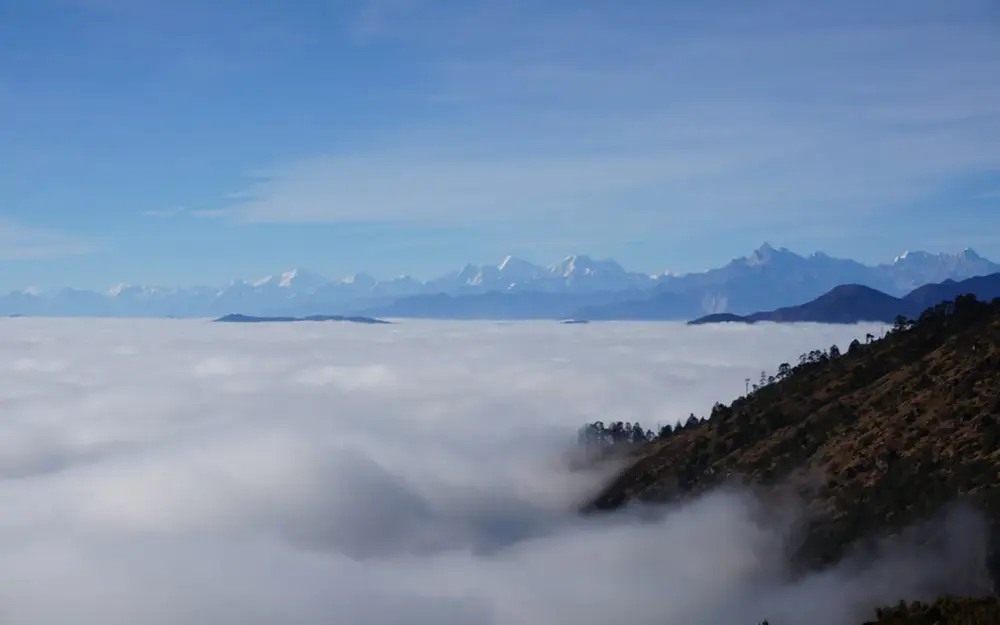
The Pikey Peak Trek is an enjoyable experience that is accomplished in the serene hills of the lower Everest area. It is a great option for travelers who want to experience beautiful mountain views, traditional villages and peaceful walking trails without the hustle and bustle of the busier trails.
The trek starts from Kathmandu and descends to Dhap, traversing through the forests, open hills and hospitable communities before finally arriving at the peak of the trek. The trail has a maximum height of 4,065 m / 13,333 ft) and is a comfortable trek for those seeking to explore the splendour of the Himalayas over 8 days.
This Pikey Peak Trek route is well planned to give the trekker a level pace each day. Overnight accommodation is enjoyed in Dhap, Jhapre, Pikey Peak Base Camp, Lamjura Danda, Junbesi and Phaplu. You’ll pass through quiet scenery, stop by the local communities and taste the simple life of the mountain. Another cultural highlight of the trip is the visit to Thupten Choling Monastery, where one can explore an important religious place before heading back to Junbesi.
The trek is of a moderate level and can be undertaken by beginners and advanced trekkers with good physical fitness. Walking is typically 3–7 hours per day, which should be sufficient to enjoy the environment without running. You’re slowly climbing the ranges from Dhap (2,850m / 9,348ft) to Pikey Peak, so your body is getting used to the higher altitudes. At each stage, the journey is broken up with comfortable mountain lodges, where you can rest and daily meals are prepared fresh to keep you energized.
By selecting a Pikey Peak Trek package, you’ll receive a mix of nature, culture and fun. The trail offers a memorable experience in the Himalayas without the crowds. Each day offers something new to see from the forest trails and ridges of open spaces to the traditional Sherpa villages and quiet mountain viewpoints. The well-planned route is appropriate for those who are seeking a fun adventure but not a high-altitude trek.
Every aspect of the trekking journey is well planned with Mega Treks to ensure a smooth ride and a fun trekking experience. We take care of all your travel, overnight and permit needs and organise the whole trip for you to enjoy and make memories in these amazing mountains.
The initial step of the Pikey Peak Trek is a private jeep tour from Kathmandu to the trekking starting point, Dhap. It requires about 7 to 8 hours to traverse a distance of about 250km. The path winds through small towns, traditional villages, green hills, forests and fields as you head out of the capital. The route dips through small towns, traditional villages, green hills, forests and farmland as you head into the trek.
You will arrive at Dhap (2,850 m / 9,348 ft), where you will get in touch with a local lodge and take time to rest up after the long drive. A quiet village with comfortable accommodation for the first night before starting the day.
On the following day, the trail winds down through peaceful hills and the local villages until it reaches the village of Jhapre, from where you continue to Dhap. This is a great way to ease yourself into the mountain environment and a nice start to the adventure.
The journey on your Pikey Peak Trek starts with a private jeep ride from Kathmandu to Dhap. The road then heads up into the hills as it leaves the capital city and travels through small towns and local villages, forested land and farmland. Once the hustle and bustle of the busy highways is behind you, the scenes get quieter and more peaceful. This is a long but fun drive to get a taste of the areas you will be trekking in eastern Nepal before you start your trek.
The route is about 250 km long and will take about 7 to 8 hours. There will be stopovers for short breaks for stretching and refreshments along the way. The surrounding hills add to the mountain atmosphere and as the elevation slowly rises, the air cools. This drive is also a great introduction to the area you will be exploring for the next few days.
By late afternoon, you will arrive in Dhap (2,850 m / 9,348 ft). It is a quiet village, and you may start your hiking adventure. After checking into your lodge, you are then able to relax and have dinner and prepare your gear ready to go out on the trail on the first day. After a good night’s sleep, you’ll be refreshed and ready to go on your trek.


You will have breakfast and start your first day of trekking from Dhap. The walk is on a gentle hill and quiet mountain roads, through small villages and open farmland. This is a relatively easy walk to help get your feet wet on the Pikey Peak Trek. As you walk along, you will experience the fresh mountain air and the peaceful way of life of the people of this area.
The trek today is about 14 km long and lasts for about 6 hours. The path slowly winds up and down through woods and clear ridges, so you’ll have plenty of time to take it easy. The quiet setting is not too taxing, but allows you to enjoy the natural beauty around you during the trip.
By the end of the day, you will reach Jhapre (2,820 m / 9,249 ft). Once you’re in your lodge, you can unwind, eat a hot meal and get ready for the next leg of the trek, which takes you to higher altitudes.
Today, you’re on your way from Jhapre to Pikey Peak Base Camp. The path slowly rises through quiet woods, open fields and mountain roads. As you climb higher into the mountain, the quietness of the area, as well as the presence of the mountain, grows. The gradual ascent lets you savor the surrounding scenery and enjoy the day.
This trek is about 13 km long and can be completed in 6-7 hours. This gradual rise is for your body to acclimate to the higher altitude as well as for the walk to be a rewarding one. As you head to the base camp, the ride is pleasant in the peaceful environment and fresh mountain air.
By late afternoon, you’ll be at Pikey Peak Base Camp (3,640 m /11,939 ft). Once you have settled into your lodge, you can have an early dinner and rest, as tomorrow you will be getting up early for your sunrise trek up Pikey Peak.
The day starts before dawn with a trek up Pikey Peak. The highlight of the trek is reaching the summit (4,065 m / 13,333 ft). You will be at the top for a while and enjoy the early morning ambience, then you will descend and travel on to Lamjura Danda.
This is about a 16 km walk, which takes about 6-7 hours a day. Once you have returned to the top of the mountain, the path winds through quiet mountain scenery to your overnight accommodation. This walk is both uphill and downhill with good rewards, making it a pleasant and rewarding day’s trek.
From the start of the track, you will reach Lamjura Danda (3,736 m / 12,254 ft) by late afternoon. Once you arrive at your lodge, you can unwind, savor a hot meal and contemplate having reached the summit of the Pikey Peak Trek, then embark on your descent the next day.
Today’s trek leads down to the picturesque village of Junbesi from Lamjura danda. The walk is on quiet mountain trails and through small villages. The trek today is shorter and easier than the rest and you are able to take in the scenery at a leisurely pace.
This walk is around 9km and takes around 3 – 4 hours. The air is warmer and the elevation lower as you go down. After reaching the peak of the trek the day before, the quiet atmosphere and more tranquil trails are scenic and healthy.
The arrival of Junbesi is during the afternoon at an altitude of (2,700 m / 8,856 ft). This is a comfortable traditional Sherpa village to stay the night. Once you have arrived at your lodge, take a rest, enjoy food and get ready for the visit to Thupten Choling Monastery the next day.
Today is spent exploring Thupten Choling Monastery. The trail up to the monastery (3,031 m / 9,941 ft) starts at Junbesi, after breakfast. One can enjoy the quiet surroundings and visit an important religious site in the region on a peaceful walk.
The round trip is about 12 km and takes about 5 to 6 hours. Once you have spent some time in the monastery, you will retrace your steps back to Junbesi. The trail is easy and it’s another chance to see the mountains without all the heavy packing.
You can then unwind at your lodge at Junbesi (2,700 m / 8,856 ft). Have a good dinner and spend time getting ready for the last day of hiking back to Kathmandu.
Breakfast will be served at Junbesi, after which you will set off on your last day of trekking to Phaplu. The trail passes through secluded mountain roads in little villages and lovely areas. The down slopes make the walk comfortable, but help you enjoy those last few hours on the trail.
The journey is about 14 km long and will take about 4-5 hours. The walk is through gentle scenery until it arrives at Phaplu. The Pikey Peak Trek allows you to take your time and enjoy the experience and memories you will gain while walking at a relaxed pace.
At the end of the day, you will be in Phaplu (2,413 m / 7,914 ft). Once you have arrived at your accommodation, you can sleep in, enjoy a great evening in the region and celebrate the successful completion of your trekking adventure before heading back to Kathmandu by car.
The private jeep ride back to Kathmandu will be the last part of the journey from Phaplu. Then it will be back along hill and mountain roads through villages and countryside until you reach the start of the tour. On the return journey, you will travel through villages, hills and scenic countryside, along mountain roads, after breakfast. The final driving phase affords one final chance to enjoy the scenery along your trekking experience.
The drive is about 275 km long and takes about 8 hours. On the way to the capital, the scene changes, eventually to Kathmandu’s bustling streets. The long road trip is more comfortable with the short breaks in between.
Your Pikey Peak Trek ends once you arrive in Kathmandu (1,400 m / 5,493 ft). You can enjoy the wonderful moments of the last 8 days and you can celebrate the completion of this rewarding journey in the beautiful hills of eastern Nepal.

You can cutomize this trip as per your requirements if met the proper guidelines.


A Pikey Peak Trek can be done at various times throughout the year, but at the right time of year, it will be more comfortable and rewarding. Clear skies, comfortable temperatures and stable weather conditions provide an ideal opportunity to enjoy the trail and spend more time outdoors. The weather is also a factor in determining the views, track conditions and the experience of your trek.
This trek is popular during the spring (March to May). The forests turn green and numerous flowers are growing along the way. The days are typically warm and it’s great to go on a long walk. This season, this is also a good time to be at viewpoints without being subjected to very cold weather.
The autumn season (September to November) is another great time of year. After the monsoon, the skies are usually clear, offering good visibility along the way. Our team is available to help you select the best date for your trip when you book with Mega Treks, taking into account the expected weather and trail conditions.
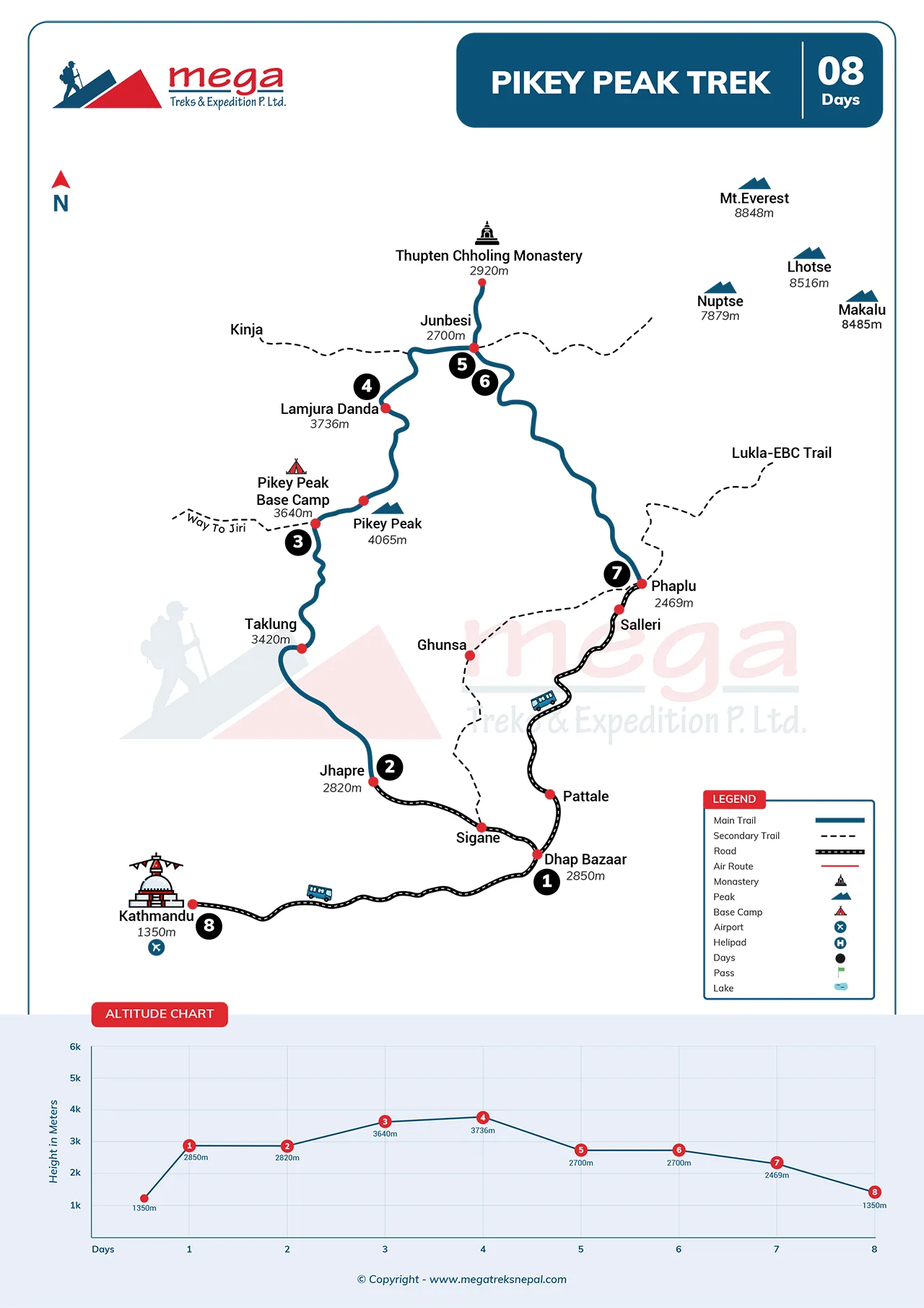
The Pikey Peak Trek is a seven-day trek of about 78 km of walking and some private jeep rides from Kathmandu to the trailhead. Each day of the walk varies in distance; there are short and long days throughout the walk to keep the pace comfortable.
The trek begins from Dhap (2,850 m / 9,348 ft) and reaches its highest point at Pikey Peak (4,065 m / 13,333 ft). The gradual climb makes it easy for trekkers to acclimate themselves as they see changing landscapes. Once on top, the path slowly slopes down through Lamjura Danda, Junbesi and Phaplu and then back to Kathmandu.
The elevation gets gradually steeper, but there is no technical climbing. Walking at a steady pace, taking frequent breaks and drinking water while on the trail makes it more comfortable.
The Pikey Peak Trek package is a moderate trek and is recommended for individuals with a moderate level of fitness. Most days are spent on hiking trails (mixed 3-4 hours) up and down the mountain. No mountaineering experience or technical skills are required along the way.
This trek peaks at Pikey Peak (4065 m / 13,333 ft). Some trekkers at this height may experience slight effects from the thin air. To help your body adapt to it more comfortably: walk slowly, drink sufficient amounts of water, take regular meals and avoid excess physical exertion.
The route is gradually rising and falling over days and many trekkers make the trip with little pain from the elevation change. It’s important to know your body and to report any unusual symptoms to your guide so that your trip is a safe and enjoyable one.
The walking distances on the Pikey Peak Trek are designed to offer a good trek. The shortest trekking day is the walk from Lamjura Danda to Junbesi, where one can go for 3-4 hours. This is a less demanding day, where you can recover from the peak day of the trek.
Typically, the longest trekking days last for about six or seven hours. That includes the walk from Jhapre to Pikey Peak Base Camp and the day that includes a sunrise climb up to Pikey Peak before moving on to Lamjura Danda. These longer days are easier to handle for most trekkers when they walk at a steady pace.
Routes are typically around 9 – 16 kilometers in length per day. The days of trekking are comfortable with frequent rest, meals and photo stops, but still time enough to arrive at the night stops in good time.
Local mountain lodges provide accommodation along the way on the Pikey Peak Trek itinerary. These lodges provide a pleasant place to rest after every day’s trek. Rooms are typically basic, but will have all the essential amenities for a night in the mountains.
Breakfast, lunch and dinner are usually served daily during the trek. In the lodge, the freshly prepared local and common trekking meals are available. It is important to make sure that you have regular feedings during the trip, particularly on longer trekking days.
It is also important to drink sufficient amounts of water along the way. Use a reusable water bottle and drink water all day to make walking more comfortable. Hot drinks are also a common feature of the lodges and can be enjoyed as a relaxing treat after you arrive for the day.
The Pikey Peak Trek package is well planned, covering the trip from Dhap to Phaplu, visiting Pikey Peak and Junbesi. This is an itinerary that will leave you enough time to enjoy your travel without rushing between destinations. It includes mountain trekking, local villages, as well as a visit to Thupten Choling Monastery before returning to Kathmandu.
Depending on the travel plans of the trekkers, they may wish to make some changes to their schedule, adding days before or after the trek. Some people may choose to do this trek along with more sightseeing in Kathmandu after the mountain trek. Changes should be scheduled in advance to give time for moving and settling.
If you want to customize your trek and have a schedule that suits your time and budget, Mega Treks can help book a trek in which you will have all the major attractions without having to sacrifice much.
For those who are relatively new to trekking and are searching for their first trek in Nepal, it may be best to do the Pikey Peak Trek. The trail is not technically difficult or for climbers who are not mountaineers. The trek is suitable for any reasonably fit walker.
The route gradually climbs from Dhap (2,850 m / 9,348 ft) to the highest point at Pikey Peak (4,065 m / 13,333 ft). The slow ascent allows the body to adapt and minimizes the risk of altitude-related issues. Slow walking with frequent breaks is more comfortable, as are frequent sips of water.
Beginners are welcome to take part in this trek, but it is always suggested to prepare in advance. It will be enjoyable from start to finish with regular walking, having a positive attitude and following your guide’s instructions.
Planning your Pikey Peak Trek itinerary will make it easier and more enjoyable to ride Pikey Peak. The walk is deemed medium hard, but will be several hours per day on mountain trails with both grade and ascent. Work up a sweat before you get here to get ready for the trek.
If you can, add an exercise routine that involves walking, hiking, jogging, cycling or stair climbing several times a week for the week or two before your trip. These exercises help you build stamina and build up your legs for a long day on the trail. Stretching exercises can also help to increase flexibility and decrease muscle soreness following walking.
It is also necessary to come with the right equipment such as comfortable trekking boots and clothes. Prior to the trip, testing equipment will ensure that things are comfortable on the trip. When you get well-prepared, you can just enjoy the views, the villages and the experiences of the trek.
The Pikey Peak Trek package takes you to more isolated mountain villages with fewer modern amenities than those found in more populated areas. When charging facilities are provided, electronic devices should be fully charged. The power bank is a smart travel accessory that ensures your phone or camera doesn’t go dead while you’re on the move.
Several mountain lodges offer charging services, but this may come at a small extra cost. The power supply can differ from place to place, so it is beneficial to charge the devices whenever possible, instead of when batteries are running low.
Some villages may have access to the internet, but the speed and reliability of the internet connection may be slow and unreliable in higher and remote villages. Before your trek, let family and friends know that you will probably not be responsive to calls during some of the sections of your trek.
Before the Pikey Peak Trek, personnel must be equipped with the appropriate trekking permits for the trek. These permits are used to control tourism and promote conservation of natural heritage and local communities. The permits must be carried all the way to the trail, as they could be asked for at various stages along the way.
The required permits may vary depending on the latest government regulations. Your trekking company will typically do them for you prior to the trip starting, which will help you concentrate on the memorable experience instead of the paperwork.
Mega Treks’ staff will inform you about the present permit conditions and help you to get all the necessary permits before your trip. This simplifies the preparation phase and helps you get ready to embark on your journey without any last-minute hassles.
The Pikey Peak Trek itinerary starts with transportation from Kathmandu to Dhap, which is the starting point of the trek. The trip lasts approximately 7-8 hours and goes through hills, villages, forests and rural areas until it arrives at the trailhead.
The trek in Phaplu will be followed by a private jeep back to Kathmandu. The drive back to the capital is 8 hours long and goes through idyllic countryside. These road trips are great for seeing some of the countryside around Nepal before and after the trek.
Private jeeps offer more flexibility and comfort on the journey. It is also beneficial for the group to travel together and to arrive at the trekking route as per the planned itinerary.
Weather and plans can sometimes change in the mountain areas of the Pikey Peak Trek package. Having a comprehensive travel insurance policy offers additional peace of mind while traveling and aids you in preparing for unforeseen events.
Trekking activities in the trek will be covered and the highest point on the trek is 4,065 m / 13,333 ft. You should also have emergency medical benefits, evacuation coverage if necessary, trip cancellation and baggage coverage in your policy.
Thoroughly read your insurance policy before coming to Nepal, so you know exactly what is covered. You will have an easier time accessing the documents if you have a printout and a digital copy of your insurance documents with you while traveling.
The Pikey Peak Trek is a fruitful trek through tranquil mountain scenery, quaint villages, wooded forest and rolling hills. An easy day-by-day stroll that doesn’t feature an excessive amount of climbing, but is perfect for any trekking enthusiast looking to see the beauty of eastern Nepal without attempting a very challenging trek.
On the trek, you will pass through villages like Dhap, Jhapre, Junbesi and Phaplu and the highest point you will reach is the Pikey Peak (4,065 m / 13,333 ft). Enjoy a cultural experience as well, with the chance to visit Thupten Choling Monastery, which is also part of the trekking experience.
Each of the treks is unique, from the first day up to the final drive back to Kathmandu. This trek can be a fun and memorable adventure for both new and seasoned trekkers if it is well planned, accompanied by experienced guides and organized support.
Yes. The trekking party is guided by an experienced licensed trekking guide who will help them navigate their way and provide local knowledge.
Yes. It’s possible to hire a porter for an extra fee and walk with a lighter pack.
Yes. Extra bags may be left in most hotels or trekking agencies without worry.
Yes. There are lodges and villages available for drinking water, but in case of possible contamination, it is advised to sanitize water before consuming.
Yes. Vegetarian food is served in most mountain lodges and a few can be made at short notice.
Some lodges might have an availability of private rooms, depending on the season and the number of trekkers.
Yes. Lodges and many villages have toilets, but in remote mountain villages, it is usually basic.
Yes. There are many small shops and lodges up the way selling snacks, chocolates, biscuits and a variety of cold and hot drinks.
Although possible, the trail can become slippery in rainy conditions and may be harder to spot on the mountain in winter, so spring and autumn are preferable.
Several villages have mobile coverage; this may be weak or unavailable in more remote areas.
Yes. Take sufficient Nepalese currency as ATM’s and digital payment options are not usually available throughout the trekking route.
Along the trail, there are very few laundry facilities, so bring clothes for the entirety of the trail.
Yes. The majority of lodges have charging stations available, but there may be extra charges based on the location.
Conducting a trek with a guide is advised as it makes the journey safer and easier, with the help of the local knowledge, route guidance and assistance.
Yes. Private trips can be organized to suit your travel itinerary and schedule.


 Write a Review


