
Talk To Expert
Mail Us

Trip Duration
19 Days
Group Sizes
2 to 25 People
Difficulty
Difficult
Max. Altitude
4950m
Activities

Meals

Accommodation
The Makalu Base Camp Trek is a rewarding adventure that takes you into the remote eastern Himalayas of Nepal. The trail winds through some stunning forests, some traditional mountain villages, deep river valleys and quiet alpine scenery, ending up at Makalu Base Camp (4,870 m / 15,977 ft).
Compared with a few of the more popular trekking trails in Nepal, this trek has fewer footpaths and is a more relaxed experience, allowing you to enjoy nature and the mountain landscape at your own pace. You’ll also pass through suspension bridges, walk along riversides and slowly ascend the high mountains while exploring different landscapes every day.
The Makalu Base Camp Trek route starts with a flight from Kathmandu to Tumlingtar (1,400 m / 4,593 ft) and takes a beautiful drive to Num (1,560 m / 5,118 ft). The trail from there goes through Seduwa, Tashigaon, Khongma Danda, Dobate, Yangri Kharka and Langmale Kharka and finally reaches the base camp. The trail is well-designed to ensure the gradual ascent of the mountain, with an acclimatization day set at Khongma Danda at 3,500 m / 11,482 ft to ensure the safe adaptation of the trekkers to the higher altitudes.
This trek is great for those looking for lengthier treks, quiet environs and secluded mountain trails. The routes are through forest tracks, stone stairs, rocky ground and alpine areas and each day is different. The terrain becomes green hills, open valleys, glaciers and rough mountain terrain as the elevation rises. In addition, trekkers can savour the local culture and lifestyle of the people in this under-visited area of Nepal.
A Makalu Base Camp Trek package comes with comfortable lodge accommodation along the trek, experienced guides and sufficient time in which to properly acclimate. While the trek can be a challenging one, with proper planning and a steady pace, it’s possible to do it if you’re well-prepared. Each day offers new vistas, quiet areas and unforgettable mountain views, making it worth the trip.
This trek is the best if you look for a Himalayan adventure that is not busy. A trekking experience in the beautiful Makalu region is safe, enjoyable and unforgettable with the help of experienced guides, well-planned logistics and professional support from Mega Treks.
From Kathmandu, you will be greeted and driven to your hotel. You’ll arrive and hold a briefing on the trek and do last-minute preparations for the adventure that is yet to come. The next day will be dedicated to arrangements for permits and sightseeing around the city, so you have time to explore while all documents for trekking are ready.
The next morning, you will take a scenic flight from Kathmandu (1,400 m / 4,593 ft) to Tumlingtar (410 m / 1,345 ft). The trek begins at Num (1,560 m / 5,118 ft), starting from the airport, which traverses through hills, villages and winding mountain roads.
From the start of the trail at Num, you pass through forests, rivers, farming areas and traditional villages on your first day on the trail towards Seduwa. This smooth beginning enables you to appreciate the natural beauty of the Makalu region, while gradually acclimatizing to the mountain environment before reaching the higher altitude regions.
Welcome to Nepal. Once you reach Tribhuvan International Airport, we will pick you up and drop you off at your Kathmandu hotel at the airport. The city is situated at (1400m / 4593ft) and is the starting point of your Makalu Base Camp trek.
Once you are checked into your hotel, you can either sleep after traveling or take a few minutes to check out the local streets. The city of Kathmandu is very vibrant and has local markets, restaurants and cultural places. The perfect chance to get accustomed to the local time and get ready for the adventure.
We will provide a brief about the trek, details about the route and answer any questions you might have in the evening. You will also have your equipment inspected to ensure you have all the necessary gear for your trip. Spending the night in Kathmandu city will help you get a head start on the trek.


Today is a day for final preparations before the trek. You can spend some of your time in Kathmandu getting all the necessary permits for the Makalu Base Camp Trek in the process. This will make things easier before heading to the east of Nepal.
There are several cultural and historical sites in the city and the local lifestyle can be experienced. To get a taste of Nepal’s culture before you head up to the mountains, go for a stroll down the traditional streets, visit temples and explore local markets.
It is possible to buy or rent trekking equipment as required. The plan will be reviewed again by our team and details confirmed for tomorrow’s flight to Tumlingtar. Kathmandu will be spent another comfortable night.
This morning, we will take a scenic flight from Kathmandu (1,400 m / 4,593 ft) to Tumlingtar (410 m / 1,345 ft). If the weather is fine, you can see hills, rivers and mountain peaks in the distance during the flight.
Once we have landed, we will get a drive to our first stop, which is a village on a hillside called Num (1,560 m / 5,118 ft). The road runs through little towns, in the field, through forests and through curvy mountain roads. On the drive, you will be able to see the landscapes of eastern Nepal firsthand.
When we arrive at Num, you’ll be able to rest and get ready for the first day of trekking. The serene village offers a cosy spot to unwind before heading further into the Makalu area.
It’s the day you embark on your trekking adventure. On leaving Num (1,560 m / 5,118 ft), we continue on the track through the woods and over the hillside. The way leads down to a river and then up to Seduwa.
Small villages, cultivated fields and beautiful natural scenery will be passed along as you continue to walk. The trail is a great introduction to the tranquil atmosphere of the Makalu region and offers a chance to see the local farming communities en route.
By afternoon, we arrive at Seduwa (1,500 m / 4,921 ft). This is an important village to get into the Makalu Barun area. Once accepted at the lodge, one can unwind and savor the tranquility before embarking on another day of hiking.
Following breakfast, we head off on a gentle rise towards Tashigaon. You are going to traverse through forests, small farms and traditional villages and experience the life of the local communities.
The trail becomes steeper as you get closer to Tashigaon. Strolling along the way, you can appreciate the tranquility of the surroundings and the green hills. A comfortable walking pace will help your body acclimatize slowly to the rising altitude.
By late afternoon, we reach Tashigaon (2,100 m / 6,889 ft). High point in the village, the final permanent village before the higher alpine area. You can take a rest at the lodge, have a warm meal and get ready for the next longer trek up to Khongma Danda tomorrow.
It’s one of the harder days of the trek today. We leave Tashigaon (2,100 m / 6,889 ft) and hike up a steep hill in thick forest and mountain ranges. As you climb the vegetation changes slowly to alpine vegetation with a gradual transition to the green forests.
The ascent will be fairly steady, with regular stops to allow the body to adapt to the higher altitude. All the fresh air and calm beauty of the mountains are worth the effort. Higher up, there are also the prospects of broader vistas of the surrounding mountains and hills.
At midday, we reach the Khongma Danda (3,500 m / 11,482 ft). It is a significant acclimatisation point before embarking on higher passes on the route. Once you have reached the lodge, you can relax and get ready for the acclimatization day the next day.
This is an important acclimatization day at Khongma Danda (3500m/11482ft). An extra day at this altitude will allow the body to acclimate to the thin air before moving to higher elevations. Acclimatization improves the likelihood of trekking safely and enjoyably by minimizing the likelihood of altitude-related problems.
Rather than passively sitting around, we will visit some of the surrounding hills and then head back to the lodge. One of the more popular and effective ways to acclimate is to walk slowly at a higher elevation and then sleep there as well. On the trek, one can enjoy the peaceful mountain scenic views and see the rugged landscape of the Makalu region.
The remainder of the day is free to unwind, drink plenty of water and get ready for tomorrow’s trek. The condition of everyone will continue to be checked on and guidance will be given by our guide on the days ahead.
Breakfast is served and we set off across the high mountain track to Dobate. The trail winds through high ridges and ultimately down through rocky trails and alpine scenery. The landscape becomes more rugged the further into the Makalu region you venture.
The path goes through out-of-the-way areas with gorgeous mountain views on clear days. There are a few rocky areas that require careful footing, but the walk is very rewarding, with the landscape varying throughout the day. Slow and steady with frequent breaks.
By afternoon, we descend to Dobate (3,068 m / 10,065 ft). Watered by the forest, the forest dominates the sides of the steep mountainsides; this resting place is quiet. Once you arrive at the lodge, you can soak up what a long walk has done to you and head on down the valley.
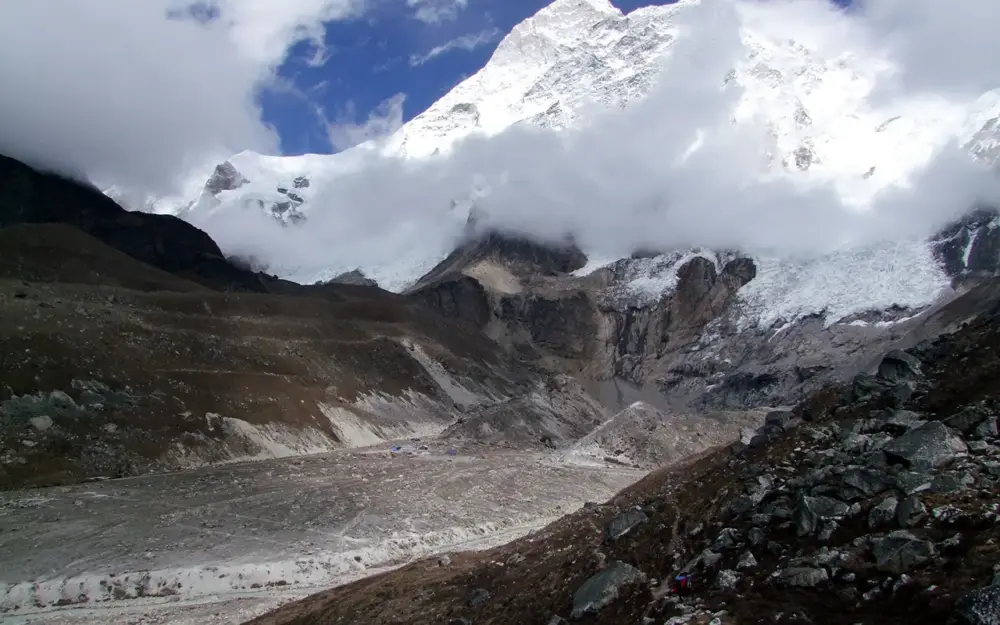
The trek starts at Dobate (3,068 m / 10,065 ft) and then takes you along the Barun Valley to Yangri Kharka. The path runs through forests, open meadows and along the Barun River. The valley slowly opens up and it is even more spectacular to view the mountain areas surrounding it.
Walking is level for the day with a steady rise in elevation. This is a pleasant stretch of the road in a peaceful rural area and in fresh mountain air. There may also be fewer trees as you cross into the higher alpine terrain.
By the end of the afternoon, we reach Yangri Kharka (3,557 m / 11,669 ft). This open area is a good overnight stop before the climb to higher Langmale Kharka. Following dinner, you have the opportunity to lie around and get ready for the next day of ascent.
From Yangri Kharka (3557 m / 11669 ft), after breakfast, we head further into the upper Barun Valley. The route gently ascends across extensive open alpine fields and rocky areas. The higher elevations are more open; there are fewer plants and trees.
A pleasant and leisurely walk with lovely views of surrounding Himalayan peaks on clear days. This section of the walk is a memorable one for its peaceful nature and remote location. Ongoing at a good rate for acclimatization.
By afternoon, we reach Langmale Kharka (4,410 m / 14,468 ft). It’s located at a high elevation with spectacular vistas and is the last overnight point before arriving at Makalu Base Camp. Once you have taken up residence in the lodge, be sure to get a good night’s sleep for tomorrow’s adventure.
The Makalu Base Camp Trek is one of the best days of the trek today. From Langmale Kharka (4,410m / 14,468ft), we head up the path to Makalu Base Camp. The path is mostly uphill, passing through rocky terrain with stunning views of the surrounding mountains.
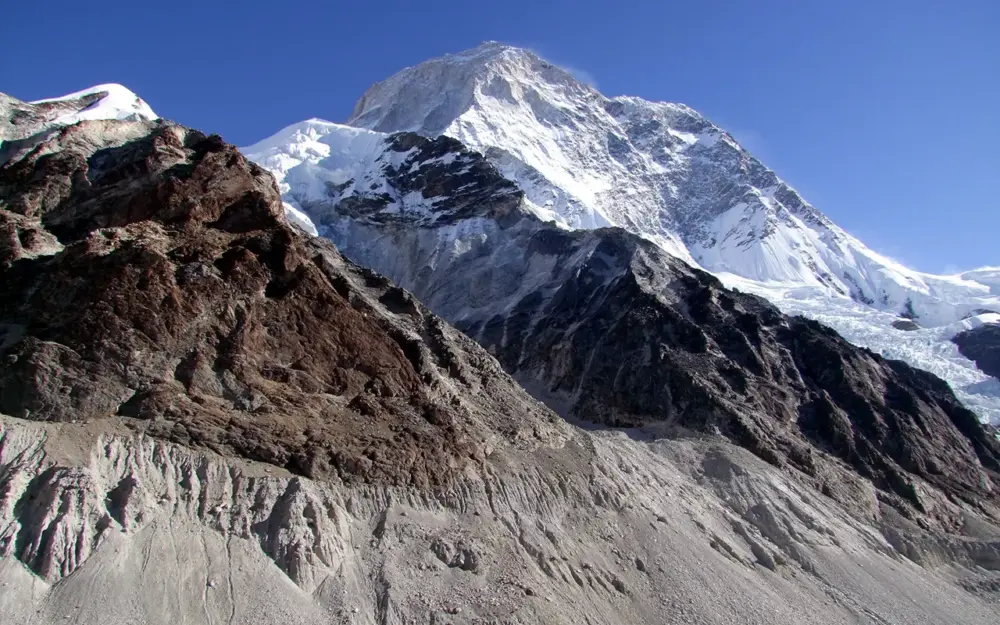
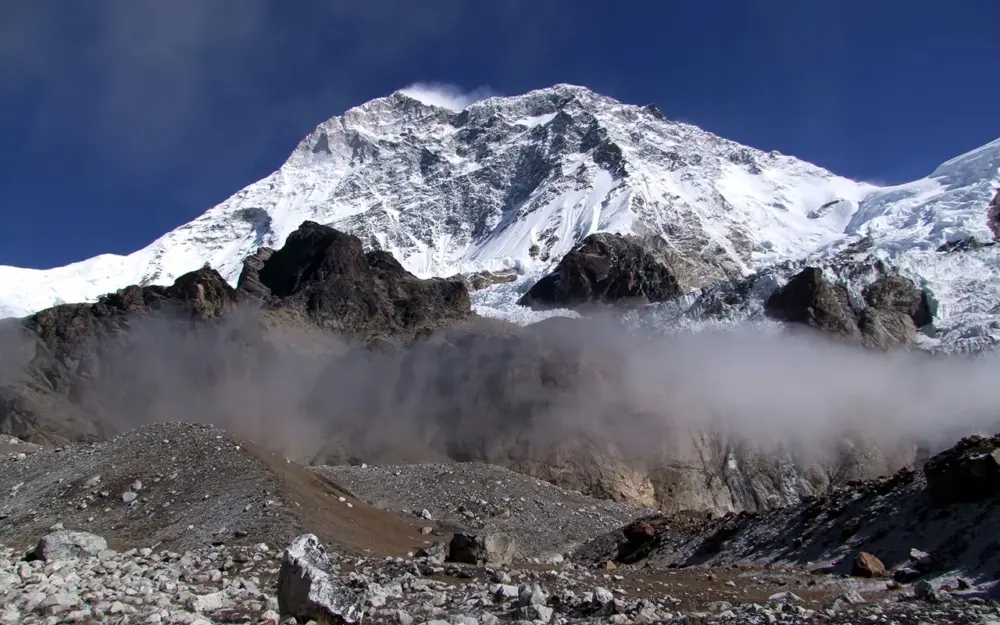
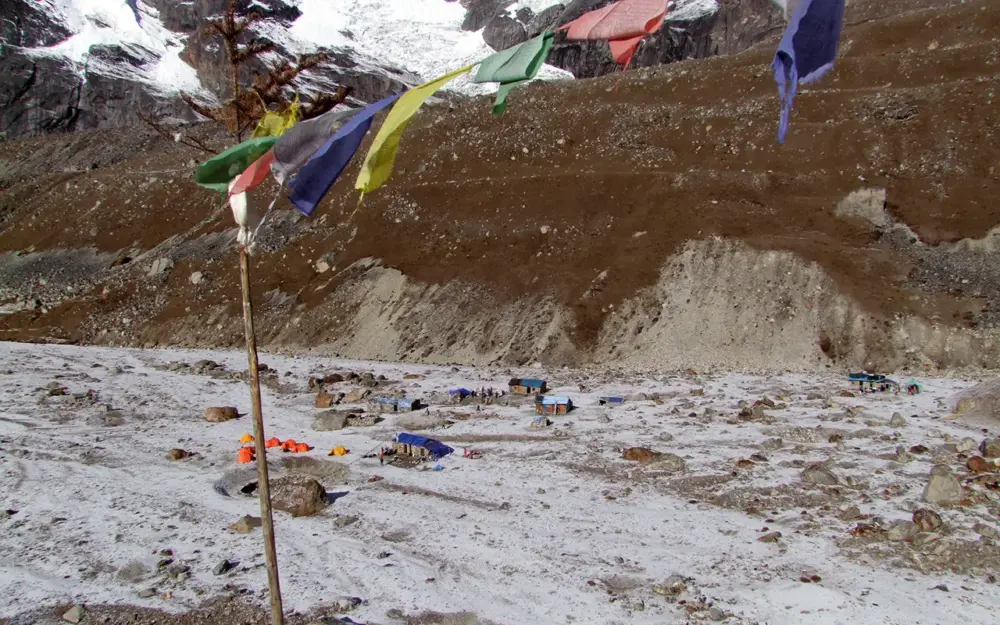
The dramatic view is even greater as you get closer to the base camp. Peaks, glaciers, rugged mountain terrain, covered with snow, form an unforgettable setting. Walking at a leisurely pace will help you acclimatize to the high elevation and be able to enjoy each part of the walk.
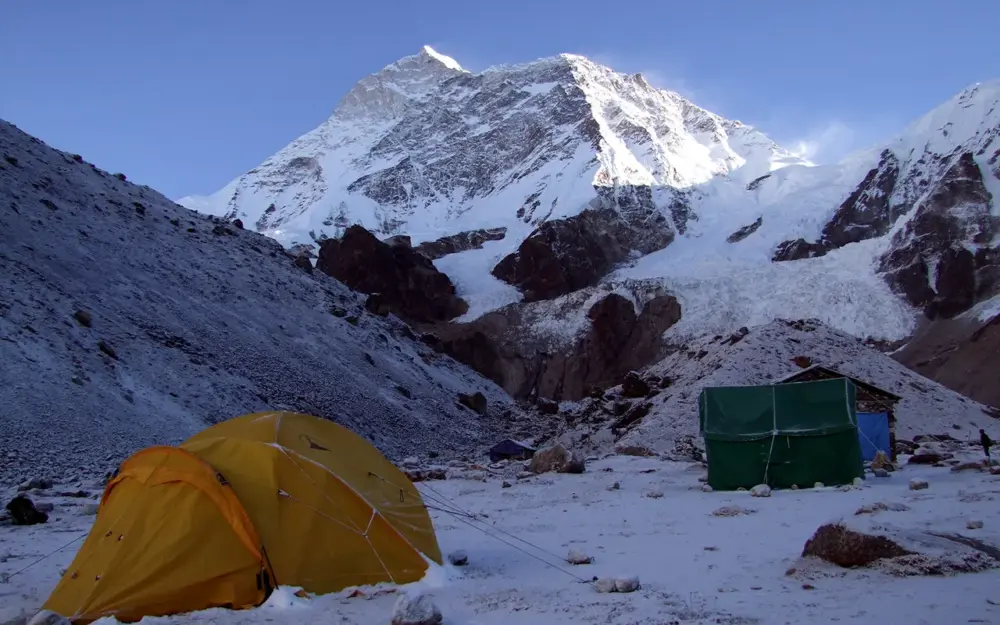
By afternoon, we arrive at Makalu Base Camp (4,870 m / 15,977 ft). Once you arrive at the lodge, you can unwind and take in the extraordinary scenery. The overnight stay will give you a chance to enjoy this remote Himalayan location and its beauty and peacefulness.
The day will be spent hiking and enjoying the wonderful mountain surroundings at Makalu Base Camp (4,870 m / 15,977 ft). As there is no long-distance trek, there is plenty of time to enjoy the beauty of the surrounding glaciers, rocky landscapes and towering Himalayan peaks.
There are many short walks around the base camp with different views of the surrounding mountains. Quiet and peaceful, great opportunities for photography and nature time. When walking slowly, your body is better able to stay active at this high elevation.
We explored the area and then came back to the lodge to rest. This additional day at Makalu Base Camp will give you a chance to enjoy this remote destination to the fullest before making the trek back home tomorrow. Another overnight stay is spent at the base camp.
It is early morning and we start our trek back from Makalu Base Camp (4,870 m / 15,977 ft) after breakfast. After passing through the high alpine landscape, we retrace our steps back through the upper Barun Valley. The descent is gradual, so you can have a different look at the mountain.
The trail winds through rough terrain, open fields and large valleys, then into lower areas. While the entire day ride is downhill, there are a couple of short uphill stretches on the trail. Walking is at a comfortable speed with regular opportunities for rest and time to appreciate the quiet environment.
We hit Yangri Kharka (3,557 m / 11,669 ft) late in the afternoon. Once at the lodge, guests can rest and recharge from the day’s trek and get ready for the trek down to Dobate the following day.
This morning we depart from Yangri Kharka (3557m / 11,669 ft) and begin to descend through the lovely Barun Valley. The path runs through familiar places, along mountain streams and under alpine flora and in quiet forest areas. The walking downhill is often easier, but there are rocky sections where care must be taken.
It becomes gradually greener as the elevation drops. Today’s walk is comfortable and enjoyable in the fresh mountain air and in the quiet surroundings. Periodic stops are made en route and the natural beauty of the area is valued.
By afternoon, we reach Dobate (3,068 m / 10,065 ft). Once at the lodge, you can sleep, eat and relax and then make the trip to the lower villages.
We head down to Danda Kharka after breakfast from Dobate (3,068 m / 10,065 ft). This path goes through woods, mountainsides and quiet parts of the valley. The lower the elevation, the warmer the air and the easier to walk.
A combination of downhill tracks and some easy rises. On the way, one can enjoy the views of the surrounding hills and forests and listen to the voice of rivers and birds. The more tranquil paths offer yet another opportunity to enjoy the wild scenery of the Makalu area.
We come to Danda Kharka (2,900 m / 9,514 ft) by late afternoon. Once you arrive at the lodge, you can unwind and get ready for the next day of downhill riding to Seduwa.
Today we head back down from Danda Kharka (2,900 m / 9,514 ft) towards Seduwa. This path winds through thick woods, along hillsides and through small farms. As you ascend to lower altitudes, there is more plant life and signs of settlement.
The walk is not too steep and mostly downhill, but has a couple of short climbs throughout. Riding through the familiar terrain affords another chance to enjoy the beauty of the Makalu region from a different angle.
By afternoon, we arrive at Seduwa (1,500 m / 4,921 ft). At the lodge, you will be able to rest and unwind from your day today before the final day of the trek tomorrow.
After breakfast, we leave Seduwa (1,500 m / 4,921 ft) and complete the final trekking section back to Num (1,560 m / 5,118 ft). This path has a few gentle inclines, declines, woodland sections and farmers’ terraced fields. The end of your trekking experience in the Makalu area is reached at the end of the trek at Num.
We get back in our car after a brief pause and head towards the Tumlingtar (410 m/1,345 ft). It is a hilly village road with beautiful countryside before it gets to the town.
Once you reach Tumlingtar, you can unwind and enjoy the completion of the trek. A nice night’s sleep will equip you for the flight home to Kathmandu tomorrow.
This morning, we are transferred to the airport for our return flight to Kathmandu from Tumlingtar (410 m / 1,345 ft). If the weather is clear, you will have your last aerial views of eastern Nepal and the surrounding hills during the short flight.
Once in Kathmandu, you’ll be transferred to your hotel. The rest of the day is free for you to relax after the trek. Alternatively, wander around the local markets, make a purchase of some souvenirs or have a meal in one of the many restaurants in the city.
At the end of the day, reflect on the Makalu Base Camp Trek and celebrate at the end of an unforgettable Himalayan adventure. Overnight accommodation will be in Kathmandu at your hotel.
Today marks the end of your Makalu Base Camp Trek. If you have some time before heading out of the hotel, you will have a chance to explore the city. Come for a leisurely morning, pack your bags and ensure all is ready for your trip home.
Our staff will transfer you to Tribhuvan International Airport at the appointed time for your flight to your destination. Arrive at the airport 3+ hours before the departure of your international flight. Our team will help you to move and wish you a safe trip.
At the end of your adventure, you will be leaving Nepal with everlasting memories of the remote mountain trails, beautiful scenery and the satisfying experience of reaching Makalu Base Camp. Hope to see you again for another adventure in the Himalaya!

You can cutomize this trip as per your requirements if met the proper guidelines.


The Makalu Base Camp Trek can be done in Nepal’s two trekking seasons: March-May Spring and September-November Fall. The weather is generally stable, the temperature is good and visibility is good during these months. The clear skies also offer a great view of the surrounding peaks of the Himalayas, making the hiking experience even more enjoyable.
Spring is a lovely time of the year as the trees and hillsides are coloured with wildflowers, such as rhododendrons. The scenery slowly transitions from green forests to alpine meadows and Rocky Mountains with elevation. Long days of walking are not so strenuous and the weather is generally mild.
The autumn season is also a favorite as well, with clear air from the monsoon rains. On the trails, it is generally dry and the daytime temperature is still pleasant. These will be determined when you are travelling with Mega Treks, where our team will help you pick the best trip date, considering the season and trail conditions.
The total distance of the Makalu Base Camp Trek is around 150 to 160 km, with various sidewalks depending on the route covered in the trek. The journey starts from Kathmandu (1,400 m / 4,593 ft), then flies to Tumlingtar and drives to Num (1,560 m / 5,118 ft), from which the trekking starts.
The terrain rises slowly through villages, through forests, through river valleys and through alpine areas. It includes acclimatization in the ascent to the high altitude so that the body adapts properly and safely to the elevation. The summit is Makalu Base Camp (4,870 m / 15,977 ft), where you’ll stop to enjoy the wondrous mountain views.
The return leg of the trek goes back through Barun Valley in its beautiful setting and then back to Kathmandu. This trek is rewarding, being steady in both ascent and descent, yet still has a good bit of time to accommodate safely.
The Makalu Base Camp Trek is very difficult in terms of the number of walking days, location and altitude. Trekkers should be ready for some steep climbs, long descents, rough, rocky paths and a few days of walking in a row. It is useful to have done numerous treks, but necessary to have good health and fitness.
Above 3,000 m / 9,843 ft, it may be possible to suffer from altitude sickness. Common symptoms are headache, tiredness, loss of appetite, dizziness and poor sleep. It’s important to look for these signs early to stay safe.
To minimise the chance of altitude-related sicknesses, there is an acclimatisation day at Khongma Danda (3,500 m / 11,482 ft) on the itinerary. As you head up the mountain slowly, taking in ample water, a healthy diet and instructions from your guide, you’ll get used to the new terrain perfectly.
Every day on the Makalu Base Camp Trek package, you’re guided on treks related to the terrain and elevation. The typical length of most trekking days is between 5 and 7 hours, with plenty of opportunities for a rest break throughout the day and to gaze upon the scenery along the trail.
The minimum walking day is typically the exploration day at Makalu Base Camp, where walking around the area takes 2–3 hours. The usual trekking distance is between 7 and 15 kms depending on the destination and the trail.
The longest walking day is typically the trek back from Makalu Base Camp to Yangri Kharka (approx. 6-7 hrs). The route is challenging some days but has been planned with an incremental ascent so that the trek can be completed at a comfortable pace and with safety.
The accommodation for the Makalu Base Camp Trek is primarily in simple mountain lodges and teahouses along the way. Rooms are typically simple and normally comprise two beds and blankets. The facilities are more limited at higher elevations due to the remoteness. Most lodges have a shared toilet and common dining area for trekkers to relax at after a long day of walking.
The meals are freshly prepared by the lodge staff and are sufficient in providing energy for trekking. Rice, lentils, vegetables, noodles, soup, potatoes, eggs, fried rice and pancakes are among the meals that you can expect. Certain lodges offer basic foods such as tea, coffee and simple snacks.
Safe drinking water is vital on the way. Most lodges offer boiled water, but water purification tablets or a reusable filter bottle is advised. Mega Treks also asks trekkers to bring a reusable bottle for less plastic usage during the trek.
The Makalu Base Camp Trek route goes through the traditional Num, Seduwa, Tashigaon, Khongma Danda, Yangri Kharka and Makalu Base Camp, then back along the same path. This is the most popular route as it provides for acclimatisation in the beautiful Barun Valley.
For experienced trekkers, the trek is extended with some of the other remote trails of the Himalayas. They take more days of trekking, more planning and physical fitness as they involve more remote areas and higher passes.
The popular route will be a complete experience for most visitors to the Makalu region. Contains traditional villages, dense forests, alpine landscapes, glaciers and spectacular mountain scenery without adding undue difficulties. The classic tour route also offers plenty of time to ensure safe altitude changes along the way.
Though this base camp trek to Makalu is a beginner’s trek, they must be well prepared before they embark on the trek. The challenge of this trek is higher than that of many of the popular treks in Nepal due to its long days of walking, steep terrain and the remote mountain environment. Unlike past trekking experiences, good physical fitness and determination are more important.
Beginners need to begin working out several weeks before the trip, increasing their step count, taking the stairs and working on their endurance. Dressing up for the practice trek in a light pack in preparation for the daily trek also helps condition the body.
When it comes to taking a trip, a very well-organized trip is not just a lot safer, it is also a lot more comfortable. Professional tour assistants track your health, plan your day and offer assistance during your travels. Many people find it easier to reach Makalu Base Camp successfully if they walk at a steady pace, drink plenty of water and follow the instructions of the guide.
The Makalu Base Camp Trek package demands physical fitness as it involves a lot of days of walking through remote mountain areas. If you are fit before you come to Nepal, you will make the journey more fun and less physically demanding.
Walking, hiking, jogging, cycling or swimming can be incorporated into a training program. Leg and core-strengthening exercises are also beneficial as they help with balance and stamina on uneven terrain. It is recommended to use a small backpack when beginning to train, as it will help your body adjust to carrying additional weight.
It’s also crucial to mentally prepare. Other days are long climbs, variable weather and basic camping and a positive attitude is essential for the trip. Appropriate clothing and boot styles, along with personal gear, can also make a trekking experience safe and enjoyable.
The Makalu Base Camp Trek will lead you through remote villages with very limited modern amenities. The majority of lodges have electricity, but charging electronic devices might be an extra cost. However, charging becomes inconsistent as you climb higher, so it is recommended to have a fully charged power bank with you.
Access to mobile networks is available in some of the lower villages, but weak or nonexistent mobile coverage in the higher parts of the trek. Internet connection may be intermittent and not always available. Best way to let family/friends know that communication may not be available for several days.
Pack only essentials (phone, camera, headlamp and power bank). Additional batteries and memory cards are helpful, if you’re a photography enthusiast. Warm electronics overnight as well and they will stay warm or cold mountain nights, which will extend battery life.
The Makalu Base Camp Trek route is subject to permits and permits must be acquired before entering the prohibited areas along the way. The permits are used to promote conservation efforts and to control the level of tourism in the area. They are usually organized by your trekking agency the night before the trek and will be easy and convenient to do.
The most important permits include the Makalu Barun National Park Entry Permit and the local area permit (if applicable). It is recommended to bring the passport and passport-sized photos as they might be required in the application process.
Documentation required for the trek will be presented during the trek and there are permit checkpoints along the trail. Be sure to carry your permits with you until the trip is over. It is best to pre-arrange all permits before you leave Kathmandu to prevent hassle during the trek.
The Makalu Base Camp trek package starts with a flight from Kathmandu to Tumlingtar. It is a short flight which saves time and in clear weather offers beautiful views of the hills and mountains in Nepal. Once landed, it is on to a scenic drive to Num, where the trek officially begins.
Upon arrival at the end of the trek, you will come back along the same path to Num and then drive to Tumlingtar. The next day, you will return to Kathmandu via flight.
Sometimes the domestic flight schedule may be changed due to the weather conditions in Nepal in the mountain areas. This is why always planning to travel a little extra is always a great idea. If delays in transportation are experienced, Mega Treks will keep a close watch on the schedules and make adjustments if needed.
The Makalu Base Camp Trek is done in a far-flung Himalayan area where medical facilities are extremely limited. Therefore, it is highly recommended to have comprehensive travel insurance before starting the trip. If something goes wrong on the way, it is important to have financial protection in place thanks to a suitable policy.
Your insurance policy should include high altitude trekking up to at least (5,000 m / 16,404 ft), emergency medical treatment, helicopter evacuation, trip cancellation and loss/delay of baggage. These benefits can be quite significant when the weather, disease or injury impacts travel plans.
Please read your Insurance Policy thoroughly before coming to Nepal and know what is covered and what is not. Bring a copy of your insurance with you on the journey – both printed and electronic! The right coverage offers more peace of mind when venturing into the remote Makalu region.
The Makalu Base Camp Trek package is a memorable trek through one of the most remote of Nepal’s trekking areas. The trail passes through traditional villages, peaceful forests, deep river valleys, alpine meadows and rugged mountain landscapes, culminating at Makalu Base Camp (4,870 m / 15,977 ft).
As this happens, you’ll see changing scenery due to the elevation change. The lower part of the valley is dotted with green hills and farming communities, whereas the upper part is flanked by glaciers, rocky hills and soaring peaks of the Himalayan mountains. Gradual change of the landscape every day is different and rewarding.
The route is for those willing to risk a less crowded mountain trek. A well-planned trek, with experienced guides, proper acclimatization and with the help of Mega Treks, can be a safe, memorable and rewarding experience in the heart of the eastern Himalaya.
One porter is assigned to carry two trekkers’ bags with each trekker bringing only their own personal equipment.
Yes. Domestic airlines have baggage allowances, so it’s advisable to pack light to prevent additional baggage charges.
No. After Kathmandu, you will not find any reliable ATM, so please bring sufficient cash with you before you start the journey.
Yes. Numerous rental shops in Kathmandu offer sleeping bags, down jackets, trekking poles and other equipment.
For the uneven mountain trails, waterproof trekking boots with good ankle support and worn soles are highly recommended.
Some trekking packages include sleeping bags; others require the trekking guests to bring or rent sleeping bags before they depart.
Use trekking poles as they will help to increase their balance and ease the pressure on their knees on steep inclines and descents.
There are a variety of vegetarian options available. Other dietary needs should be discussed with the trekking company before departure.
There are basic health posts in some of the lower villages, but in higher trekking areas, advanced medical facilities aren’t available.
Yes. For individuals who do not want to share porter service, a private porter can be booked prior to the trek.
Bring cash in the form of Nepalese Rupees as most inns and small businesses are reluctant to accept foreign money or credit cards.
It is not common to find laundry facilities. When the weather matches the conditions, the majority of trekkers wash their small clothing themselves.
The best combination is a duffel bag that will hold the luggage of a porter and a comfortable daypack that will hold all your necessities.
Bedrooms are quiet and usually unheated; warm clothing and a quality sleeping bag will ensure a comfortable night’s sleep.
Yes. There are basic snacks available in some villages, but the range of food gets narrower and prices higher at higher elevations.
Himalayan birds, mountain wildlife and various native plants can be seen depending on the season and luck.
No age limit. A healthy body, good fitness and the capability of a good long walking day are more important.
Yes. For many trekkers, they would like to spend additional days in Kathmandu and then head home, depending on their travel schedules.
Booking of several weeks or months is recommended in the spring and autumn times of the year when trekking is popular.


 Write a Review


