
Talk To Expert
Mail Us

Trip Duration
14 Days
Group Sizes
2-20 People
Difficulty
Moderate
Max. Altitude
4,200 m
Activities

Meals

Accommodation
When you arrive at Tribhuvan International Airport, a representative of Mega Treks and Expedition will meet you and take you to your Kathmandu hotel. Once you check in, you will be able to relax or visit the surrounding area at your own speed.
In the evening, we will join a welcome dinner and a briefing on the trekking program where we will clarify the trekking program, permits and some equipment needed and some key facts about the trekking program. This is also a good opportunity to ask questions before your Tsum Valley Trek begins.


Today is reserved for completing the final preparations before leaving Kathmandu. Our team will also organize the required trekking permits and check all the necessary travel documents to the restricted area. The remaining time can be spent on inspecting your trekking gear, buying the things you forgot, or even sightseeing Kathmandu in case all is set.
In the afternoon, we will go through the route, talk about altitude awareness, transportation and any other questions. This is a preparation that will aid in the smooth beginning of the Tsum Valley Trek Nepal in the next morning.
An early morning departure takes us west from Kathmandu towards the Gorkha region. The road then traverses a blend of tarmac highways and mountainous roads, crossing rivers, terraced agricultural land, and traditional villages until one arrives at Arughat.
The road gets more rugged as we go on Soti Khola and reach Machha Khola where the trekking part begins. The trip gives us a preview of the sceneries that characterize this part of Nepal. Once we get to the teahouse, we will be able to rest and prepare the first day of walking.
The trek begins by following the Budhi Gandaki River through forests, small settlements, and cultivated farmland. The trail is linked by a number of suspension bridges which join various parts of the trail as it ascends through small gullies and rocky terrain.
Passing through villages such as Khorlabesi and Tatopani, we continue towards Jagat, where trekking permits are checked before continuing further into the Manaslu region. This is a lovely walk that enables all the people to get into the groove of the trekking and enjoy the varying scenery of the valley.
Leaving Jagat behind, we continue through forested trails and traditional villages while gradually gaining elevation. The trail leads through the Gurung village of Philim, which boasts of fields, and mountainous scenery. The trail then leaves the main Manaslu Circuit and enters the restricted Tsum Valley beyond Philim.
Here, the environment is less noisy since there are fewer trekkers heading this way. The Tsum Valley Trek Itinerary starts at Lokpa, where the scenery, the local culture, and village life slowly start to stand out compared to the lower valleys.
As we leave Lokpa we will take a quieter path to the very centre of Tsum Valley. The path is through woodland, across suspension bridges across the Siyar Khola, and some gradual ascents and descents before arriving at Chumling. As we ascend we have different scenery and the villages start showing the traditional way of life of the Tsumba people.
Once in Chumling, we will have time to explore the village, with its stone houses, plowed fields, and the monastery close by. We will spend the night at a local teahouse before continuing higher into the valley the following day.
The trail of today ascends gradually through the traditional villages, terraced fields, and quiet mountainous scenery. On our way to Rachen Gompa, a significant Buddhist monastery in Tsum Valley, we will cross a number of mani walls and chortens, where a community of resident nuns resides.
There might be time to explore the monastery and enjoy its serene environment before we move into our accommodation depending on the schedule of the day. It is better to remain here and have a closer look at the religious traditions that still have a significant influence on the Tsum Valley Trek.
This morning, we will retrace part of the trail before following a different route towards Gumba Lungdang. The road leads through woodland with a few small streams crossing on its way and then slowly ascending to the monastery which is in a quiet environment that overlooks the rest of the mountains.
Upon arrival to Gumba Lungdang, you are free to have a rest or to spend some time in the monastery and its environs. We will spend the night here preparing to hike to Ganesh Himal Base Camp the next day.
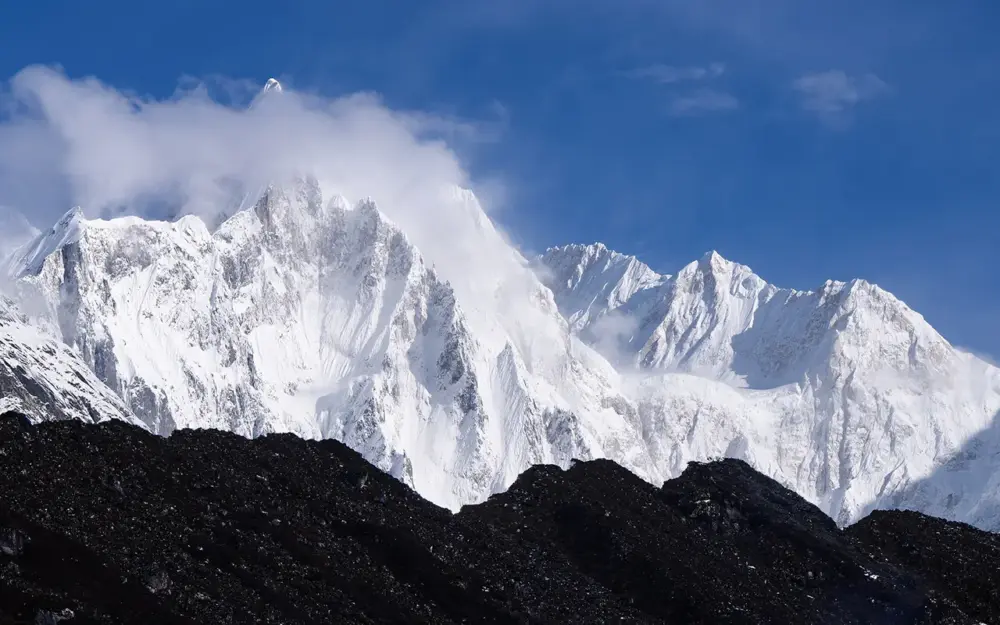
Today we will take a day hike to the Ganesh Himal Base Camp Viewpoint, which is one of the highest points of the trek. The trail ascends gradually through the alpine landscape up to the base camp region where we are rewarded by the clear weather with expansive views of Ganesh Himal and the adjacent mountain ranges.
After spending some time at the viewpoint, we will return along the same trail to Gumba Lungdang. The increase will be a side trip to the Tsum Valley Trek Itinerary that will be remembered and will enable us to spend one more night in the monastery before starting our walk back.
We will start our descent of Gumba Lungdang after breakfast and we will follow the trail back to Lokpa. The path takes us through forests, mountain slopes, and tiny streams and into the main path that leads out of Tsum Valley. The further we descend, the more comfortable the walk becomes, and there are no lack of occasions of seeing the scenery around us in a new light.
Late in the afternoon we will reach Lokpa and we are going to stay at a local teahouse. The night is free to rest and look back at the time spent in exploring the upper valley then move on with our journey of going back the following day.
Leaving Lokpa behind, we will follow the familiar trail back towards Jagat. The road goes over Philim and down through woodland, agricultural land and ancient villages. The reverse route will enable us to experience the scenery in a new perspective, with the gradual decline.
After reaching Jagat, we will check into our teahouse and spend the evening resting after another enjoyable day on the Tsum Valley Trek. Jagat is also the spot where the restricted area portion of the journey ends.
Our walk today proceeds further down the Budhi Gandaki Valley. Before we get to Machha Khola, we will cross some suspension bridges, pass through villages, waterfalls and trails alongside the riversides. As the altitude slowly declines, the warmer climate can be felt and the trail is not as challenging as the higher parts of the trek.
As soon as we reach Machha Khola, you will be able to rest in the teahouse and spend your last night in the mountains. This is the right time to share the great achievement of the Tsum Valley Trek Nepal with your guide and other trekkers.
In the morning, we will get in our car and commence the drive to Kathmandu. The trip goes up the mountain road along Arughat to the highway to the capital. On the road, we cross rivers, villages on the hillsides, terraced farmlands, that have been with us all through the trek.
Upon arrival in Kathmandu, we will transfer you to your hotel. The rest of the day is up to you to relax, spend one last night in the city, or to make some last minute shopping before you leave.
Your Tsum Valley Trek Itinerary comes to an end today. It will then take you to Tribhuvan International Airport where you will continue with your flight depending on your schedule.
In case you are considering another Nepal trip or tour, our Mega Treks and Expedition team will be glad to help you with your next trip. We thank you for travelling with us and wish you a safe and pleasant journey home.

You can cutomize this trip as per your requirements if met the proper guidelines.


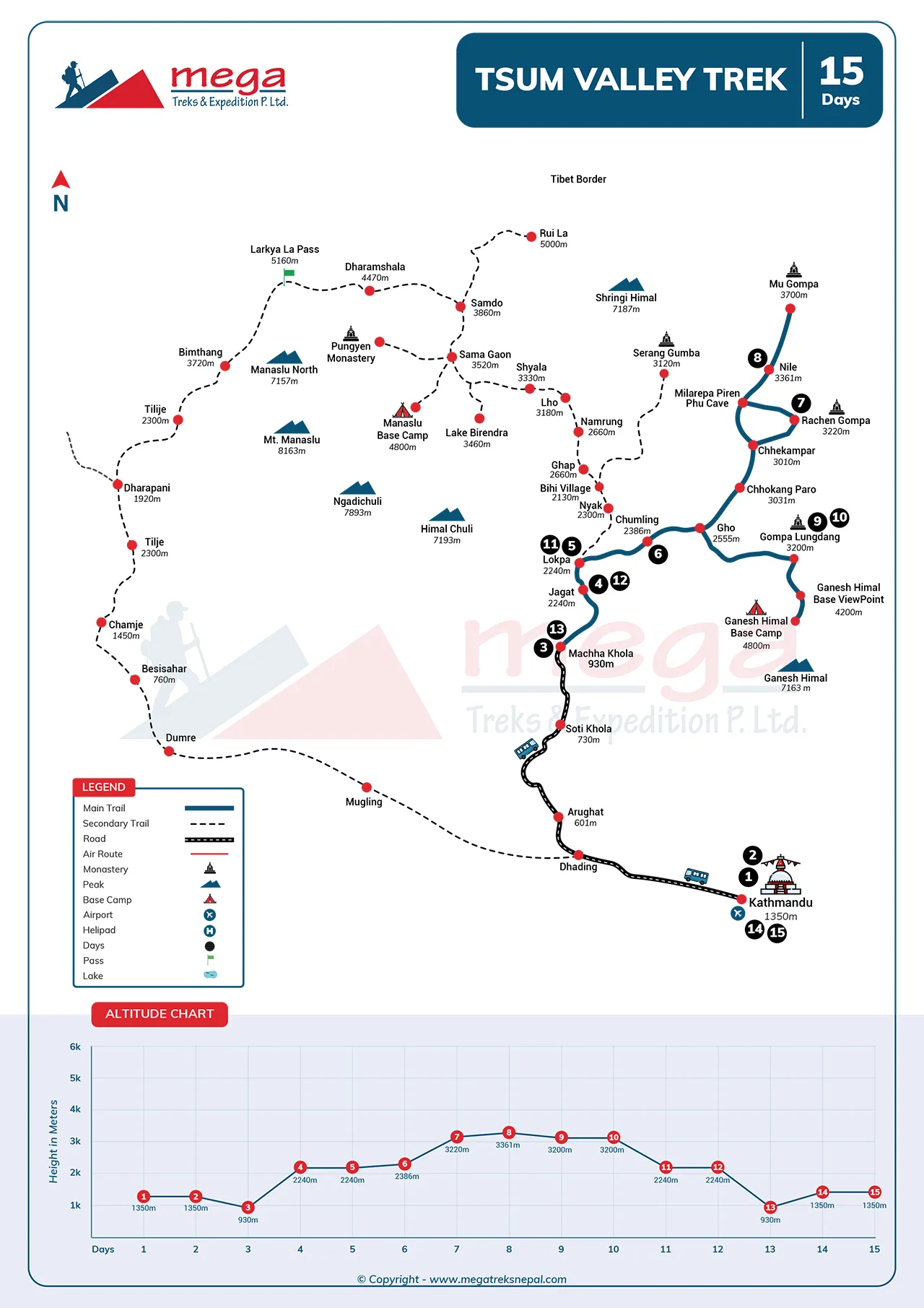
The Tsum Valley Trek is a moderate trek that can be done by travellers with moderate fitness level and interest in exploring the mountainous remote areas. The trail is not a technical climbing or mountaineering trip, but it is a few days of walking in the forest trails, stone steps, and mountain paths with frequent ups and downs.
The highest point on this itinerary is the hike to Ganesh Himal Base Camp at 4,200 metres, where the thinner air can make walking more demanding. Pre-trip preparation with regular walking, hiking, or other cardiovascular activities, which we recommend, is advisable. Proper physical training enables you to appreciate the Tsum Valley Trek in a more comfortable way and the long days of trekking less challenging.
Tsum Valley Trek Nepal accommodation is offered in local teahouses along the way. You will stay in a comfortable standard tourist hotel in Kathmandu before and after your trek. On the trail teahouses have simple twin rooms with simple facilities, where one can comfortably rest after a days walking.
Facilities become more limited as you move farther into Tsum Valley, particularly in the higher villages where tourism infrastructure remains simple. The majority of teahouses share their bathrooms and dining places where freshly cooked food is offered. The communities also provide trekkers with a chance to learn the hospitality and life of the local communities by staying in such family run teahouse lodges.
The teahouses on the route prepare meals during the Tsum Valley Trek Itinerary. Breakfast, lunch and dinner will typically consist of a choice of Nepali and simple international food like rice, lentils, noodles, vegetables, soups, potatoes, eggs and bread. Throughout the trek, vegetarian meals are quite common.
During any high altitude expedition, safe drinking water is significant. Most teahouses serve boiled drinking water at a fee whereas bottled water is sold in most villages. We recommend carrying a reusable water bottle together with water purification tablets or a portable filter to reduce plastic waste and ensure a reliable supply of drinking water throughout the trek.
The Tsum Valley Trek is best done in spring (March to May) and autumn (September to November). These are the months when there is generally good weather, good daytime temperatures, and clearer mountain views. The trails are generally in good condition, making trekking during these seasons more enjoyable.
Spring and autumn are usually associated with warmer temperatures and blooming rhododendron forests at lower elevations and typically offer great visibility after the monsoon season. During winter, trekking is possible, but temperatures may drop below freezing at high altitudes, and snow may cover the route occasionally. When the period of summer monsoon occurs, the lower part of the route may become muddy and may cause delays in the journey.
Even though the Tsum Valley Restricted Area Trek does not hit the extreme altitudes of certain Himalayan trails, the altitude is to be considered seriously. Some trekkers might experience mild symptoms such as headaches, fatigue, or loss of appetite as the trail gradually climbs above 3,000 metres. Report to your guide as soon as you observe any suspicious symptoms along the way.
We have scheduled our itinerary such that the altitude is gradually increased so that your body can adapt itself to the condition as you are moved up the valley. A slow pace of walking, consuming enough water, having normal meals and taking ample rest are all factors that reduce the chances of altitude related illness and enable you to enjoy the trek more easily.
The majority of international tourists visiting Nepal to visit Tsum Valley Trek need a Nepal tourist visa that can be procured at Tribhuvan International Airport or at a Nepalese embassy prior to travelling. As visa policies and charges can change periodically, we suggest that you make sure you visit the current requirements prior to departure.
Your passport has to have a minimum of six months before your arrival date in Nepal. We also recommend carrying a few passport sized photographs, which may be needed when applying for permits. At Mega Treks and Expedition, we will guide you on the documents required before the trek commences so that you are well prepared before you arrive.
The Tsum Valley Trek Nepal takes place in a restricted area, so special permits are required before entering the valley. Trekkers need the Tsum Valley Restricted Area Permit and the Manaslu Conservation Area Permit (MCAP). No Annapurna Conservation Area Permit (ACAP) is required for this itinerary.
It does not allow independent trekking in the restricted area. Any trekkers have to be accompanied by a licensed guide via a registered trekking company. Mega Treks and Expedition will do everything to secure all the necessary permits before the trip, and you can concentrate on the trip preparation.
We place our utmost priority on your safety during the Tsum Valley Trek Itinerary. Our professional guides keep track of health of the group on a daily basis and give recommendations on the pace of the trek, hydration and acclimatization. In case anyone falls ill along the way, we advise one to tell the guide as soon as possible to be able to evaluate the situation immediately.
When the trail goes up the valley to the upper part, it makes hospitals scarce and prevention is vital. Before travelling, we advise that you see your doctor and bring your own medication during the trek in case you have any underlying medical conditions. Our guide carries a basic first aid kit to help with minor injuries and common trekking related problems.
Transportation during the Tsum Valley Trek is by private jeep or four wheel drive vehicle between Kathmandu and Machha Khola, as outlined in the itinerary. The road trip involves Arughat and Soti Khola before the starting point of the trek and vice versa.
The road conditions are also seasonal and especially during the monsoons season, the road conditions may change and influence the travel time. Our drivers are experienced and well versed with the roads in the mountains and we will also change the schedule when it becomes necessary to have a safe and comfortable trip. We advise that you be flexible in your travel arrangements, particularly when you have international flights immediately after the trek.
It is highly advisable that all who are taking part in the Tsum Valley Restricted Area Trek are insured in case of any unforeseen events like illness. Trekking to the highest point of this itinerary, emergency medical care, hospital costs and helicopter rescue where necessary should also be incorporated in your policy.
Some weather, illness or injury may sometimes intervene with trekking plans especially in remote mountain areas where medical services are hard to access. Also, remember to check the coverage of trekking in Nepal by your insurance policy before travelling and to bring a copy of your insurance information during a trip.
Communication facilities become more limited as you travel higher into the mountains during the Tsum Valley Trek Itinerary. The Kathmandu valley, and some of the lower villages, have mobile network coverage, which can be weak or non-existent in the higher parts of the valley. WiFi is available in some teahouses at a fee, but the connection is usually very slow and cannot be depended on all the time.
A majority of teahouses have mobile phone charging, camera charging, and other electronic charging services, which are normally charged at a low fee. Power can be delivered by the local power supply or solar power and therefore the availability of charging in one village may not be the same as it is in another. Having a fully charged power bank is a good idea to have your devices operating during the trek.
Tsum Valley Trek is a journey through traditional villages, monasteries, forests and mountainous sceneries, which are liked by many trekkers to even take photographs. Photography is usually allowed in the trail, but we would like to request you to seek permission before you take photographs of the local people, monks, or religious events. Adhering to the local practices will assist in establishing good relations with the communities you are visiting.
The use of drones in Nepal is controlled and might need the permission of the authorities before flying. There may also be some monasteries and restricted zones that limit drone operations. If you are traveling with a drone, please reach out to our team and we will tell you about the most recent rules and permit issues.
Many travellers choose to extend their Tsum Valley Restricted Area Trek with another destination after returning to Kathmandu. Visiting Pokhara, Chitwan National Park, or other trekking trail in the areas of the Annapurna, Langtang, or Everest is also popular should time permit.
In case you wish to spend more time in Nepal then Mega Treks and Expedition can assist in arranging accommodation, transportation, sightseeing tours or other trekking programmes. We are pleased to advise an extension which will suit your available time, interests and travel plans.
The Tsum Valley Trek package includes the services listed in the cost includes section, but you should also budget for personal expenses during the journey. These may include hot showers, WiFi, battery charging, bottled drinks, snacks, laundry, souvenirs, and tips for your guide and porter.
There are no ATM facilities along the trekking route, so we recommend carrying enough Nepalese Rupees before leaving Kathmandu. The money you carry will be based on your preferences, but having spare money will be easy to pay the extra services and personal purchases along the trek.
The Tsum Valley Trek Nepal goes through the traditional villages and key Buddhist monasteries where locals and tourists observe the local traditions. During religious visits, dress conservatively, listen to your guide, and seek permission before accessing restricted places or taking photographs of people in monasteries.
Do not litter along the trail. Carry your rubbish until you reach an appropriate disposal facility. We also encourage the use of reusable water bottles instead of single use plastics whenever possible. Local culture and conservation of the natural environment can conserve Tsum Valley to future generations of trekkers.
This will be your first Himalayan trek, and you will find that preparing before you go will help to make your Tsum Valley Trek Itinerary more comfortable and enjoyable. You should take a few weeks of regular walking, hiking or other light exercise before the trip to help you increase your stamina. You should also consider getting to Kathmandu at least one day before the trek to have time to attend the trip briefing, to organise your equipment, and to rest following your international flight.
During the trekking, do not rush but keep a steady pace, particularly when the trail is ascending. Also drink lots of water, eat often and pay attention to the instructions given by your guide during the expedition. The weather and the road conditions in the mountains can occasionally influence the plans of travelling and to be flexible would ensure that you enjoy the travelling experience. Your Tsum Valley Trek Itinerary can become a memorable and valuable experience when you prepare well and set reasonable expectations to visit one of the remote Himalayan valleys in Nepal.
Tsum Valley is in the northern area of the Gorkha District bordering Tibet. It is located in the Manaslu area and is characterized by ancient villages, Buddhist monasteries, and rather peaceful trekking routes.
The Tsum Valley Trek is located in a limited area to aid in conserving its culture, traditional way of life, and the natural setting. The trekkers will need to secure special permits and be accompanied by a licensed guide.
The summit of this tour is Ganesh Himal Base Camp at around 4,200 metres. Overnights are also lower, which will enable a more gradual adaptation to the altitude.
The average number of hours of walking during a trekking day is 5 to 7 hours, based on the itinerary and the nature of the trail. Ascent to Ganesh Himal Base Camp is commonly the day-long stretch of the trek.
Yes. The road will visit some of the great monasteries like Rachen Gompa, Mu Gompa, and Gumba Lungdang. These monasteries remain active religious hubs of the local people.
Yes. Mu Gompa is also a part of the itinerary and is accessed as part of the trek between Rachen Gompa and Nile. It is the highest monastery in Tsum Valley and one of the valley’s most important religious sites.
The Manaslu area with its forests hosts a multiplicity of wildlife, such as Himalayan tahr, musk deer, and numerous bird species. It does not guarantee wildlife sighting but the area has a rich mountain ecosystem.
There are also small local stores in certain villages where you can purchase snacks and drinks and some basic supplies. The choice is further reduced as you go deeper into Tsum Valley and therefore it is advisable to buy necessities before you leave Kathmandu.
It is not advisable to drink alcohol, especially at high altitudes. It will make you more dehydrated, and can also influence your body to adapt to the altitude.
Yes. Majority of teahouses have the charging of cameras, mobile phones, and other electronic devices at a minimal fee. It is also advisable to carry a power bank particularly when one has a longer day of trekking.
The Tsum Valley Trek Nepal is a lesser traveled path in comparison to other popular trekking destinations in Nepal. The valley has maintained its Buddhist culture, local practices and its ancient monasteries and this provides the visitors with a contrasting experience to the other more frequented areas.
The path is usually not as busy as typical trekking paths like those of Everest Base Camp or Annapurna Base Camp. This puts it as a good choice among travellers who want to experience a less busy trekking adventure.
Yes. The Tsum Valley Trek is often combined with the Manaslu Circuit Trek by many trekkers. This constitutes a more protracted itinerary which explores the hidden valley and the regular route around Manaslu.
Yes. The trail passes through a few suspension bridges across the Budhi Gandaki River and Siyar Khola. These bridges are common in trekking in the area and they are maintained to ensure their use by the locals and trekkers.
Yes. The trek goes through a traditional village where you can encounter the people who live in the area when you stay in teahouses or when walking across the settlements. Observing the local customs and traditions contribute to establishing favorable relations during the trip.
Yes. Most teahouses offer vegetarian food and many trekkers use these food items when they are trekking since they are made using fresh ingredients available locally.
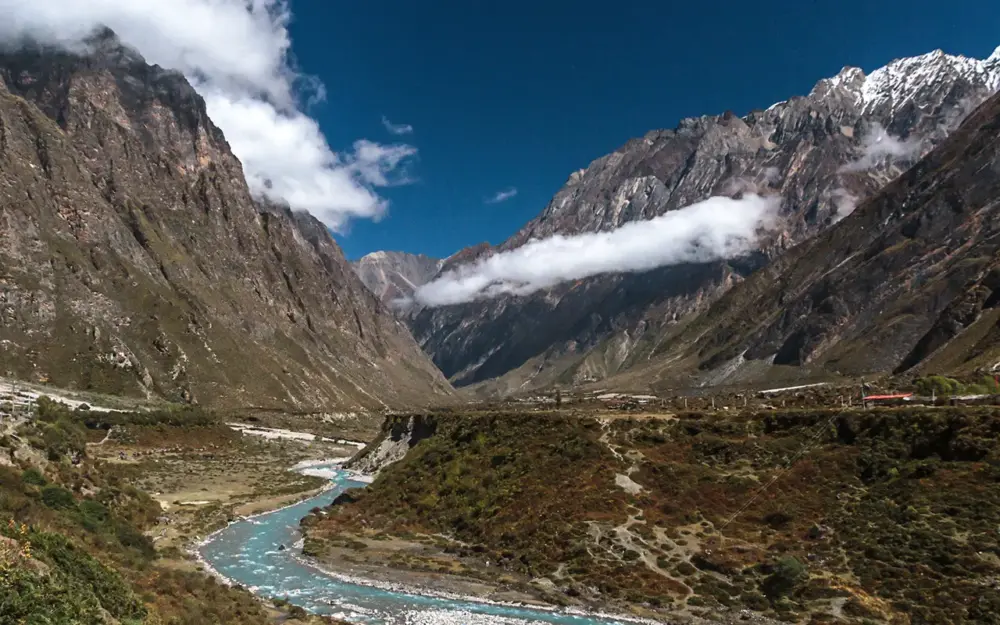
The road goes through river valleys, forests, terraced agricultural lands, alpine meadows, and old mountain villages. The landscape slowly transforms as you attain a higher altitude giving broader views of the surrounding Himalayan landscape.
Yes. The itinerary can be tailored to fit your time schedule, level of fitness or travelling plans at Mega Treks and Expedition. The private departures are also possible upon the request.
Yes. Any things that are unnecessary in the trek can be kept safely in your hotel in Kathmandu until you are back.
We suggest that the Tsum Valley Trek Itinerary should be booked some weeks or months before you intend to go. With early booking, time is ample to secure permits, ensure the availability of guides and carry out all travelling preparations.


 Write a Review


