
Talk To Expert
Mail Us

Trip Duration
17 Days
Group Sizes
2 to 25 People
Difficulty
Challenging
Max. Altitude
6189 m
Activities

Meals

Accommodation
Island Peak Climbing is an enriching Himalayan adventure that blends trekking in the Everest region with a thrilling peak climb. Island Peak (6,189 m / 20,305 ft) is a relatively easy to climb trekking peak in Nepal and is a destination that attracts climbers looking to enjoy high-altitude climbing in the Khumbu region along with the landscapes and culture.
The trip starts with a flight to Lukla, and then the traditional Everest route will be used by visiting Sherpa villages, suspension bridges, forests and mountain valleys. Trekking along the way, passages are made at Namche Bazaar, Tengboche, Dingboche and Chhukung, as the altitude slowly increases. These trail days enable adequate acclimatization and also a chance to learn local customs, monasteries and everyday life in the mountains.
The Island Peak Climbing Itinerary is well designed to allow participants to get ready to climb the mountain by having acclimatization days and pre-climb training. Before climbing the mountain, climbers are trained on the use of ropes, crampons, harnesses, and other climbing gear. This training aids in gaining confidence and enhances safety as the climbers ascend.
The climb involves glacier travel, snow slopes and a difficult final push to the top. The most important part of the trip is to reach the Island Peak Summit, which has great vistas of Lhotse, Makalu, Baruntse and numerous other Himalayan mountains around. The accomplishment of being on the peak makes the struggle worth taking part in.
This is an adventure that will suit trekkers who want to go a step higher in conventional trekking. Although prior climbing experience may prove to be of use, most of the motivated first-time climbers have managed to make it through the journey with the right preparation and guidance. The mountain landscape, culture, and climbing difficulties make the whole experience memorable.
Mega Treks conducts this expedition with accomplished support staff, which assists the climbers to have a safe and well-controlled journey in one of the most beautiful mountainous regions in Nepal.
It starts with your arrival in Kathmandu, where you can take some time to acclimatize yourself in the city and prepare to start the adventure. A sightseeing and preparation day preceding an entry into the mountains enables you to get the equipment checked, final plans completed, and get to know more about the trip. Then, an early morning flight transports you to Lukla (2,860 m / 9,383 ft), the starting point of the Everest region.
The trek begins in Lukla and follows the route of the classic Sherpa villages and scenic mountainous areas. It goes through Phakding and Namche Bazaar and proceeds into Tengboche, Dingboche, and Cho La. The days slowly increase in altitude, allowing your body to adjust to the level of altitude. The expedition then ends up in Island Peak Base Camp, where preparation to climb the summit is made.
Upon arrival at Tribhuvan International Airport, you will be met and helped in getting to the hotel. The ride will lead you through the bustling streets of the Nepali capital, where the traditional culture and modern life collide.
After your journey, you can take time to rest when you arrive at the hotel. In case you are in a good mood, you can walk through the streets around and get a preliminary feel of Kathmandu. There are numerous tourists who like walking in the surrounding neighborhoods to feel the mood of the city. You can also explore Thamel, a tourist hot spot with vibrant streets, restaurants, shops, and stores of trekking equipment.
This will be a good time to buy everything you need for your next adventure, as far as last-minute purchases are concerned. Having spent some time relaxing, head back to your hotel and get ready to head on your way.


Today, you are going to find out the cultural treasures of Kathmandu Valley and make final preparations for your adventure with Island Peak. It starts with a guided tour of some of the most significant historical and religious places of the valley.
You will go to Kathmandu Durbar Square, which has old temples, courtyards, museums and palaces that are used to display the rich history of the city. The tour then proceeds to Patan, whose remarkable Newari architecture and stunningly made temples attract tourists. You will go to Bhaktapur and explore incredible structures including Nyatapole Temple, 55 Window Palace and Taleju Temple. These are historic sites that are listed as UNESCO World Heritage Sites.
The sightseeing program also covers the Swayambhunath Temple, Pashupatinath Temple and Boudhanath Stupa, which are also some of the most important religious sites in Nepal. Once the tour is completed, you will be able to complete your preparations for the trek.
Your current destination is Kathmandu to Lukla and then on foot to Phakding. The first flight in the early morning will take you to Lukla, the entrance of the Everest region. The mountain flight is a wonderful experience that will bring you great mountain views and will be the start of your trekking career.
Once in Lukla, you will begin walking the trail. The trail goes through Chaurikharka and Chheplung, where one can see the life of the local villages and the culture of the Sherpa communities that inhabit the area. You will also find beautiful landscapes and cultivated fields on the way, which will add color to the scenery.
The walk is not very steep and you can relax into the rhythm of the walk and appreciate the natural environment. Towards the end of the afternoon, you will arrive at the village of Phakding and spend the night and make the necessary preparations to continue the journey.

You will begin your journey at Phakding and go on to Namche Bazaar, which is the central trading hub in the Everest region.
Then you continue to walk to Monjo in Sagarmatha National Park. In this case, the trail gradually gets steeper and heads towards Namche Bazaar. The climb may not be easy, but the mountainous scenery around it is worth the struggle.
Namche Bazaar is a key tourist destination among trekkers and locals. The town boasts shops, restaurants, equipment stores and other sites that aid travelers on their way further into the Himalayas. You will find time to relax and see the bustling scene of this mountain village before you take up abode here.
In Namche Bazaar, you will spend an acclimatization day today, having an excursion to Syangboche. The process of acclimatization is a significant phase of the trip and the process of gradual adaptation of your body to the rising altitude.
You will have a brief hike to Syangboche after breakfast. The path ascends gradually above Namche and up to the vicinity of Syangboche Airport, a small mountain airstrip utilized by helicopters and small planes. Weather permitting, as you ascend, you can have your first glimpses of Mount Everest and the Himalayan skyline around it.
Another place you are taken during the excursion is the Everest Sherpa Resort, where numerous trekkers have a rest to enjoy the mountain views. You will take some time here, and then you will come down to Namche Bazaar. The rest of the day is time to see the local area, rest, and get ready for higher elevations to come.
This is the day that you will walk between Namche Bazaar and Tengboche. You will depart the bustling mountain city after breakfast and go on a picturesque path that will run along the mountainside of the Dudh Koshi River. The road offers stunning mountainous views and a landscape that varies throughout the day.
Going on the path, you will come across columns of yaks carrying supplies across the country. The trail also traverses rhododendron woods that introduce color to the scenery during flowering season. Slowly, the path ascends to Tengboche, a quiet village that has a renowned monastery.
On arriving at Tengboche you will get a chance to explore Tengboche Monastery. It is a key spiritual hub of the Everest region. The monastery is situated between Thamserku and Kangtega mountains and is a good place to meditate. After sightseeing around the place, you will stay in a local lodge.
You are trekking today from Tengboche to Dingboche. You will leave Tengboche in the morning and walk down through pine and rhododendron forests, across a suspension bridge over the river. This path then passes through a few small towns as you head further into the Everest region.
You will go through Deboche and go on to Imja Khola before reaching Pangboche village which has a historic Buddhist monastery. The trail then passes through the village of Somare and slowly ascends to Dingboche.
The landscape is more open and rugged as you approach your destination. Dingboche has a grandiose mountainous terrain with Island Peak and Mount Lhotse on the horizon. A Buddhist stupa greets the visitors to the village, making it a tranquil place. Once you have arrived at Dingboche, you can rest and get ready to go higher.
Your trek will begin at Dingboche and proceed to Chhukung. The path goes through stone-walled fields and rocky terrain and gradually ascends. The current walk is shorter than what they used to do in the past during the trekking days, but this will give them more time to acclimatize and then proceed to the Island Peak Base Camp.
On one side as you go along the trail, there is Mount Lhotse, and on the other side there is Ama Dablam. You will come to a small settlement called Bibre, where yak herders have their way after a few kilometers of walking. Here we can see Island Peak quite clearly, with its impressive form emerging against the rest of the landscape.
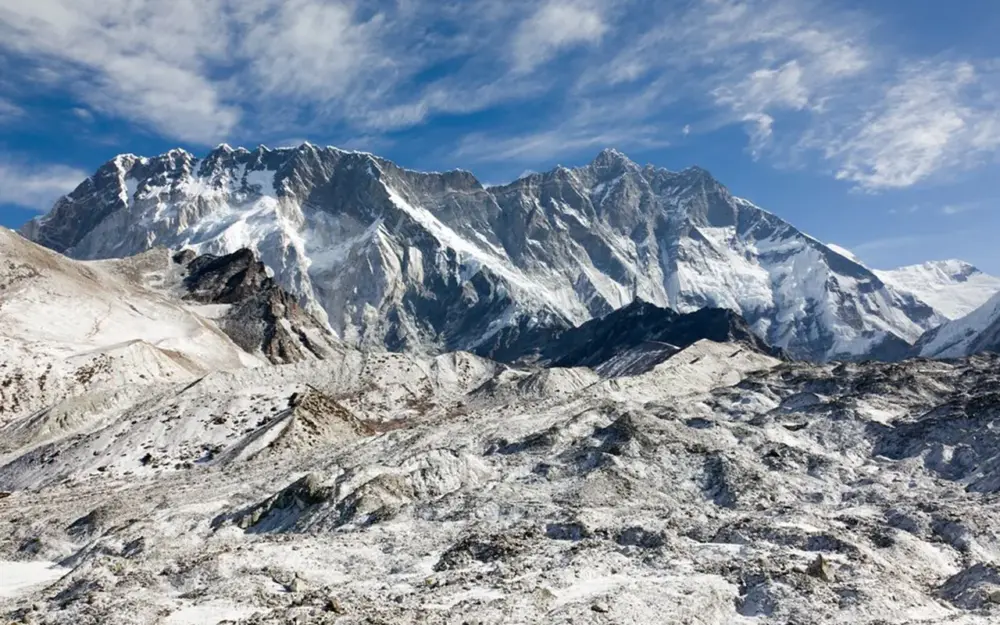
The path goes further over the land, which is affected by the surrounding glaciers and mountain rivers, and then it reaches Chhukung. This village is encircled by glaciers and lofty Himalayan mountains. The village provides a sight of Lhotse, Island Peak, Ama Dablam, Makalu, Baruntse, and others. Once here, you will stay overnight in a local lodge.
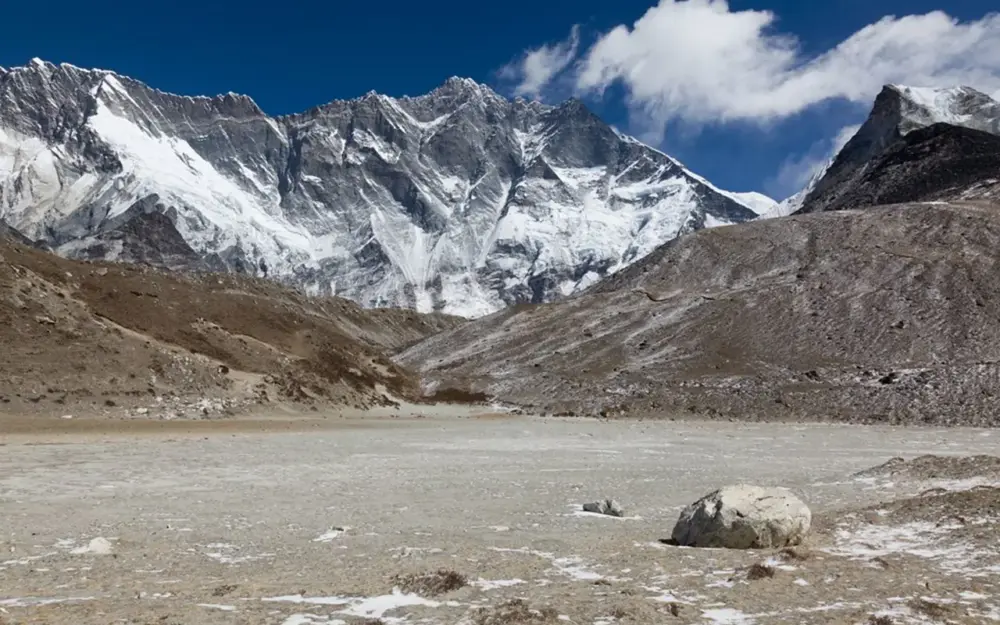
You will trek today from Chhukung to Island Peak Base Camp. The trail turns south of the village, and then passes eastward, entering the main valley. The path takes the southern flank of the Lhotse Glacier moraine and gets steeper the higher you climb.
Onward beside the way one passes areas of glacial moraine formed by the Imja and Lhotse glaciers. The mountain setting is more dramatic, and rocky terrain and wide panoramic views of the nearby mountains are featured. This path leads down to a wide valley on the southwest side of Island Peak.
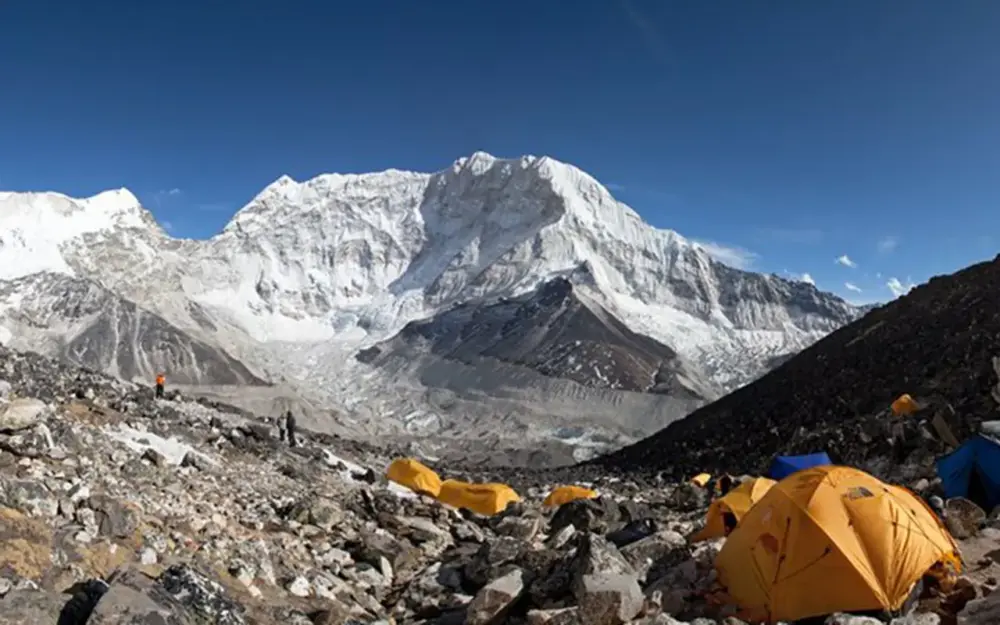
On arrival at the Island Peak Base Camp, you will rest in camp and get ready for the climbing part of the expedition. The support staff will prepare the campsite and finalize preparations for the upcoming days. You can then relax and have a meal after dinner at base camp before you begin the climb the next day.
The adventure today involves climbing lessons with a walk to High Camp. Practical training will be provided to you by your guide before you go out of base camp to enable you to prepare for the summit climb. You will be taught to use essential climbing gear like crampons, harnesses, climbing boots, ropes and ice axes.
The training process contributes to the development of confidence and gives a chance to train methods which can be applied during the climb. When you are finished with the teaching, you will proceed to High Camp.
The path ascends above the base camp and ascends a steep incline which turns to sandy ground and then grassy, finally turning to rocky ground. The trail becomes narrower and enters a steeper channel of rocks, and then it leads to High Camp. Once here, you will move into camp and prepare last-minute arrangements for the summit day. The rest of the afternoon is to be devoted to preparation and rest.
This day is the highlight of the adventure with you climbing Island Peak and coming back to Chhukung. You will leave High Camp before sunrise and start the ascent to the summit. The trail begins through rocky country and has a few small rocky formations before stepping onto the glacier.
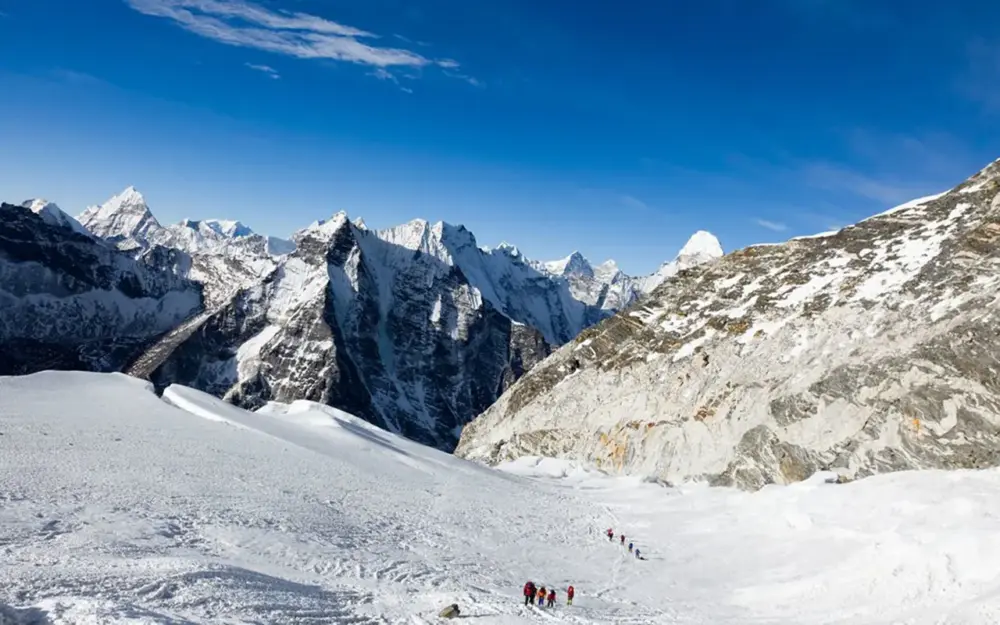
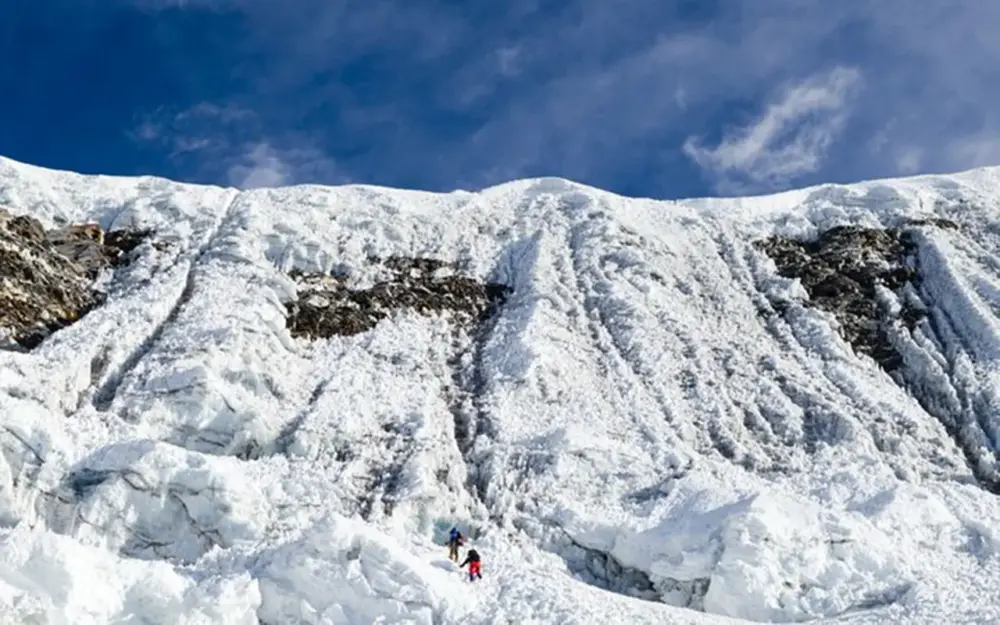
At the glacier, there might be a need to cross crevassed places with the help of ropes to be safe. This is followed by an ascending snow slope which is very steep towards the summit ridge. The top of Island Peak (6,189 m / 20,305 ft) will reward you with incredible views of Lhotse, Makalu, and Baruntse.
Having taken pictures and spent some time at the top, you will slowly go down to Island Peak Base Camp. After breakfast and a little rest, the expedition proceeds to Chhukung. During the evening, you are able to rejoice over the successful climb and have a well-deserved rest.
You will trek today back to Tengboche from Chhukung. You will then head down the same familiar trails after breakfast, having another view of the same mountains around. The descent is taken along the same valley as the ascent was made.
The path crosses the region where the Imja Khola meets the Dudh Koshi River and then to Pangboche. In case you missed visiting Pangboche Monastery during the journey, it is an opportunity to visit the site.
Going further, the road goes through the alpine landscape and forest areas. Slowly you will approach Tengboche. Upon arrival, you may once again visit Tengboche Monastery and enjoy its peaceful atmosphere. You will also spend a few days in the locality, and at night you will retire to a lodge, and consider how well the business was carried on.
Your trek will begin at Tengboche and proceed to Monjo via Namche Bazaar. Even though you will be on a well-known path, the landscape usually looks different when going through the area below.
On the way, it might be possible to see wildlife that lives in the national park. Upon arrival at Namche Bazaar, you will be able to have lunch and do some last shopping, after which you will proceed with the descent.
Leaving Namche, the path descends gradually through forest and villages. At a slow pace, you will finally arrive at Monjo, a small village close to the entrance of Sagarmatha National Park. After a long day on the trail, you can relax and spend the night here.
Today you trek from Monjo to Lukla. This is the last day of the trekking and is a last chance to appreciate the landscapes and culture of the Everest region.
The trail turns moderately easier and takes you through several Sherpa villages. In the process, you will be able to see the local traditions expressed in prayer flags, prayer stones and Buddhist culture, which is closely related to everyday life in the area.
The path goes on through well-known places until you reach Lukla. You can use the evening to relax and have recollections of the adventurous journey before you fly back to Kathmandu.
You will be flying back from Lukla to Kathmandu and then to your hotel. An early morning flight will be offered to get you back across the Himalayas to the capital of Nepal. The brief flight gives a last view of the mountains followed by a return to the city environment.
You will arrive in Kathmandu, where you will be taken to the hotel. This day is to be a day of rest and recuperation, after many days in the mountains. After the trip is over, you can decide to spend the day at the hotel and have a taste of the comfort in the city.
The rest of the day is spare for personal activities. Most of the travelers spend this time sleeping, sorting photographs or just slack off after the stress of trekking and climbing. It is a well-earned chance to rest and rejoice over your successful adventure.
Today is a free day in Kathmandu. Once the trek and climb are completed, you can do with the day as you wish. This will be a great time to unwind and spend your last full day in Nepal.
You can also do sightseeing in Kathmandu leisurely or go shopping around the local markets and see what you can buy as a present or a souvenir for your family and friends. Thamel is a tourist-friendly location with several handicrafts, clothing, and local products. You can also have the day to relax and use the amenities at your hotel, in case you want to do it.
Having no schedule, the day will enable you to rest up after the expedition and spend the rest of your time in the city. It is a nice and flexible day prior to your international departure.
This will be the last day of your Island Peak experience in Nepal. After breakfast, you can make final preparations for your journey home. Pack your luggage, travel documents and any souvenirs that you have picked up during your stay.
You will be taken to Tribhuvan International Airport, where you will board your departure flight at the time of reservation. The transfer will be done so that you arrive at the airport early before your flight time. When you leave Kathmandu, you can look back on what you have in the journey, both in the cultural sites of the valley, as well as hiking through the Everest region and topping the Island Peak.
When you take away memorable experiences of the Himalayas and the people you had met on the way, your adventure ends and you start going back home.

You can cutomize this trip as per your requirements if met the proper guidelines.


Island Peak Climbing is best in spring (March-May) and autumn (September-November). The seasons are usually stable, clear of mountains and with favorable climber conditions. In the lower trails, spring is mild with blooming rhododendron woodland and autumn is when the monsoon has passed and visibility is excellent. Clear views of Everest, Lhotse and Ama Dablam, among other Himalayan peaks are enjoyed by the trekkers during these months. Departures can be made during winter, though colder weather and snowfall will complicate climbing.
Summer monsoon is not usually a good time due to frequent rainfall, cloudy weather and delays in flights. The selection of the season is a key factor in the success and fun of the journey. The majority of climbers choose spring and autumn since they offer a good combination of comfortable trekking and safer climbing. These are also the most favored periods of time to follow the Island Peak Climbing Itinerary.
Island Peak Climbing is a trek in the Everest area as well as a non-technical ascent of a Himalayan peak. The entire trek typically spans about 120-130 kilometers, which consists of the approach hike, summit ascent and exit trail. The trip begins in Kathmandu (1,360 m / 4,462 ft) before flying to Lukla (2,860 m / 9,383 ft). The path slowly ascends through Phakding, Namche Bazaar, Tengboche, Dingboche and Cho La. Climbers then continue to Island Peak Base Camp (5,087 m / 16,690 ft) and High Camp (5,600 m / 18,373 ft).
The peak of the expedition area is Island Peak Summit (6,189 m / 20,305 ft). The gradual climb ensures that the participants are able to acclimatize themselves to the elevated levels, and then they may attempt the summit. The trail offers an exhilarating blend of mountainous scenery, cultural exposure, and climbing adventure in the Everest area.
Island Peak Climbing is rated as a moderate-level climbing trip that requires good physical conditioning and determination. The trip itself is conducted on the already set tracks in the Everest area, yet the peak day involves glacier passages, steep snow inclines and climbing gear. Previous climbing experience may be beneficial but not necessarily in the presence of proper guidance and preparation.
One of the primary difficulties in the trip is altitude sickness. The quantity of oxygen in the atmosphere decreases slowly as climbers ascend above (3,000 m / 9,843 ft). The risk of altitude-related problems can be minimized by a proper acclimatization period, gradual ascents and proper hydration. The symptoms are usually headaches, tiredness and loss of appetite. Adhering to a carefully designed schedule will give the body time to adapt to the increased heights. It is essential to be health-conscious during the climb and discuss your health with the guides during the climb.
The number of walking hours will fluctuate during the trip, based on the terrain, the amount of elevation and the goals of each day. On the shorter trekking days, the participants can walk between three and five hours on the acclimatization days or on days when they are traveling between the neighbour villages. The trekking days are usually six to seven hours of walking on the mountain trails and valleys.
Summit day is the most challenging day and may take up to ten hours of climbing and trekking. This is due to the long period of time, as climbers would start early in the morning, arrive at the top, and safely go back to lower grounds. Daily walking times will be geared towards the correct acclimatization and provide adequate rest between the large elevation gains. Some days can be physically taxing, but the program is not overly active or restful. A constant speed and adherence to the instructions of the climbing team allow participants to cope with the daily workload and have an enjoyable experience.
Accommodation during the trek is mainly provided in local mountain lodges. These lodges provide comfortably basic rooms in which trekkers can stay after a day on the trail. The camping accommodation might be needed at higher elevations and during the climbing phase based on the itinerary and weather conditions.
Food is cooked to meet the energy requirements of trekking and climbing. Breakfast, lunch and dinner are usually taken on the mountain part of the trip. Foods that are commonly eaten are rice, noodles, soup, potatoes, vegetables, eggs and Nepali food. Hot beverages such as tea, coffee and others are very common along the trail. It is also important to drink enough water at elevated altitudes. Water purification tablets or refillable bottles are used by many trekkers in order to remain hydrated during the expedition. The food is basic, healthy, and is meant to sustain strength on the trip.
Island Peak Climbing can be used in combination with several alternative routes that can allow one to have a longer adventure in the Everest region. Other climbers prefer to reach the peak by the Gokyo Valley, which has stunning scenes of high mountain lakes and other peaks. Some include the ascent with a trip to Everest Base Camp, then proceed to Cho La and Cho Oyu.
These route variations add extra trekking days and provide additional opportunities for acclimatization. Crossing high mountain passes before the climbing route is also included in some itineraries. The decision on the route is based on the available time, experience in trekking and individual interests. Although the standard route is the most popular, alternative routes provide alternative scenery and experiences in the Khumbu region. Mega Treks helps travelers choose the route that best fits their objectives, fitness, and time frame.
Beginner are welcome in this expedition if they are physically fit, motivated and ready to face the challenges of high altitude trekking and climbing. Though previous climbing experience would be an advantage, lots of first-time climbers do finish the expedition successfully through proper training and assistance.
Before the summit bid, guides train on how to use the climbing gear like crampons, harnesses, ropes and ice axes. This training helps participants to be confident and learn some simple climbing techniques. The beginner must learn that the trek is at high altitude and takes days of hiking. Practice before the trip can significantly enhance general performance and enjoyment. Good attitude, readiness to learn and dedication to preparation can be much more critical than prior climbing experience. The well-prepared will have an enjoyable and enjoyable time in the mountains.
A successful climbing experience will require good preparation. The training of the participants should start several months before departure and it should focus on cardiovascular fitness, endurance and leg strength. Hiking, running, cycling and climbing stairs are all great exercises to gain the fitness required to go on the trek.
The adventure entails several days of strolling upwards at a rising level and endurance becomes a significant aspect. Balance and stability while carrying a daypack may also be enhanced due to the strength training exercises. Mental preparation is also useful as it is possible that weather conditions, elevation, and long walking days may be taxing. Training exercises like walking or jogging outdoors in advance of the trip assist the body to adjust to prolonged physical exertion.
Through the effective training, confidence is built, and the likelihood of making it to the summit safely is enhanced. When well prepared, the participants will be in a position to experience all the challenges and rewards of the journey.
There are charging stations in most of the villages along the trekking path, especially in bigger settlements, like Namche Bazaar and Dingboche. With increased altitude, charging services might be restricted and frequently charged extra. It is strongly advised to carry a power bank with you to ensure that your electronic devices are running during the trek.
There are several places where the internet is available along the route, but the speed and reliability of the internet vary with weather and location. Better connectivity is usually available in lower villages compared to higher camps. In certain locations, mobile network coverage is provided but it can also get weaker at higher altitudes. Internet services are primarily utilized by many trekkers to keep in touch and update family and friends. Due to the conditions in the mountains, one should expect to be offline at times. It can be more convenient to carry spare batteries and additional charging facilities to make the trip.
This climbing adventure has several permits that are needed. Trekkers also need to acquire the required permits for the Everest region and the official climbing permit for Island Peak. These permits aid in controlling tourism, keep conservation going and ensure legal access to the trekking and climbing regions.
Depending on the government regulations and seasonal conditions, permit requirements can be altered. A majority of organized trips do the permit process on behalf of the participants, which reduces administrative efforts and all documentation is done properly. When trekking, travelers are supposed to carry copies of the permits as there are checkpoints along the way. Preparing permits before departure also avoids delays and enables the journey to be done without any hitches. Documentation of proper planning of any Himalayan climbing expedition is significant.
The trip usually starts with a foreign entry in Kathmandu and then it takes a domestic flight to Lukla. This mountain helicopter tour is the primary entry point to the Everest area and begins the trekking aspect of the adventure.
Ground transportation is usually provided between the airport and hotel in Kathmandu. Once the climbers are through, they go back to Lukla and fly to Kathmandu. The weather in the mountains may sometimes influence the flight schedules so, flexibility is essential.
The majority of travelers stay an additional day in Kathmandu following the expedition to allow for any time delays and spend some time in the city before leaving. Mega Treks can also aid in transportation arrangements so that they can ensure a successful traveling process upon arrival to the ultimate departure.
Anyone taking part in this trip is highly advised to take travel insurance. High altitude trekking and climbing, emergency medical treatment, trip interruptions, and helicopter evacuation should be included in a suitable policy. It is necessary to ensure the insurance policy covers activities up to this point as the climb will reach the Island Peak Summit (6,189 m / 20,305 ft).
The surroundings of the mountain are unpredictable and weather patterns can sometimes interfere with the time of transportation. Full coverage insurance offers financial security and tranquility during the trip. Travelers ought to thoroughly examine policy specifics before leaving and make sure that all the activities they intend to engage in are covered.
This is an adventure that is a mixture of trekking, cultural aspects, and mountain climbing in the Everest region. Scenic trails, classic Sherpa villages, suspension bridges, monasteries, and dramatic Himalayan scenery can be expected by the participants. The expedition follows a slow rise in altitude, with escalating altitudes enabling the trekkers to enjoy the specific environment of the Khumbu region.
The summit of the expedition is the Island Peak Summit, where the climbers are rewarded with views of the Himalayan peaks around them. Meanwhile, tourists are exposed to the local culture, mountain hospitality and the difficulty of high-altitude climbing. The journey is demanding, time-consuming and requires planning, yet the benefits are high. With the Island Peak Climbing Itinerary, being properly planned assists in maximizing the level of safety and enjoyment in the adventure. The experience leaves long-term memories and gives an important accomplishment to individuals who want to experience a challenge in climbing the Himalayas.
It is rated as moderately difficult and requires good physical conditioning and determination.
No, but previous experience of hiking or trekking can be of use.
The average length of the itineraries is 16-18 days of trekking and climbing.
Yes, it is necessary to be well acclimatized since the trek takes one to high altitudes.
Yes, the participants are accompanied by experienced climbing guides during the expedition.
The trek is done in local lodges, and camping at higher climbing camps is done when necessary.
Foods often consist of rice, noodles, vegetables, soups, eggs and local foods.
Yes, several villages charge, most often at a higher cost.
Some villages have Internet, but speed and reliability can be less than ideal.
Spring and autumn are taken to be the best seasons.
This requires that the participants are comfortable walking for several days at high altitude.
Yes, high-altitude trekking and emergency evacuation insurance is highly recommended.


 Write a Review


